
Blog
Rules, history and strategy for the games you can play here.
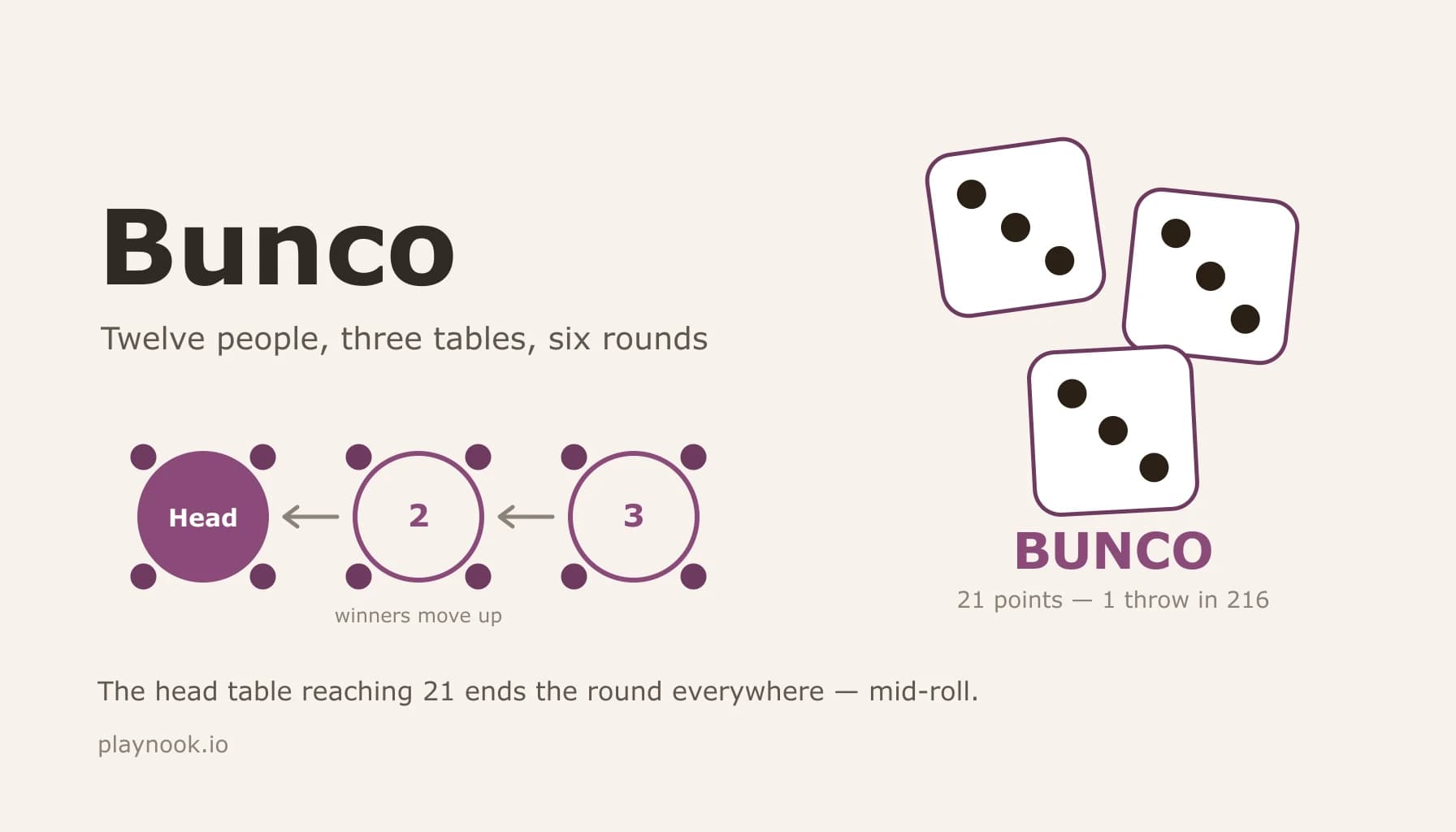
How to Play Bunco — Rules, and How to Host a Night
Bunco rules in full, plus what nobody tells hosts: how long a round really runs, how often a Bunco falls, and why the Bunco prize is a tie six nights in ten.
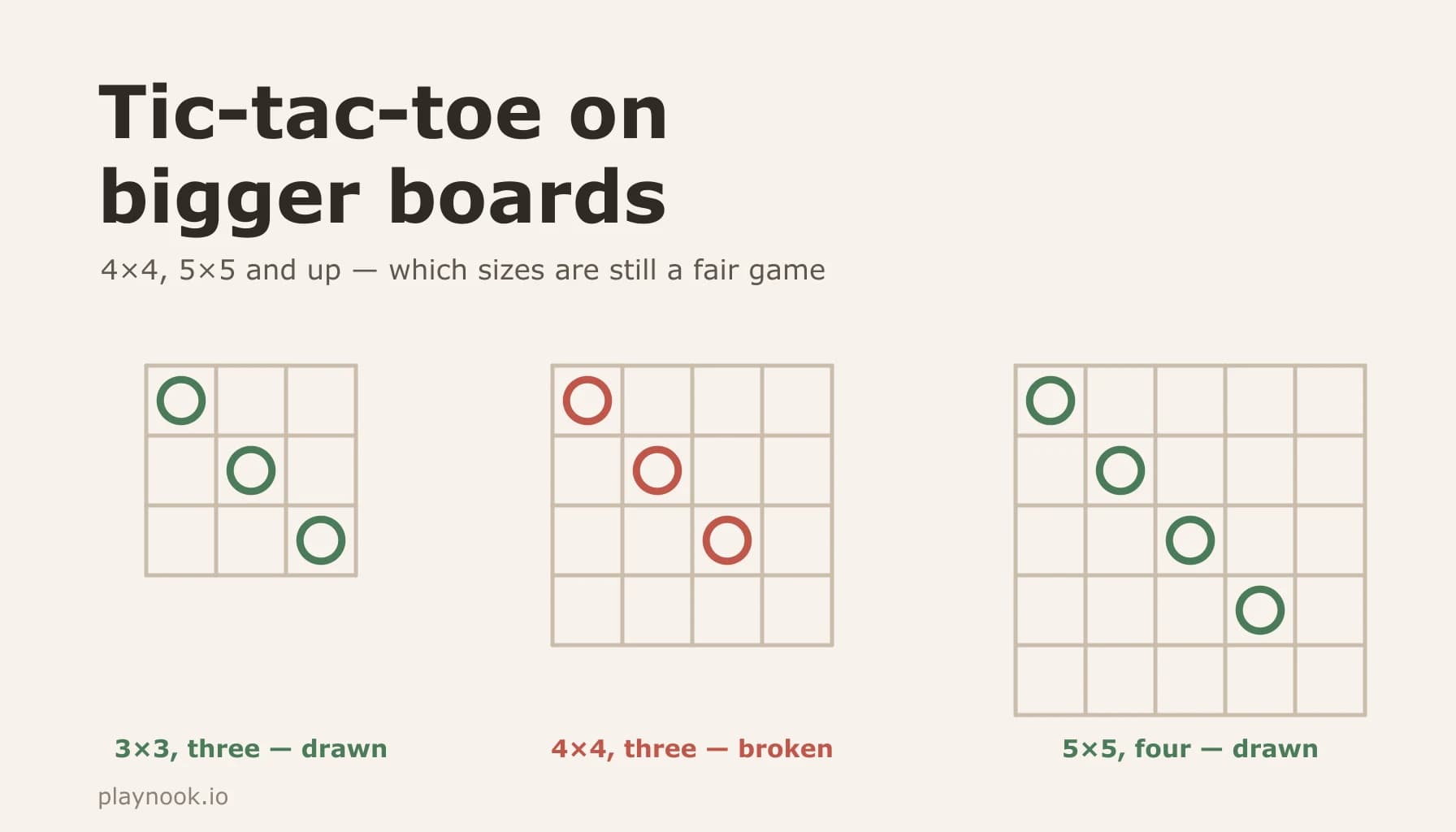
Tic-Tac-Toe on Bigger Boards: 4x4, 5x5 and Up
Rules for 4x4 and 5x5 tic-tac-toe, and which sizes are actually fair. Every board here was solved completely — and a bigger grid on its own makes the game worse.
Play the game →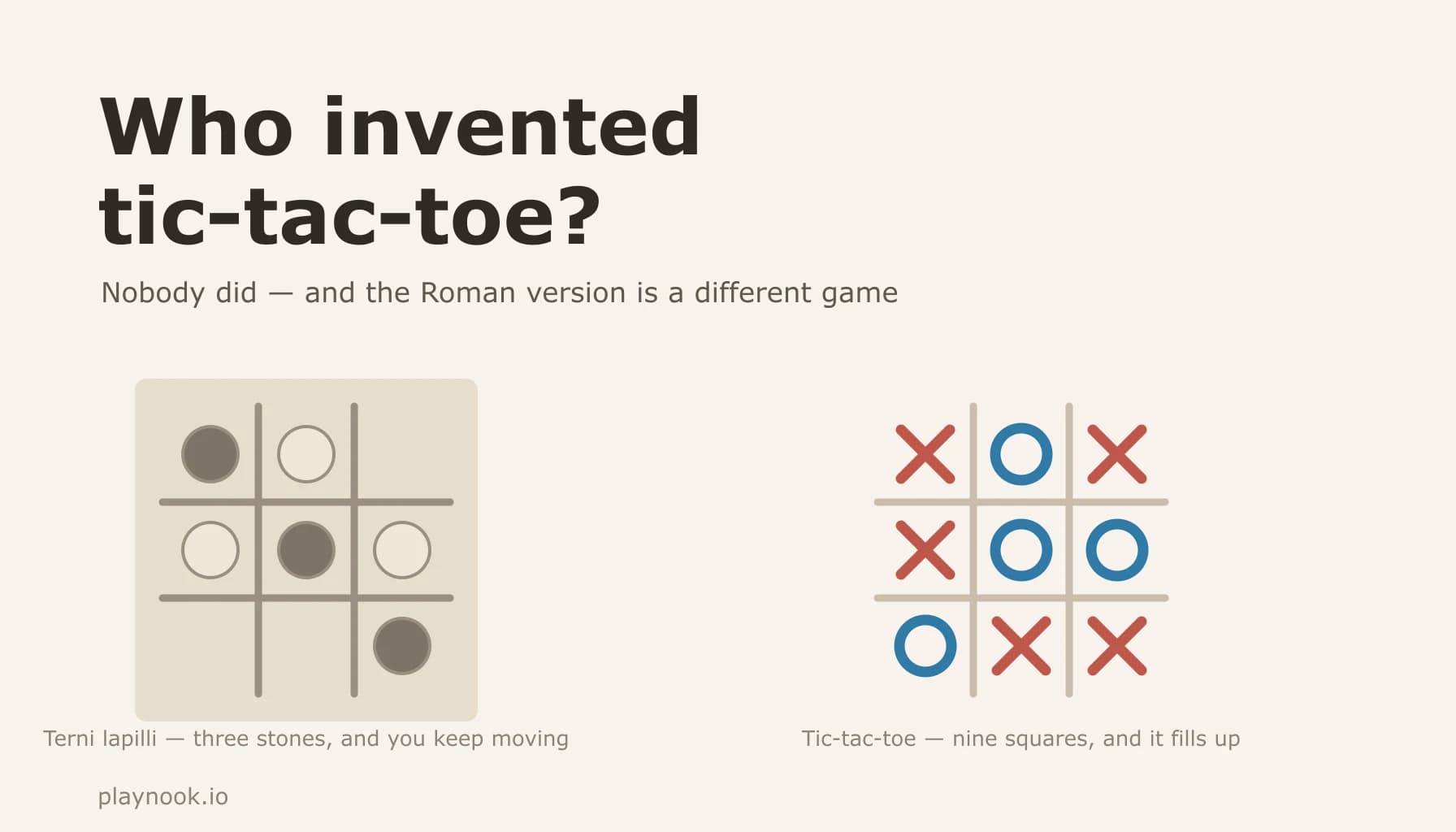
Who Invented Tic-Tac-Toe? Nobody Did
When tic-tac-toe was invented, where the Roman game fits, and why noughts and crosses has two names. The Roman version is solved here — and it is a different game.
Play the game →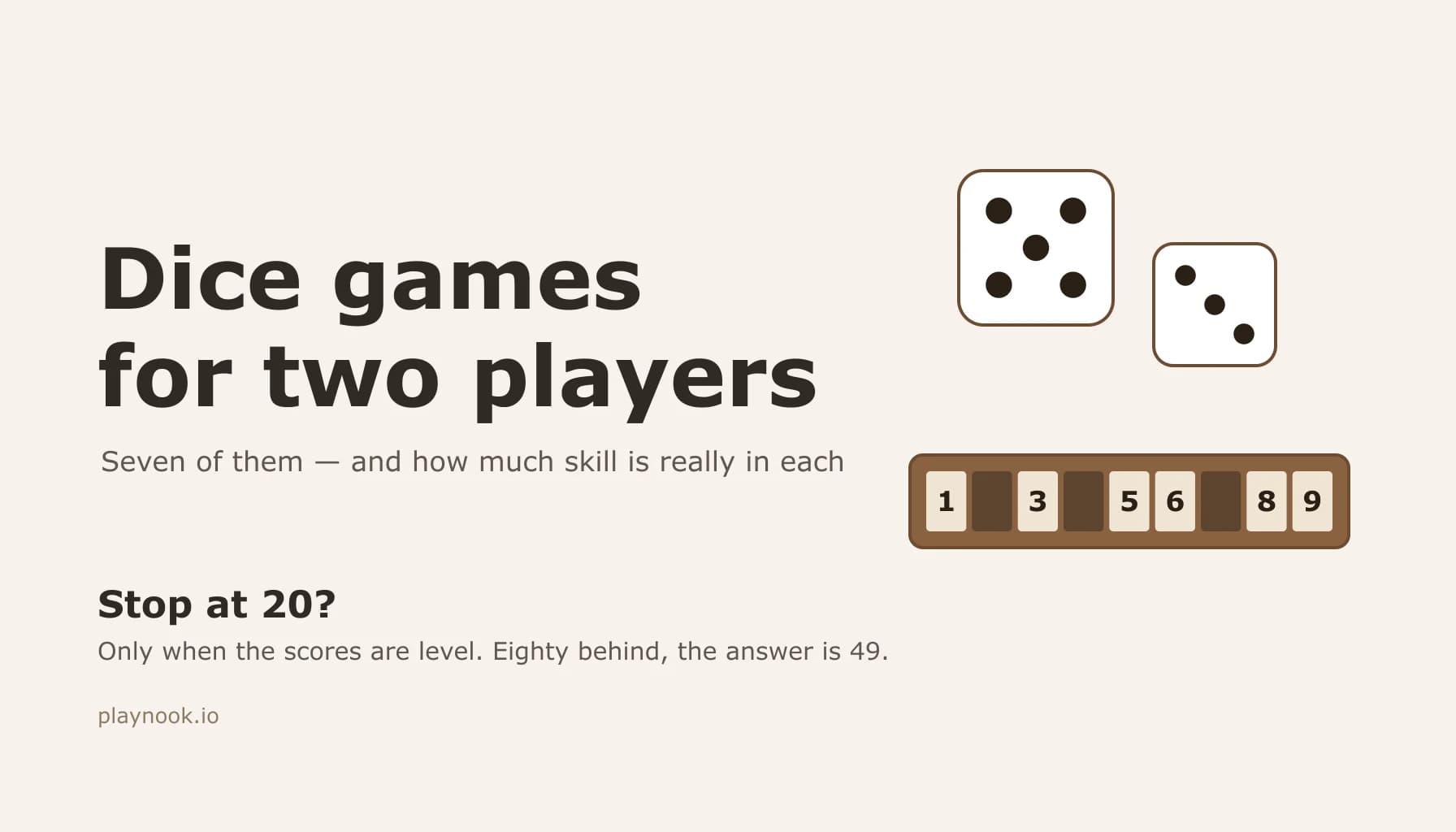
Dice Games for Two Players — Seven Worth Playing
Seven two-player dice games: the rules, what each needs, and how much skill is really in them. Pig solved exactly, and the stop-at-20 rule tested.
Play the game →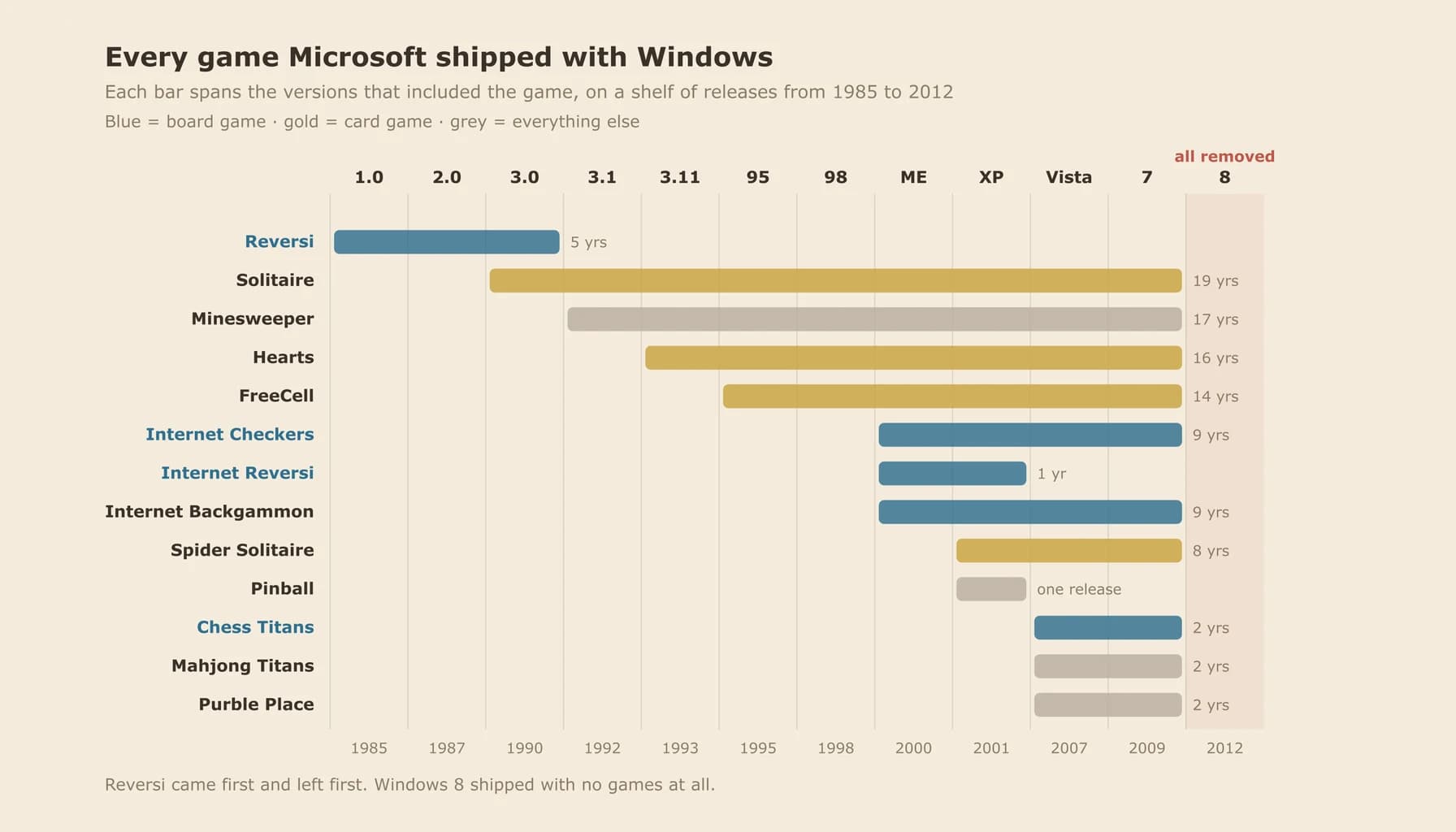
Board Games That Came With Windows
The first game Microsoft shipped with Windows was not Solitaire — it was Reversi, in 1985. Which board games came with which version, and where to play them now.
Play the game →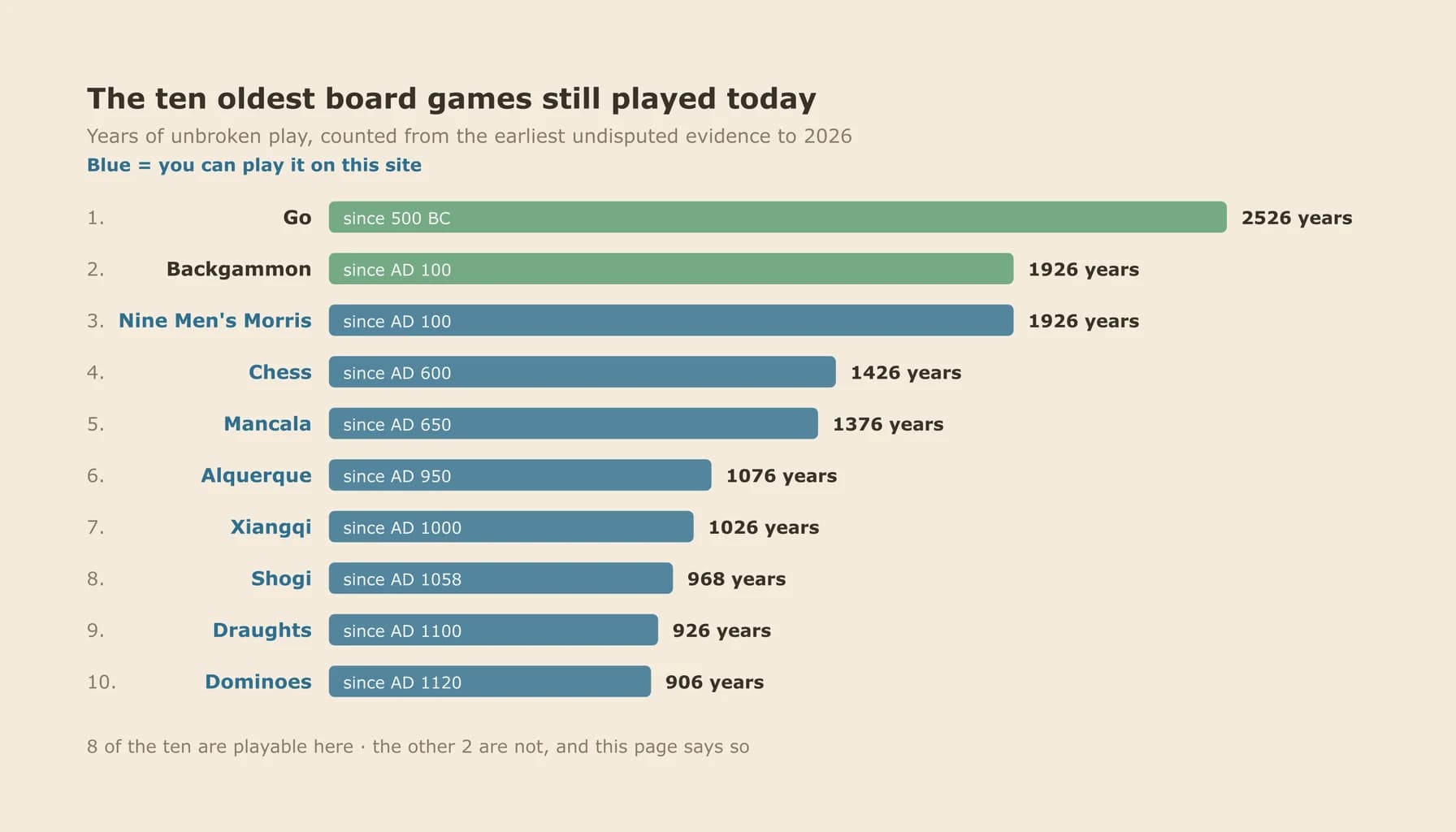
Oldest Games in the World Still Played Today
Go has run unbroken for 2,526 years. The ten oldest board games still played today, ranked from the earliest solid evidence — and eight of them you can play here.
Play the game →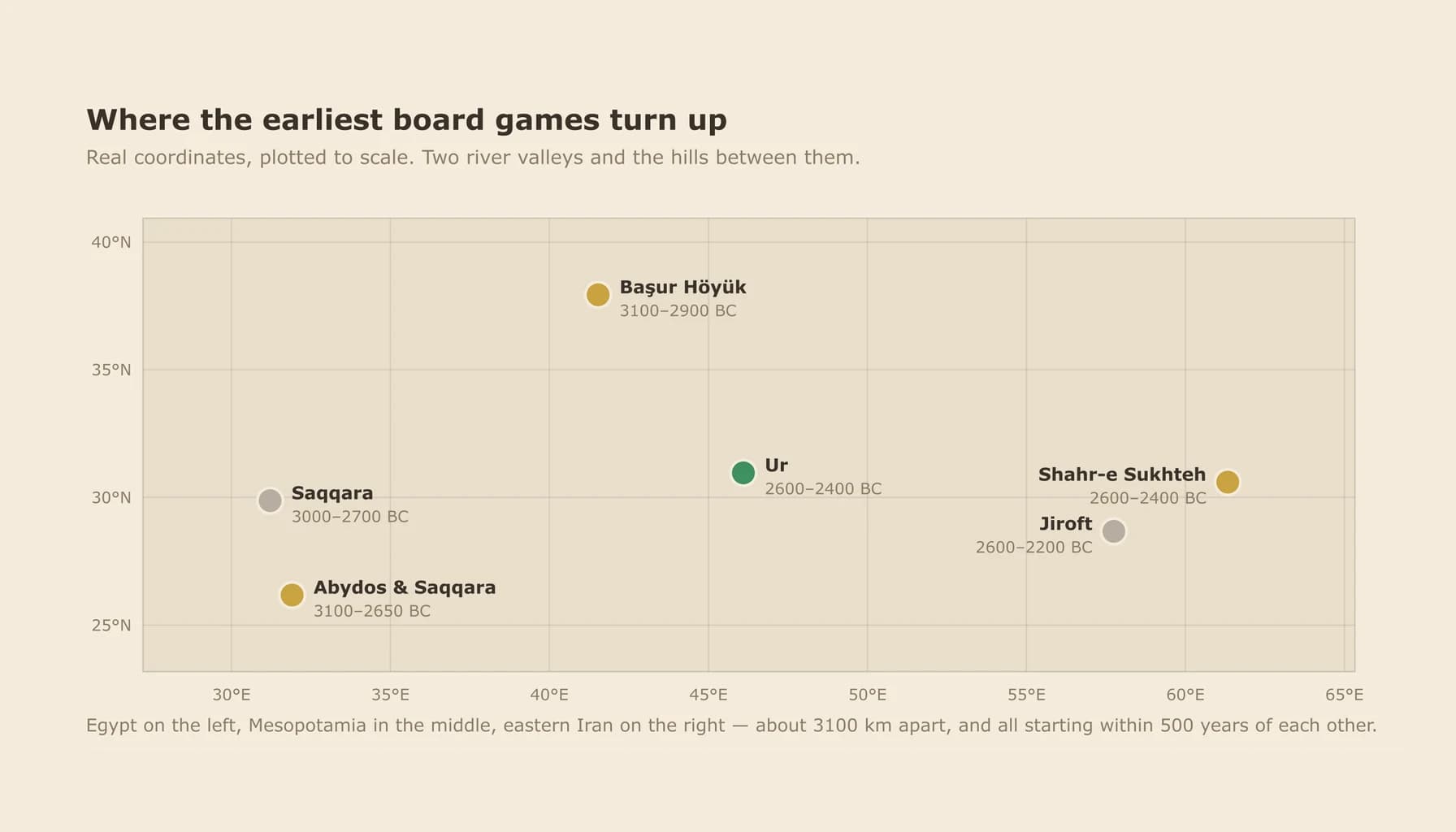
When Was the First Board Game Invented?
Not one date but a 900-year window, and not one place but three river valleys 3,100 km apart. What the earliest finds actually show — and what they cannot.
Play the game →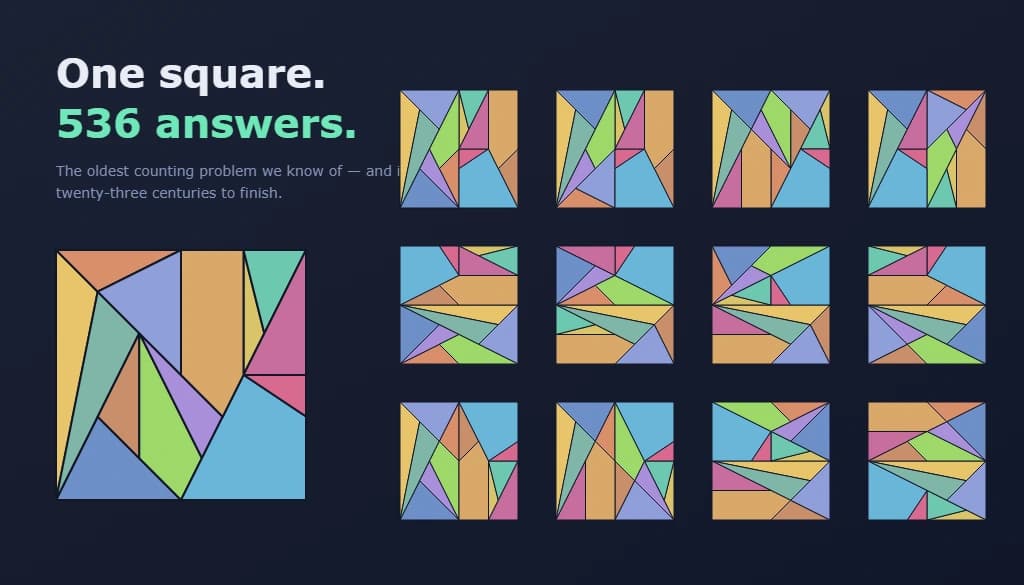
Ostomachion: Archimedes and the Number 536
The oldest counting problem we know of, asked around 250 BC and answered in 2003. Why 536, why it took so long, and what we found when we counted it again.
Play the game →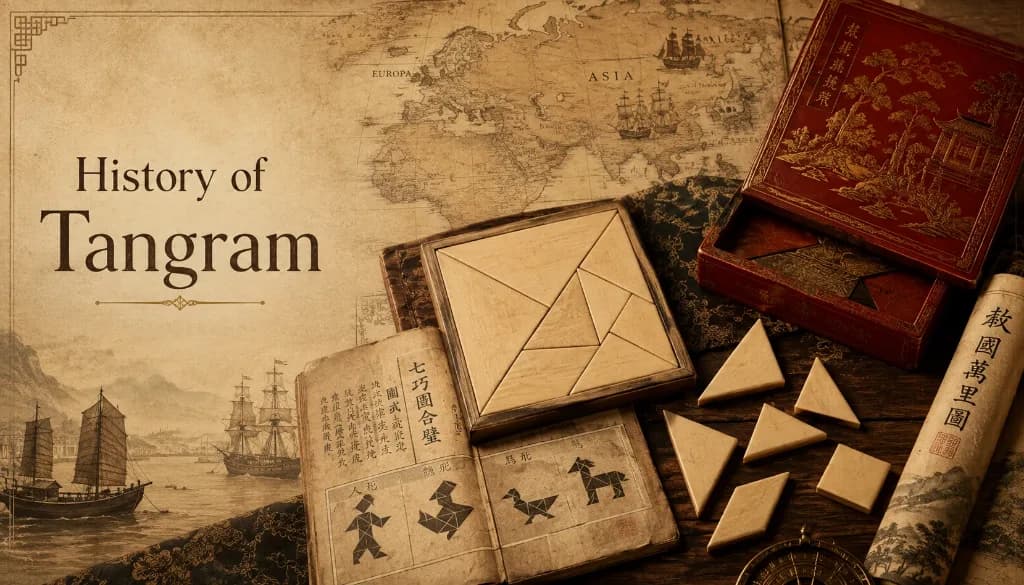
Tangram History: Where the Puzzle Came From
Not ancient, not Egyptian, not invented by a man called Tan. What the record actually shows about the tangram: 1813, the 1818 craze, and a Japanese book of 1742.
Play the game →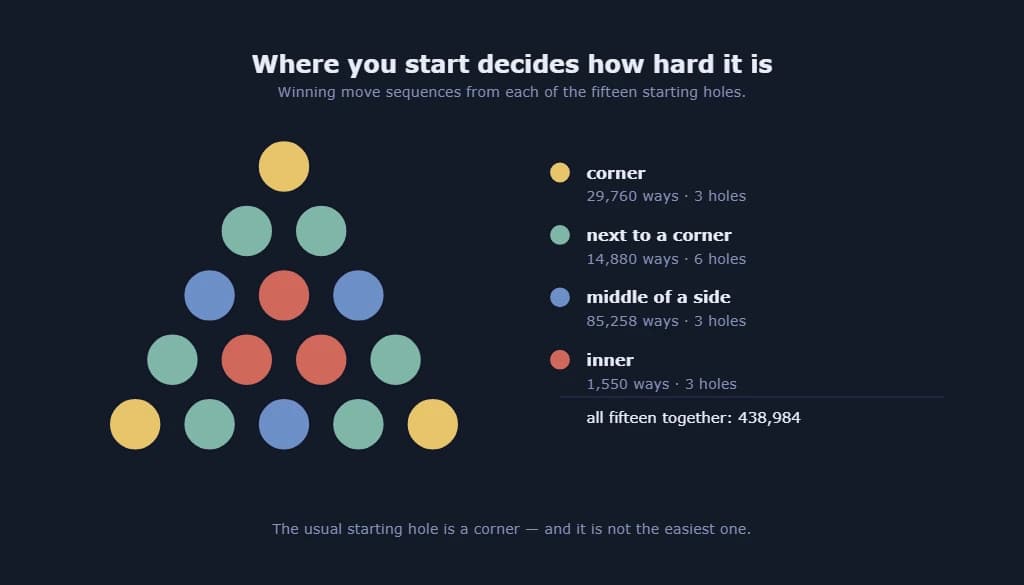
How to Win the Triangle Peg Game
The 15-hole triangle, solved completely: 29,760 winning lines from the usual start, where the last peg can land, and a solver that flags the move that kills you.
Play the game →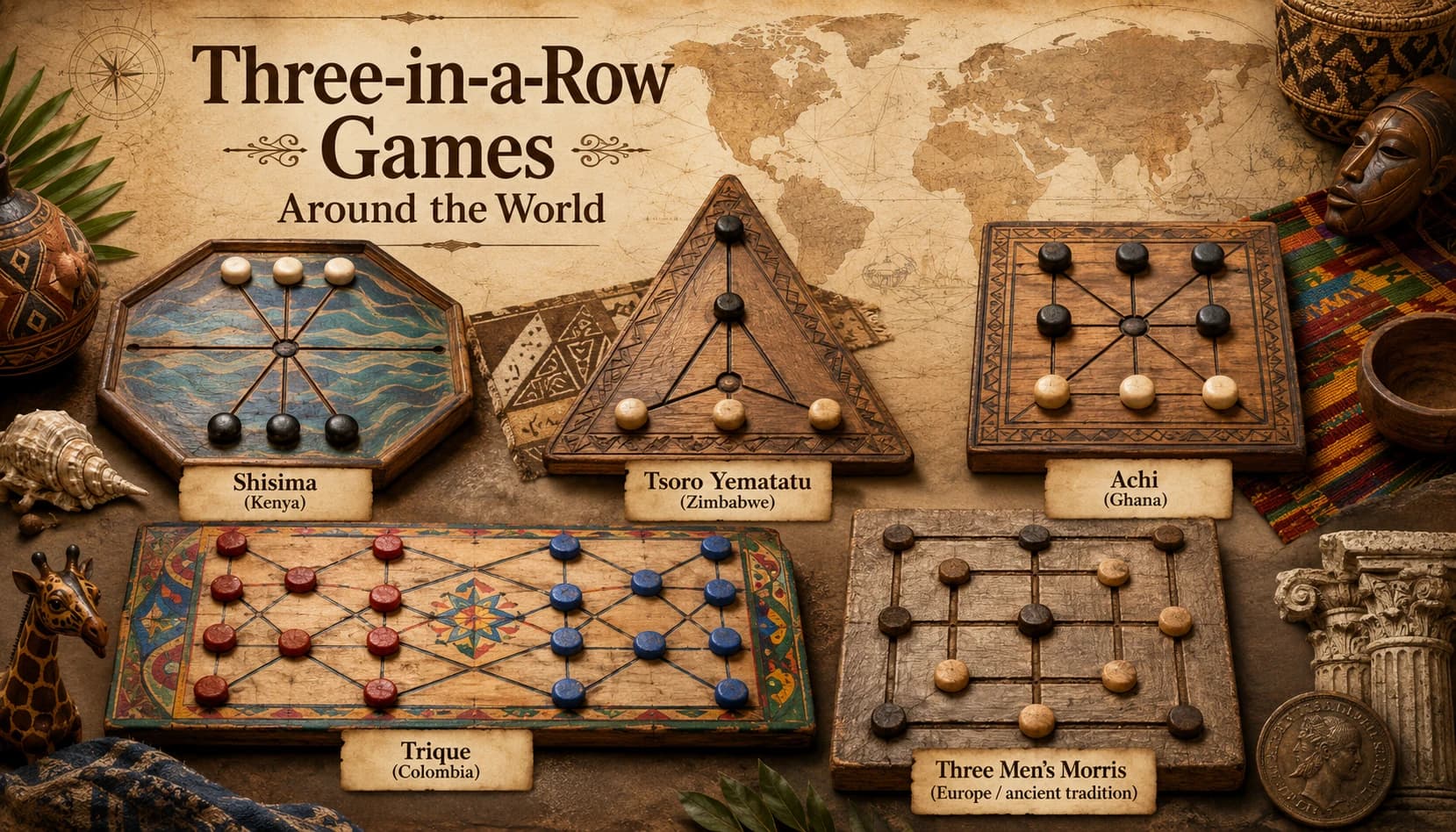
Three-in-a-Row Games Around the World
Five cultures, one problem: the middle point decides the game. We solved Three Men's Morris, Achi, Picaria and Shisima to show how each of them fixed it.
Play the game →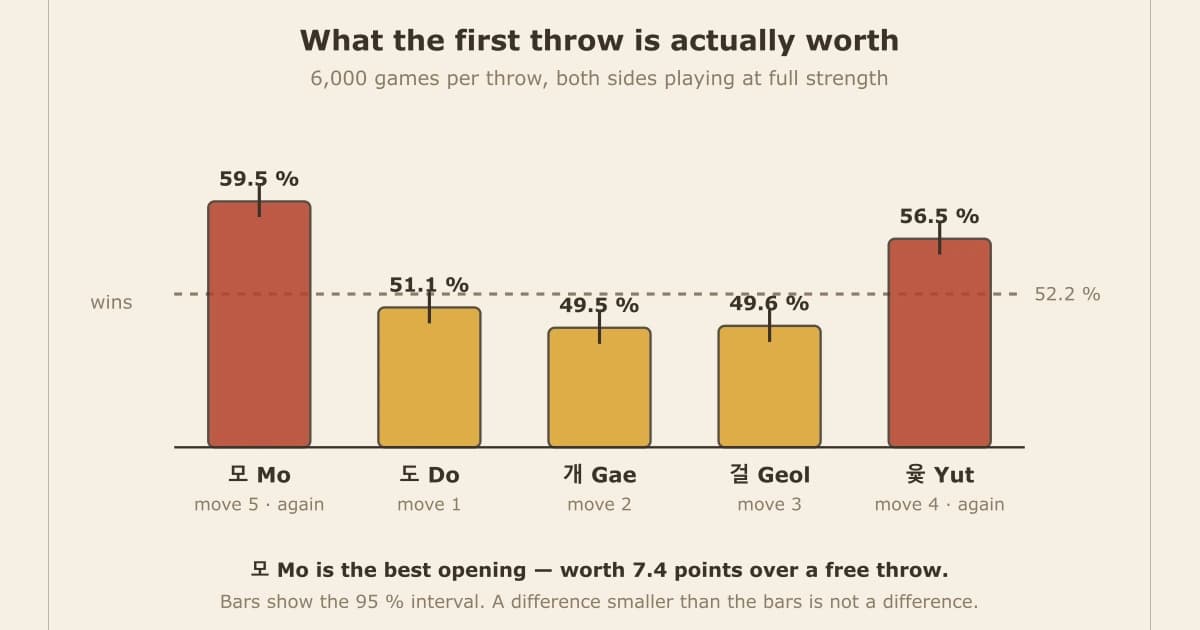
Seollal Games: What Korea Plays at Lunar New Year
Yut Nori, jegichagi, tuho and gonggi — the games Korean families actually play at Seollal, and what a Mo on the opening throw is really worth.
Play the game →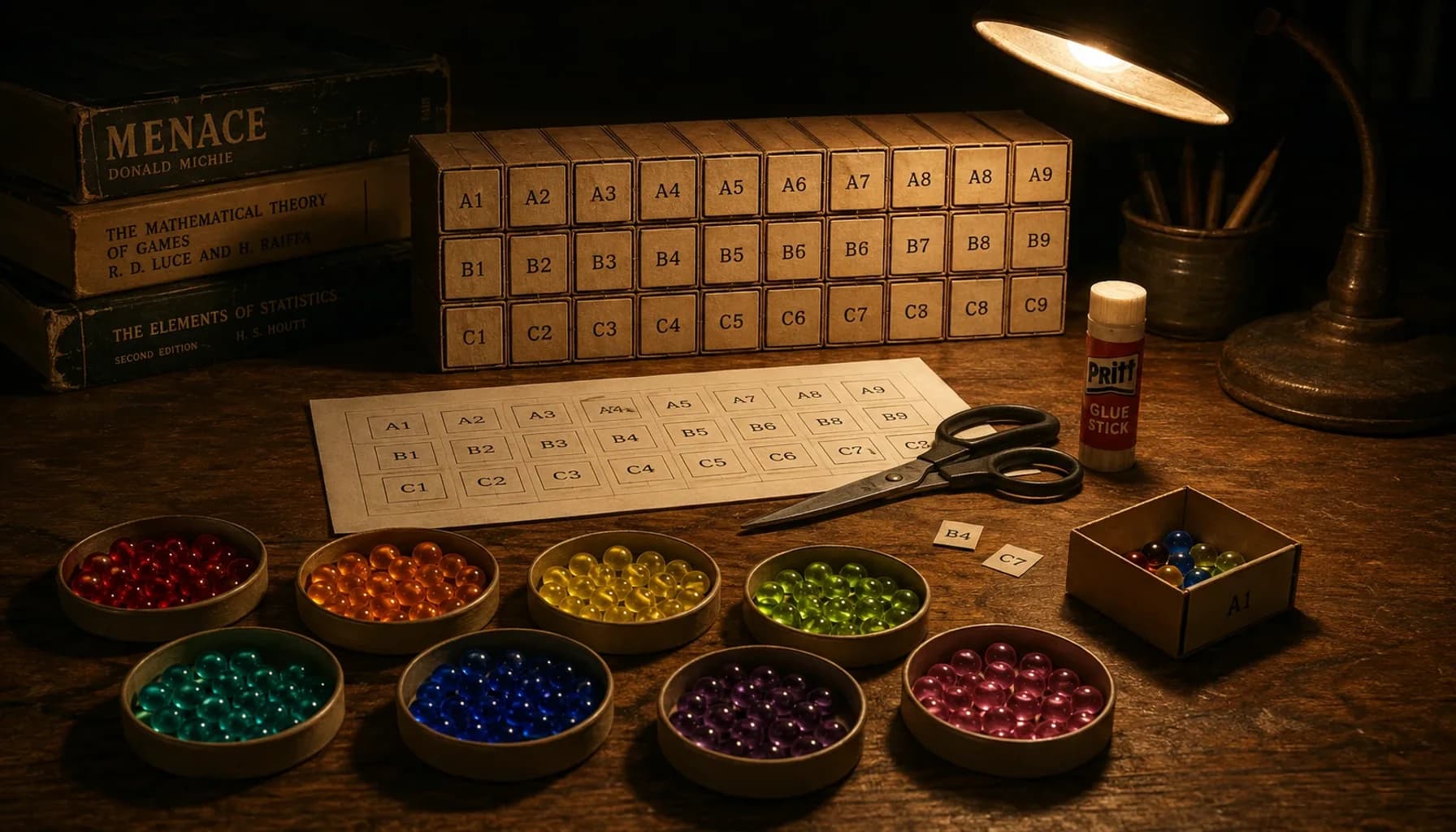
How to Build MENACE: All 304 Matchbox Labels
Every guide says “take 304 matchboxes and label them” and stops there. Here are all 304 positions drawn out, ready to print, with the exact bead counts.
Play the game →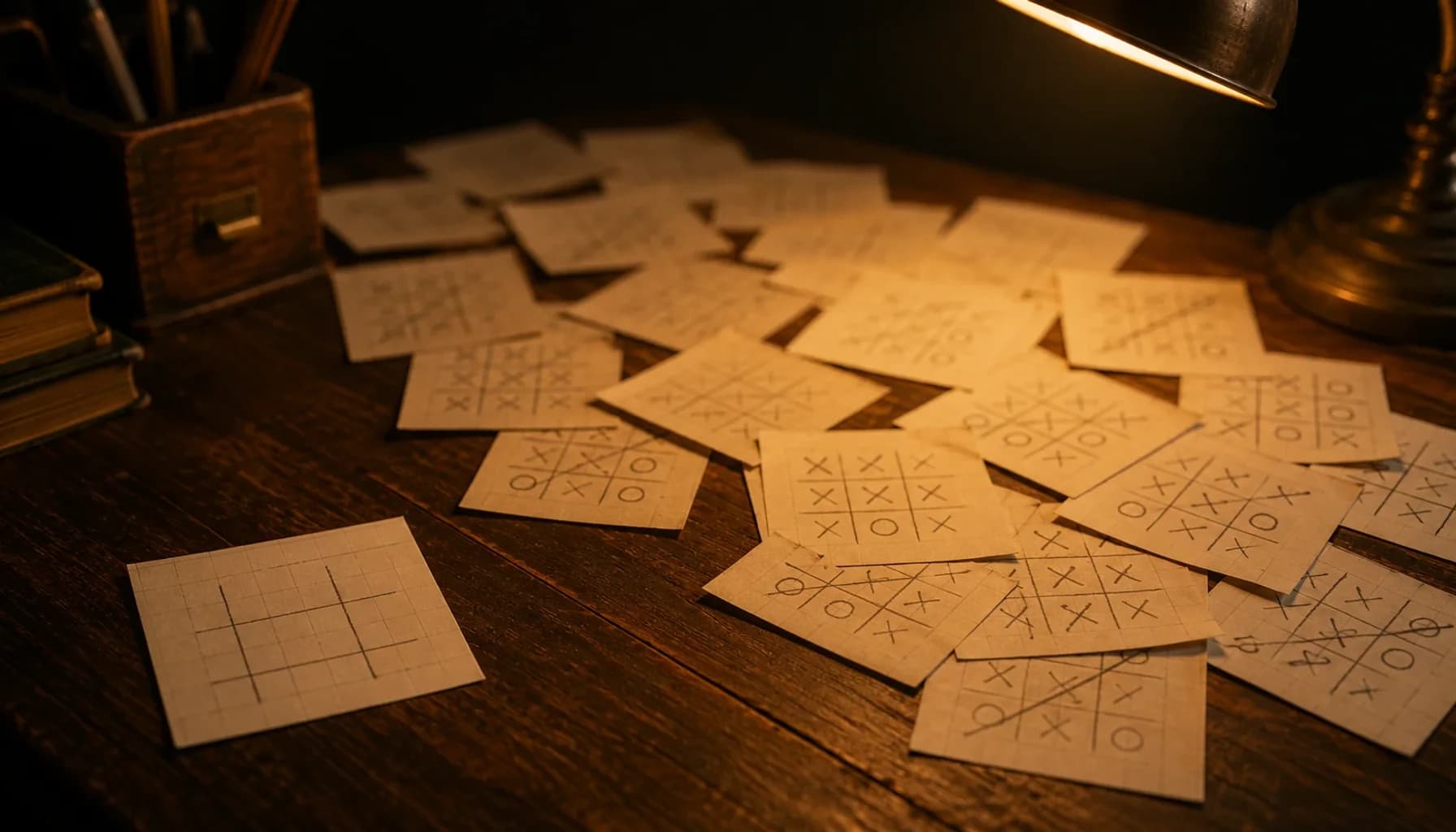
How Many Possible Tic-Tac-Toe Games Are There?
There are 255,168 possible tic-tac-toe games — but only 26,830 distinct boards, and 765 after symmetry. Every noughts and crosses number, recomputed from scratch.
Play the game →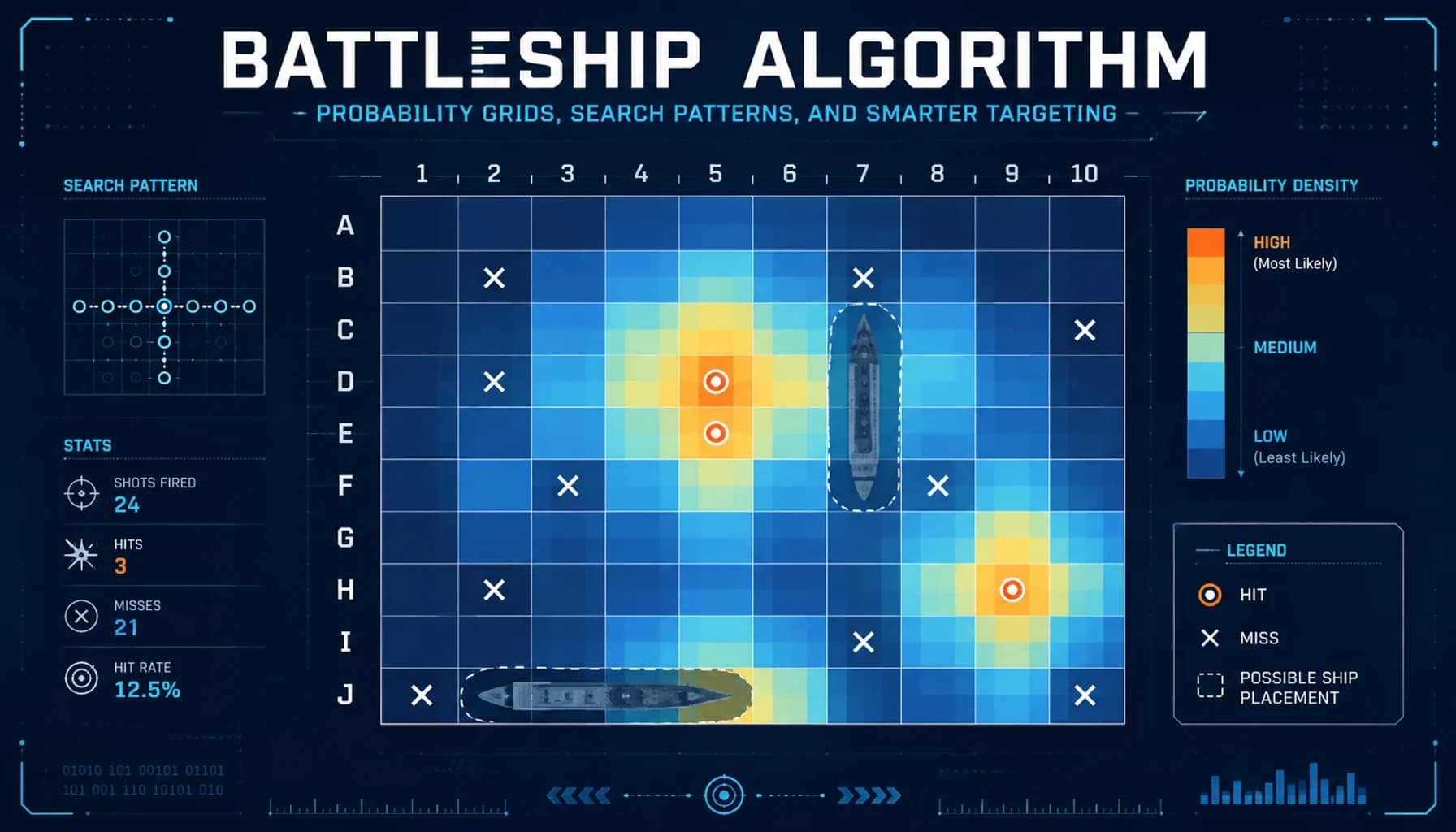
How a Computer Plays Battleship: by Counting
The probability density method, measured: 95 shots for random fire, 44 for the strongest opponent — and why there is no best place to hide your ships.
Play the game →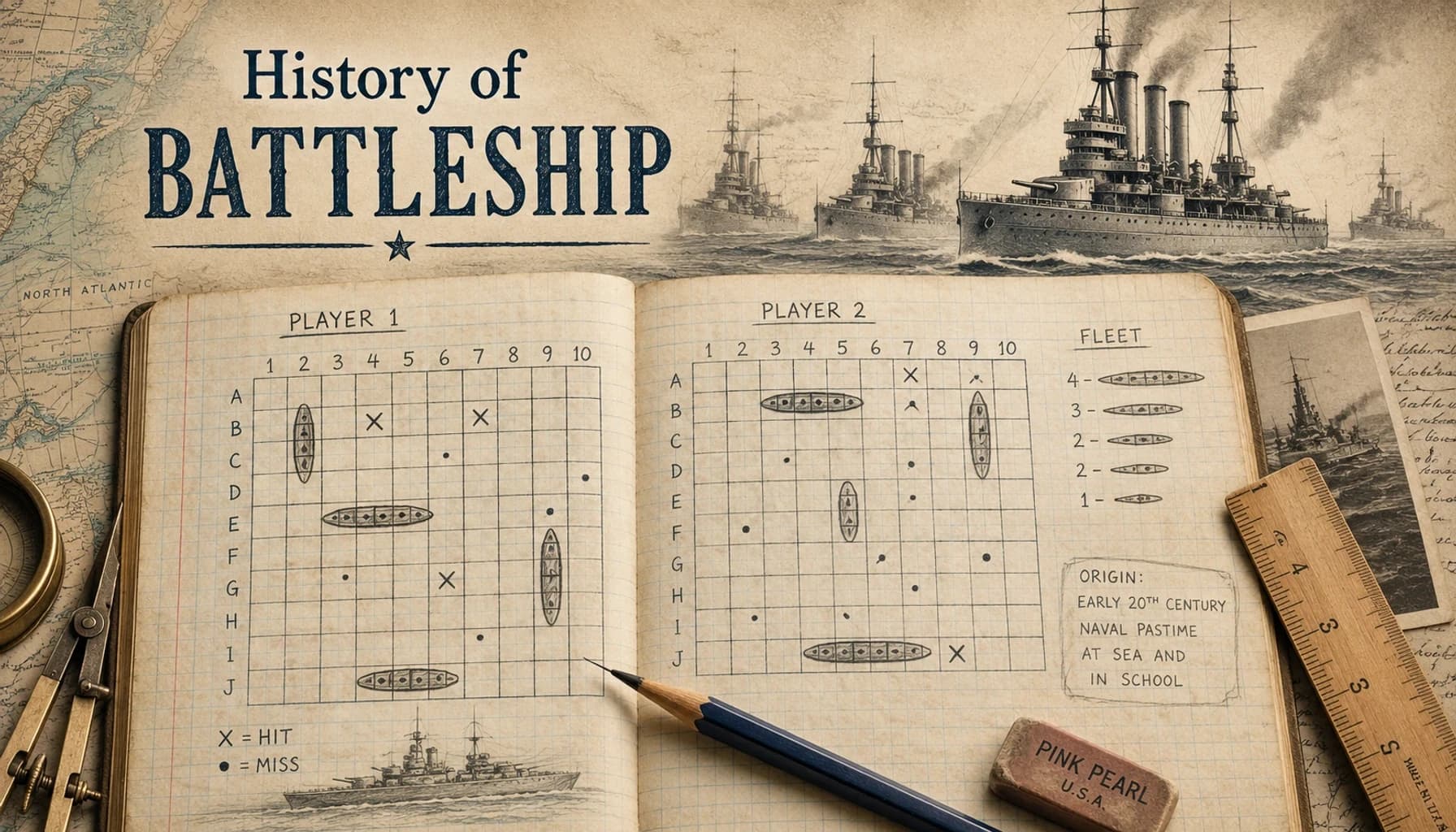
The History of Battleship: Paper Before the Plastic
Battleship was old before Milton Bradley boxed it: a Russian diary from 1907, Salvo sold in pads from 1931, and what 1967 actually changed.
Play the game →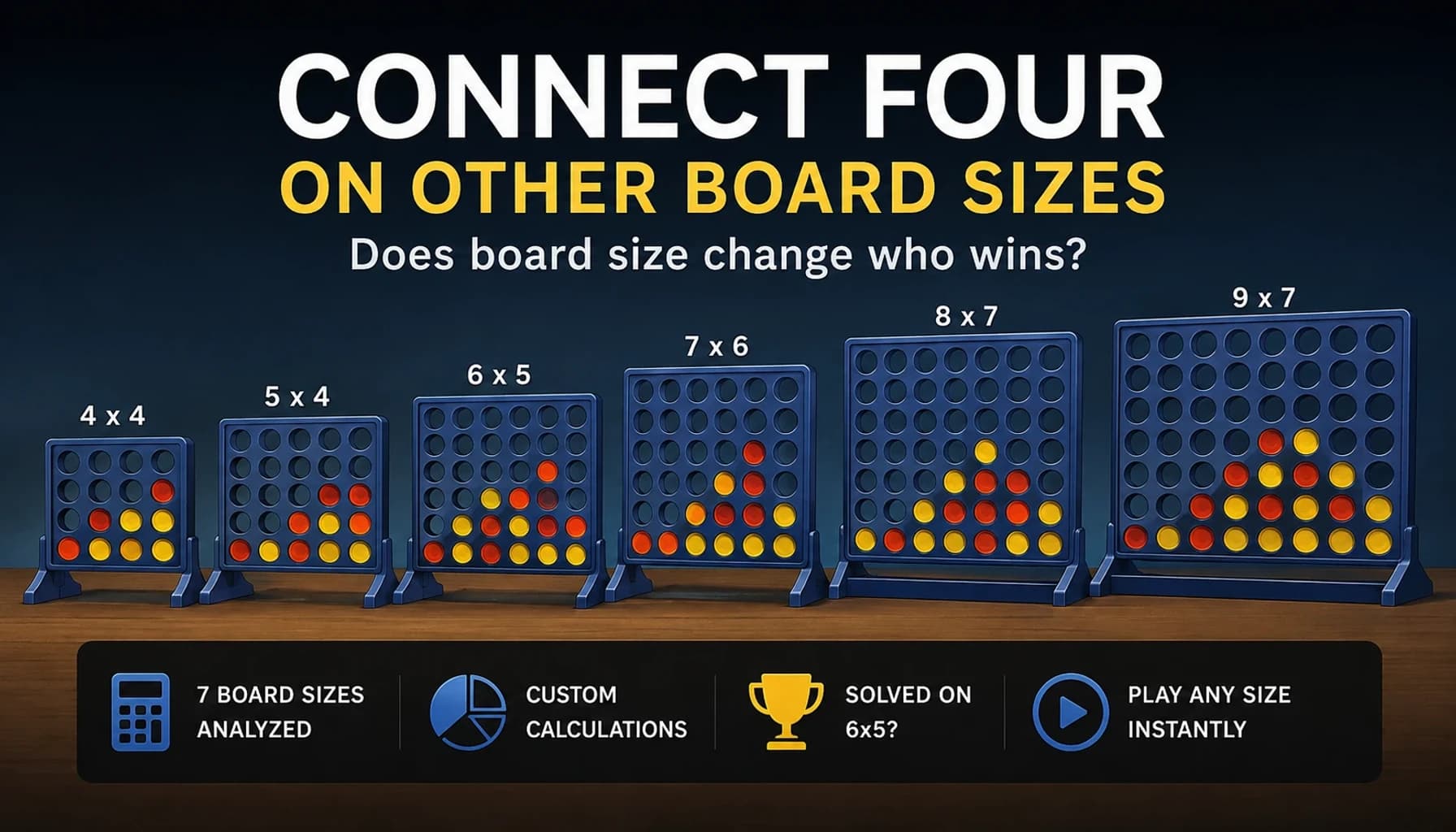
Connect Four Board Sizes: Who Wins on Each
The standard 7×6 board is a first-player win. Change the size and the answer changes. The full table of solved sizes, seven of them recomputed here.
Play the game →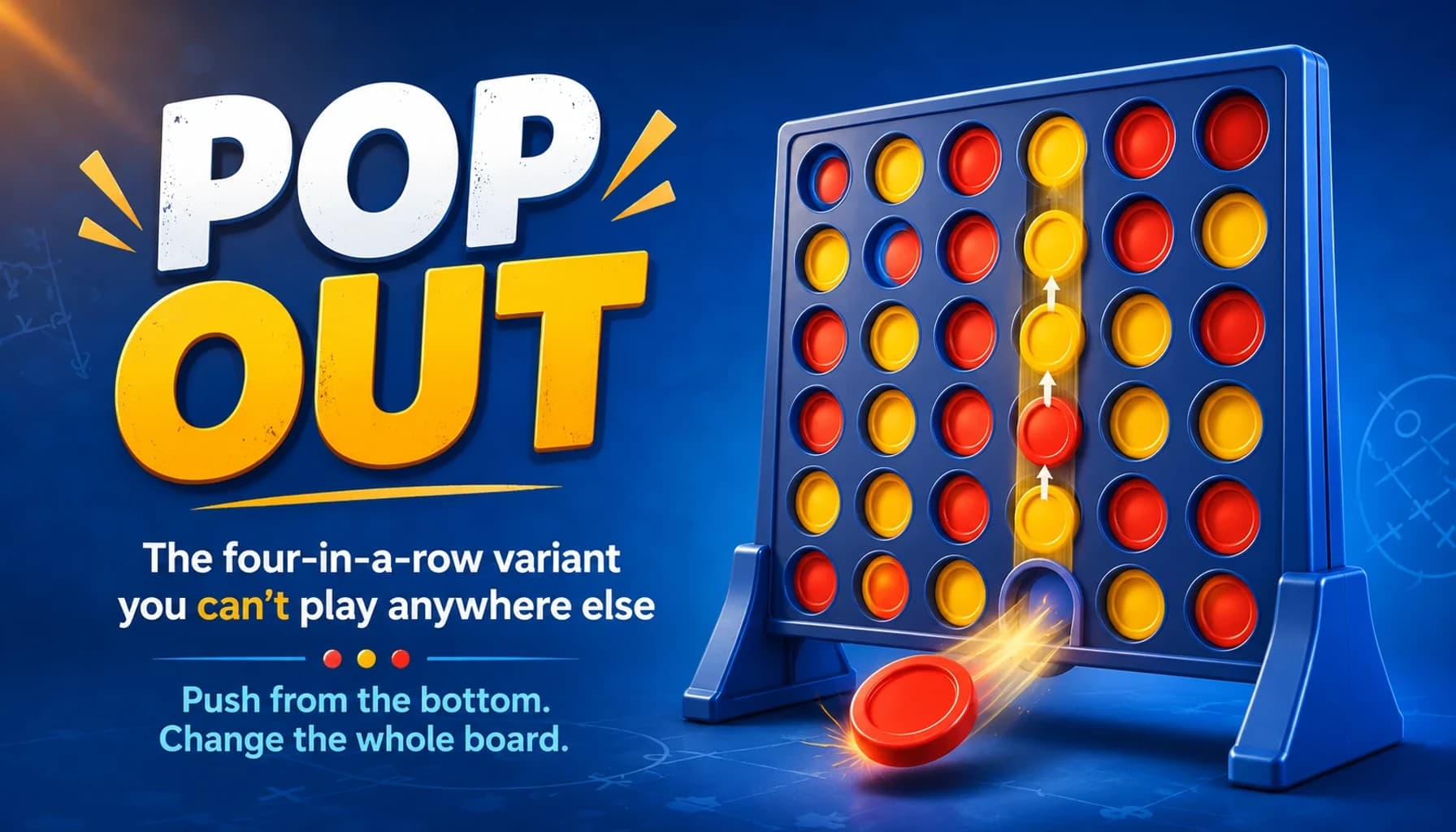
Pop Out: The Connect 4 Variant Nobody Offers
Pull one of your own discs out of the bottom of a column and everything above it falls. An official variant that breaks the odd/even rule of the game.
Play the game →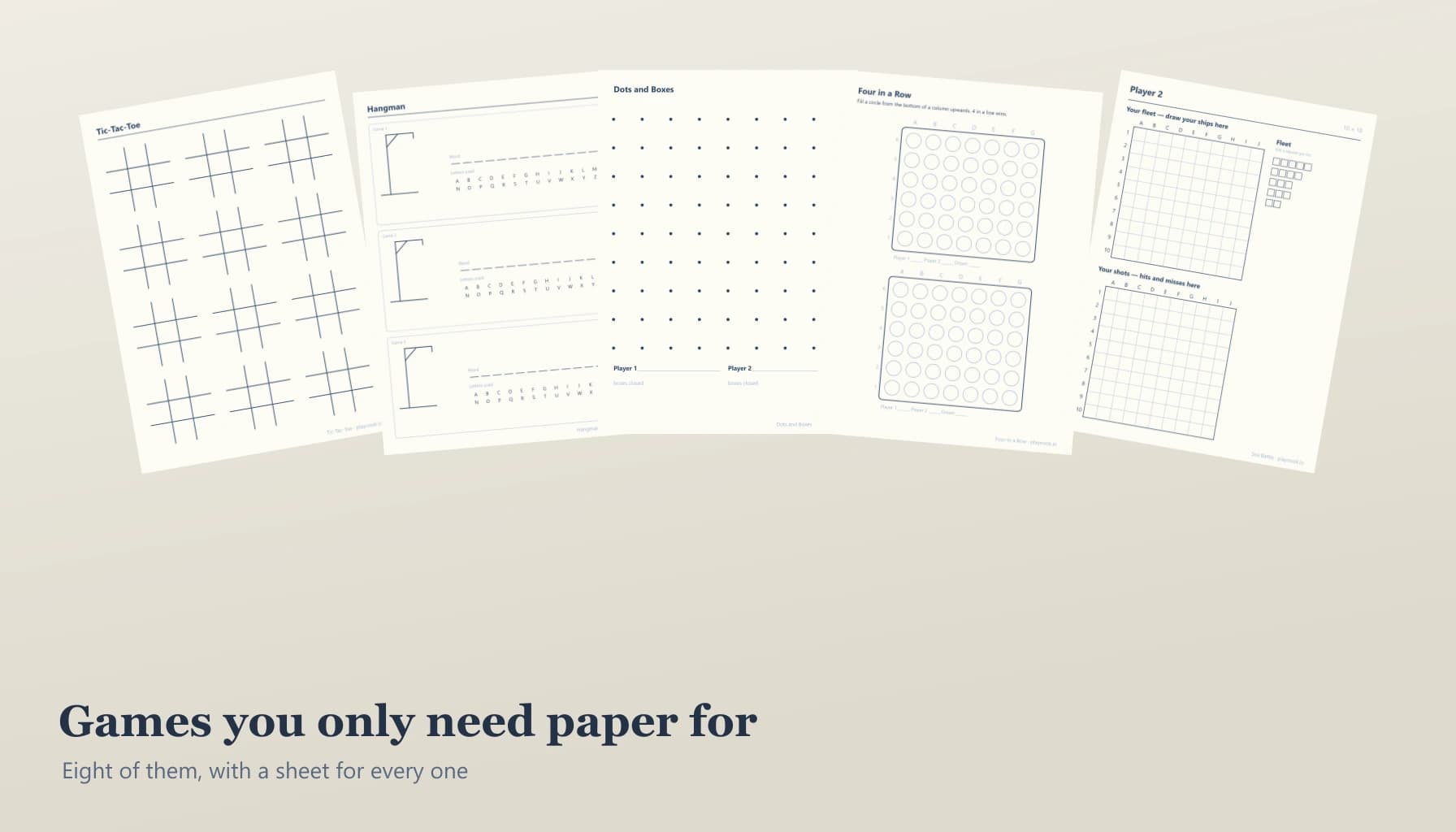
Games You Only Need Paper For: Eight Worth Knowing
Tic-tac-toe, dots and boxes, hangman, SOS, Nim, sprouts and sea battle: the rules, which age each suits, and a printable sheet for every one of them.
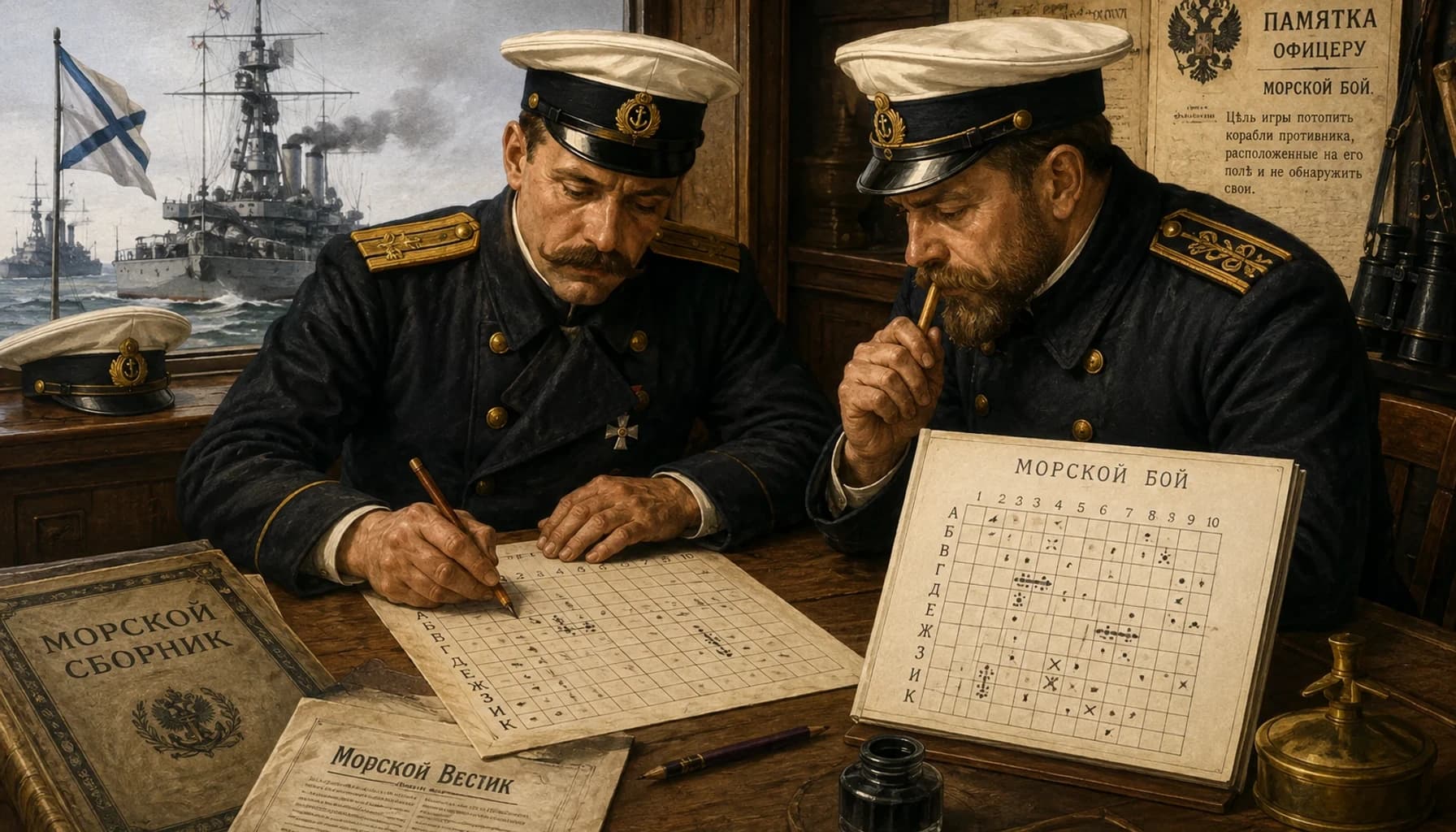
Russian Battleship Rules: Ships That May Not Touch
Морской бой has ten ships, twenty squares, no two touching even at a corner, and another shot for every hit. Why that one rule changes the whole game.
Play the game →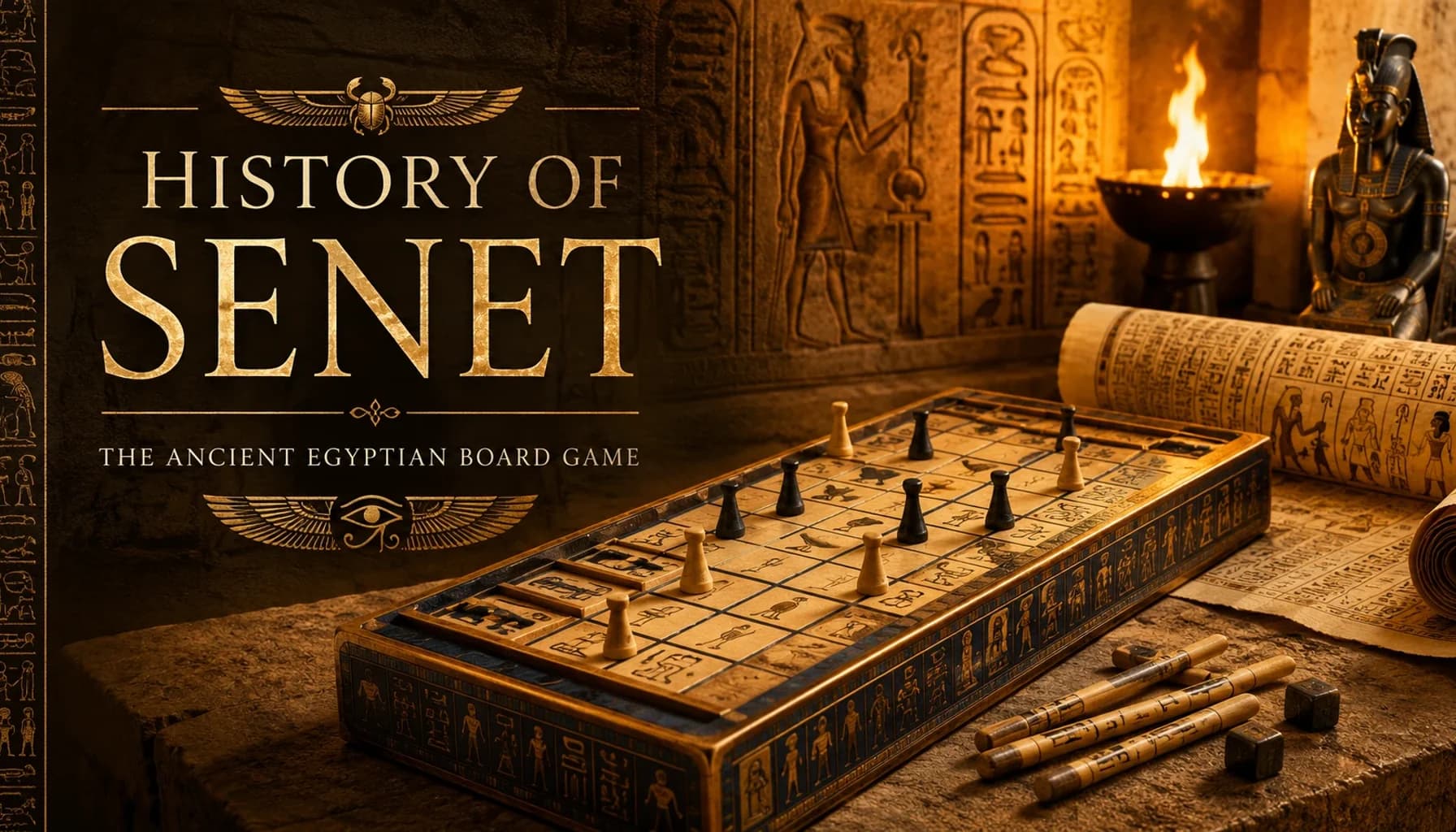
The History of Senet: 3,000 Years, Not One Rule
Played in Egypt from about 3100 BC to the Roman period. Tutankhamun's four sets, Nefertari at the board — and why nobody wrote down how it worked.
Play the game →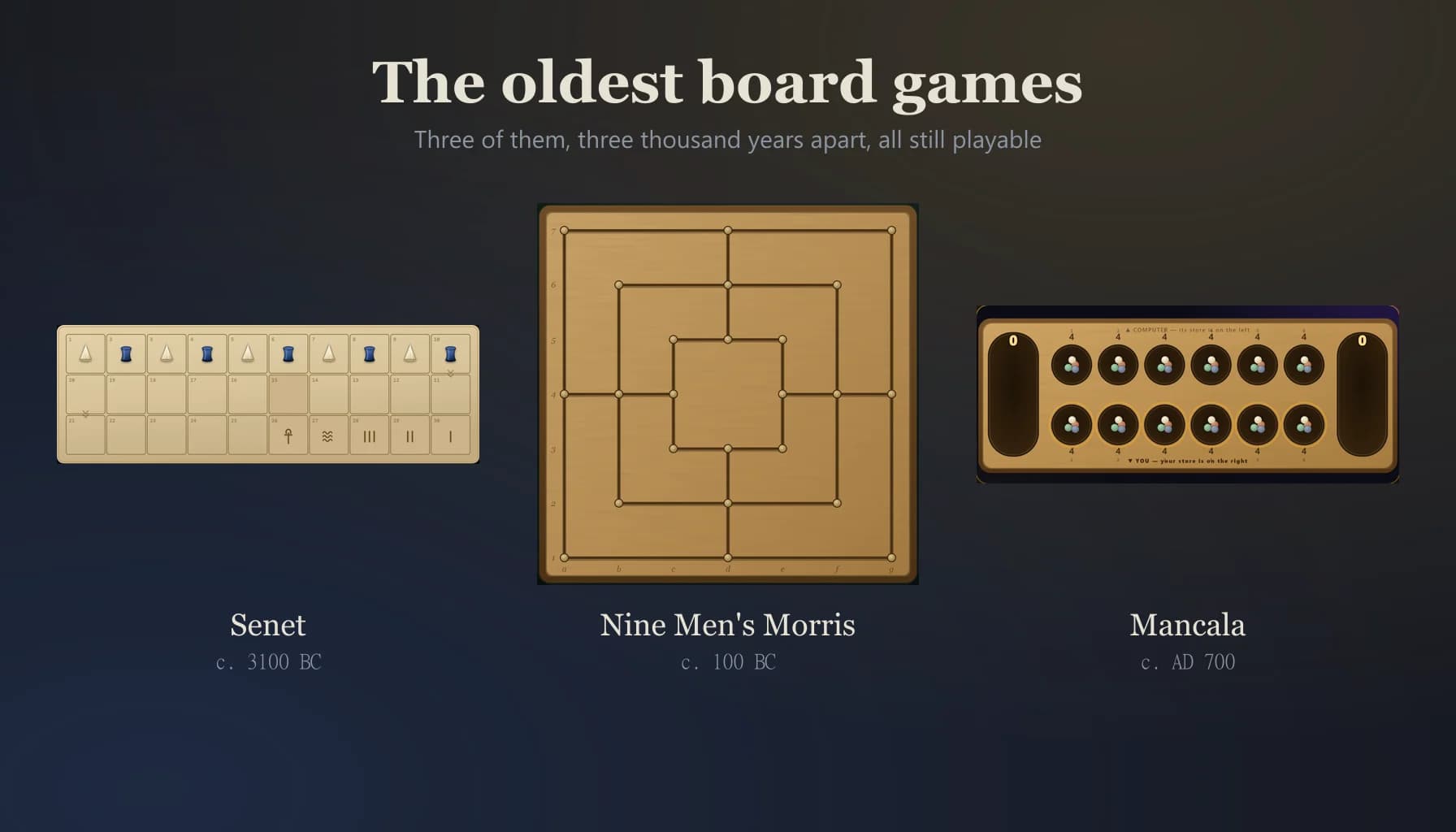
What Is the Oldest Board Game in the World?
Senet is the oldest board ever found, but nobody knows its rules. Ur is the oldest we can play as it was played. Go is the oldest still played today.
Play the game →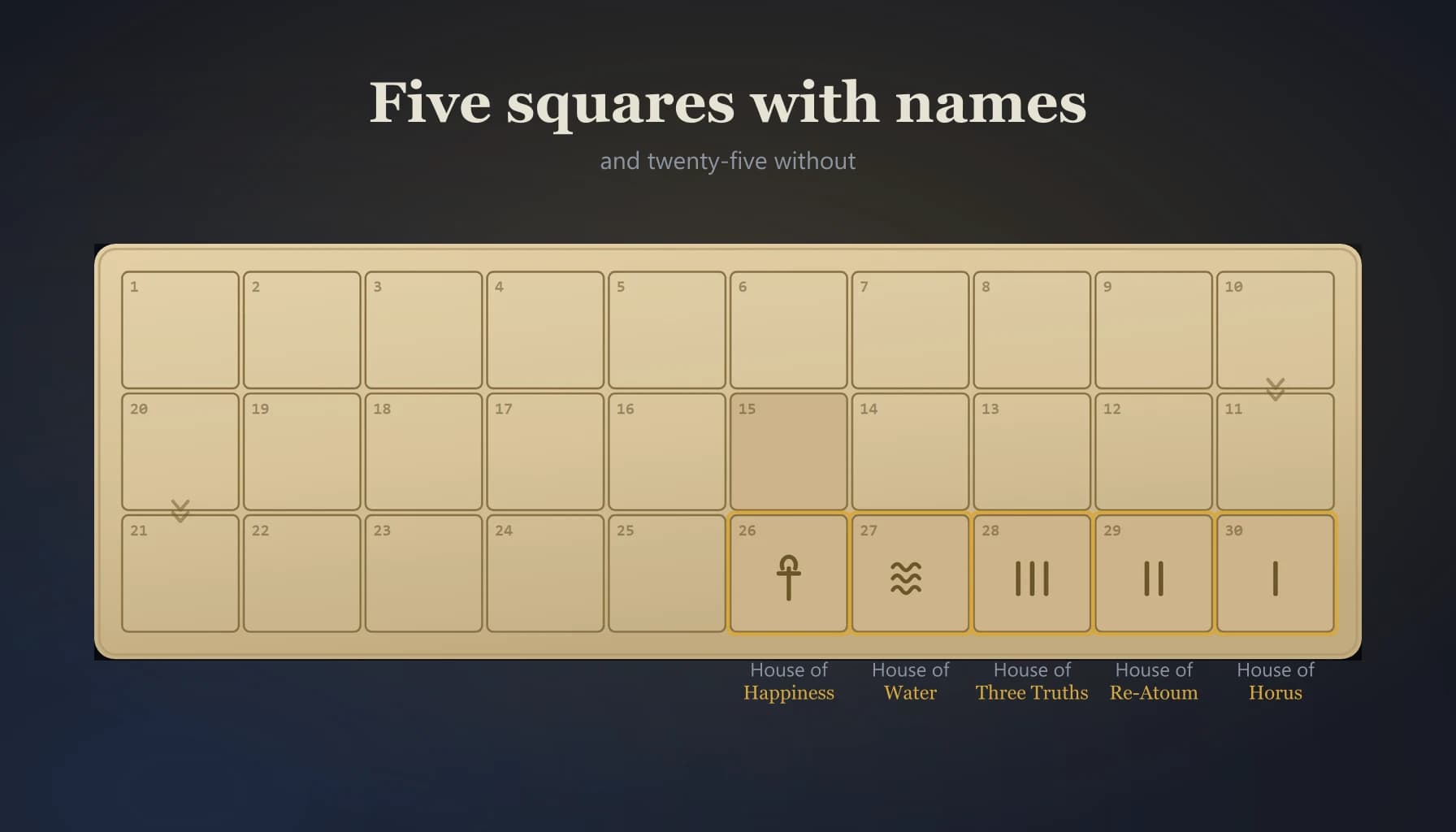
What the Senet Board Means: The Five Named Squares
Twenty-five plain squares and five with names: the House of Happiness, of Water, of Three Truths. What the Egyptians meant, and what each one does.
Play the game →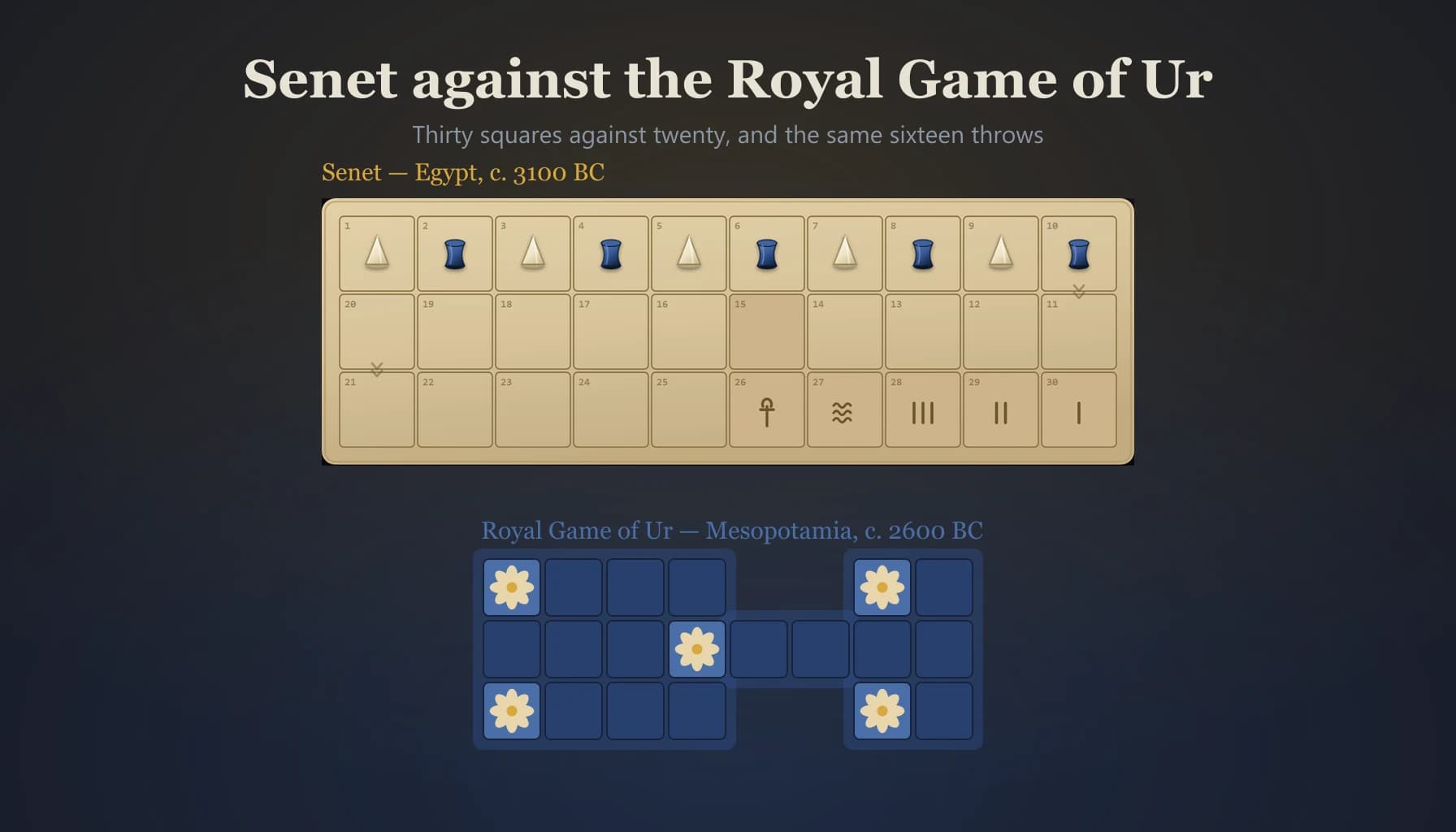
Senet vs the Royal Game of Ur: Opposite Fates
Egypt and Mesopotamia built race games five centuries apart, both thrown with four binary lots and identical odds. One kept its rules; one lost them.
Play the game →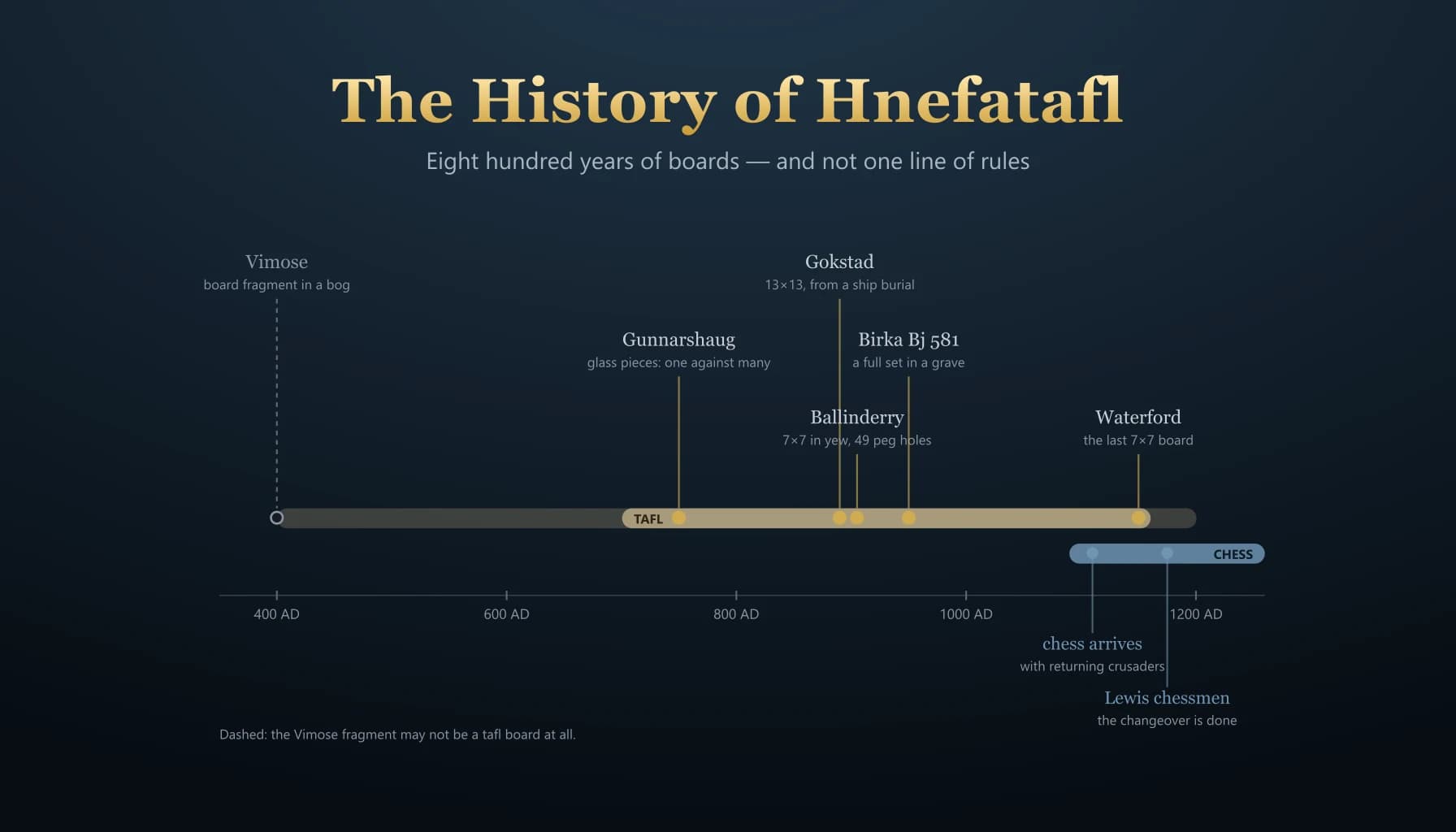
The History of Hnefatafl: What the Vikings Left
Boards from bogs and ship burials, a riddle asked by Odin, a gaming set in a warrior's grave — and why the rules of the Viking game are missing.
Play the game →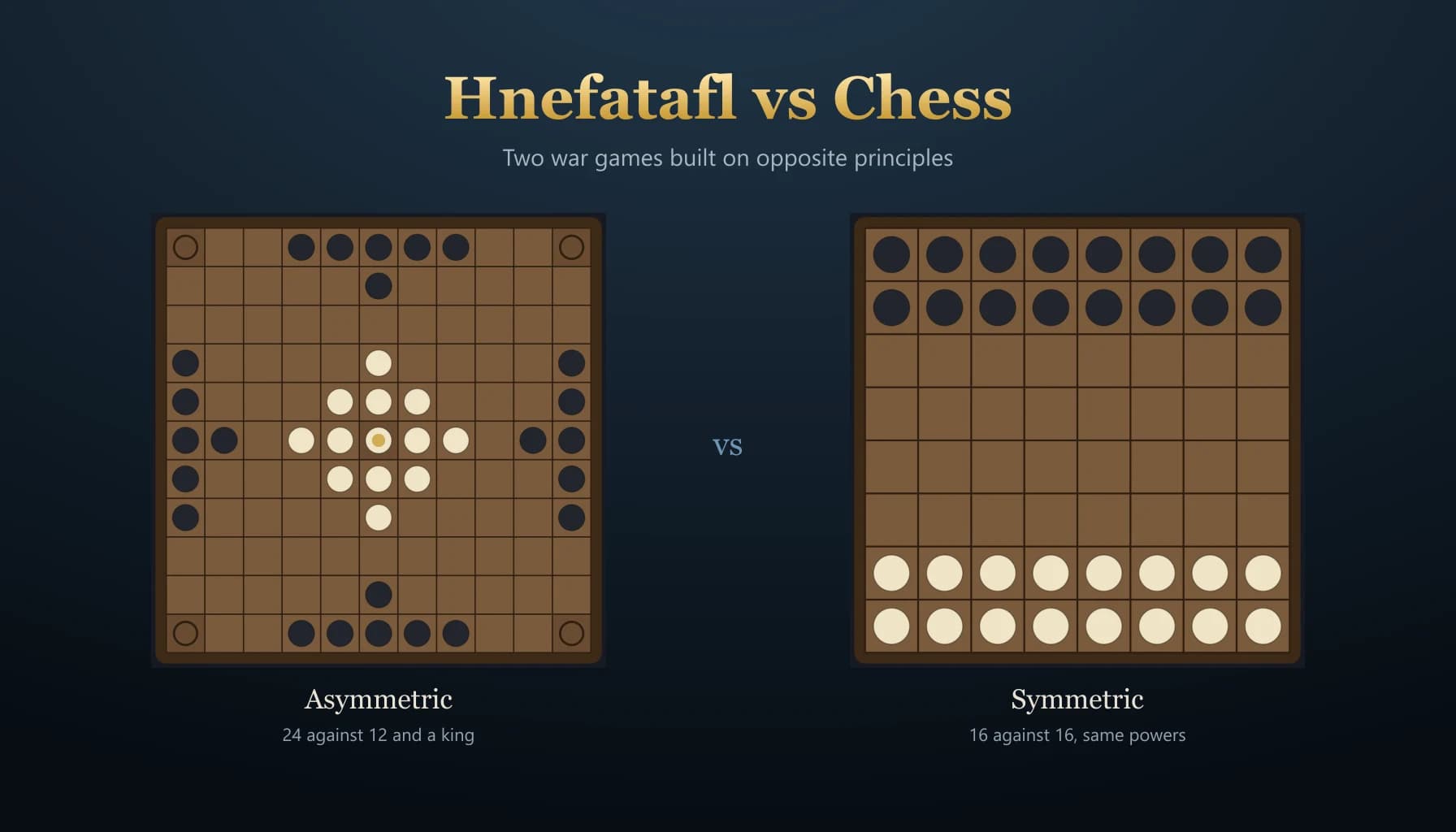
Hnefatafl vs Chess: the Game Chess Replaced
Two war games on opposite principles. Why standing next to an enemy is safe in one and fatal in the other, and how chess pushed the other out by 1200.
Play the game →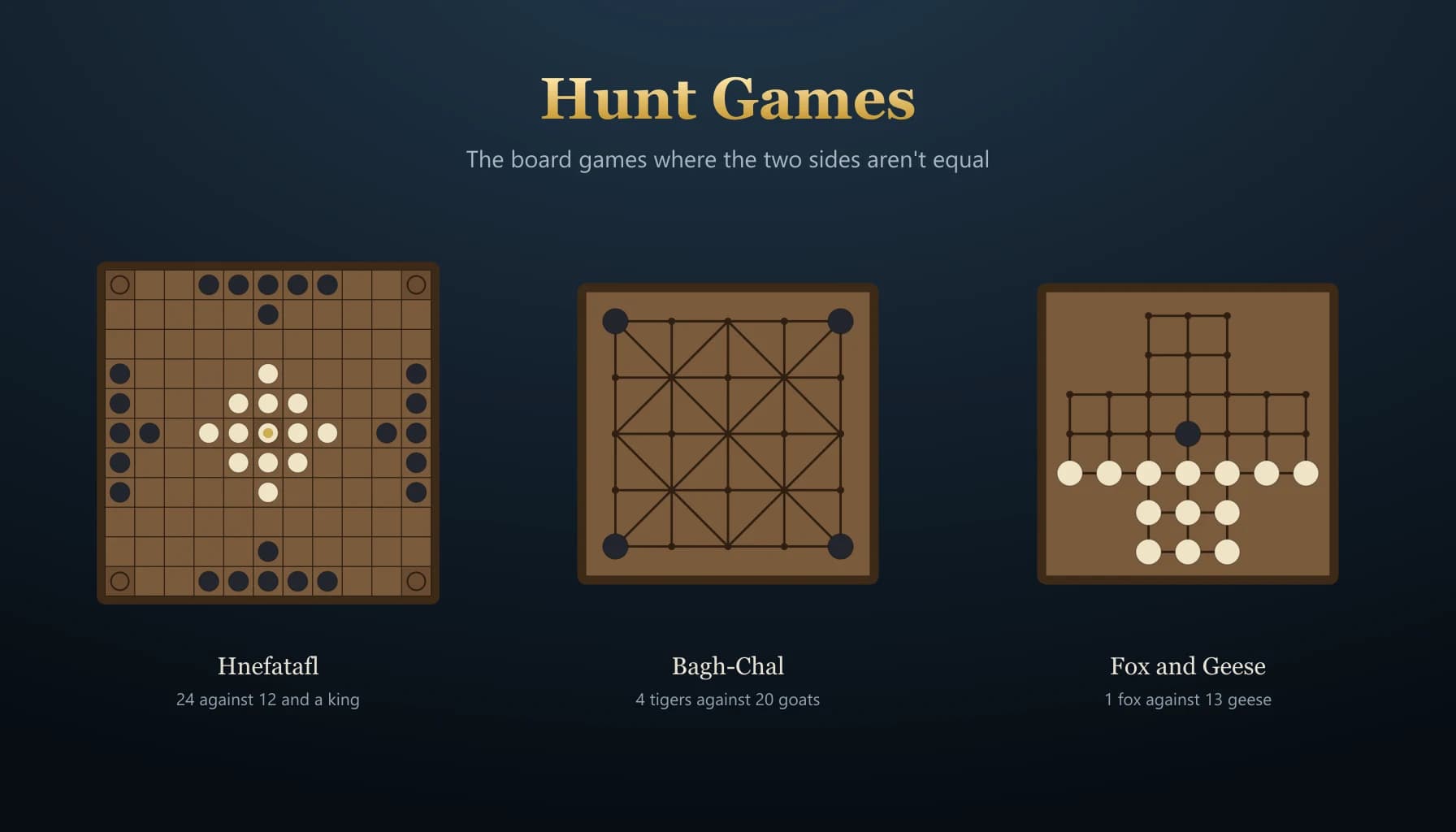
Hunt Games: Where the Two Sides Are Not Equal
Tigers against goats in Nepal, a fox against geese in England, a king under siege in Scandinavia: one idea invented repeatedly, and its balance problem.
Play the game →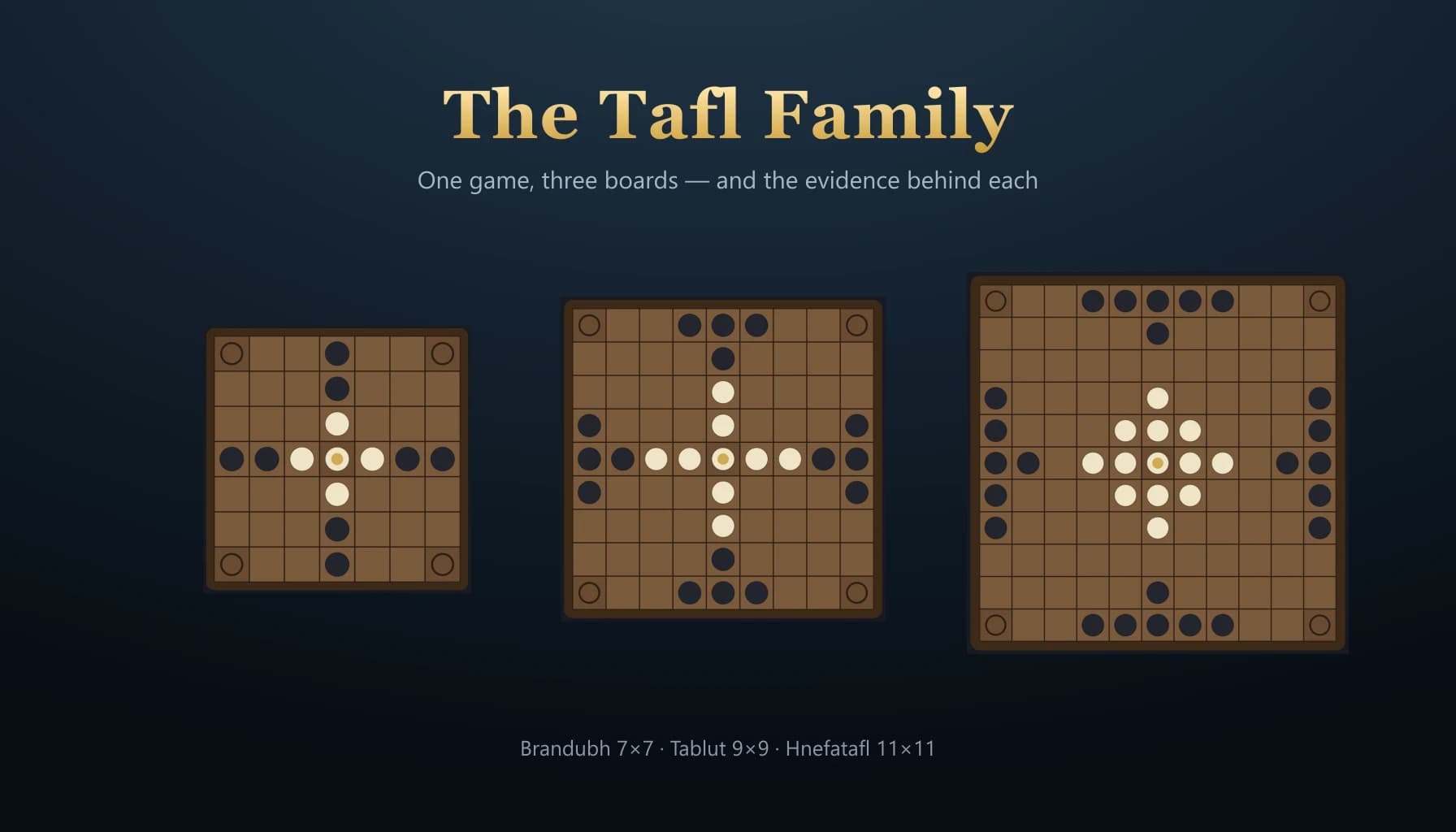
The Tafl Family: Hnefatafl, Tablut and Brandubh
Six versions of the Viking hunt game, sorted by the evidence. What Linnaeus saw in 1732, and why Ard Rí is in every shop and in no historical source.
Play the game →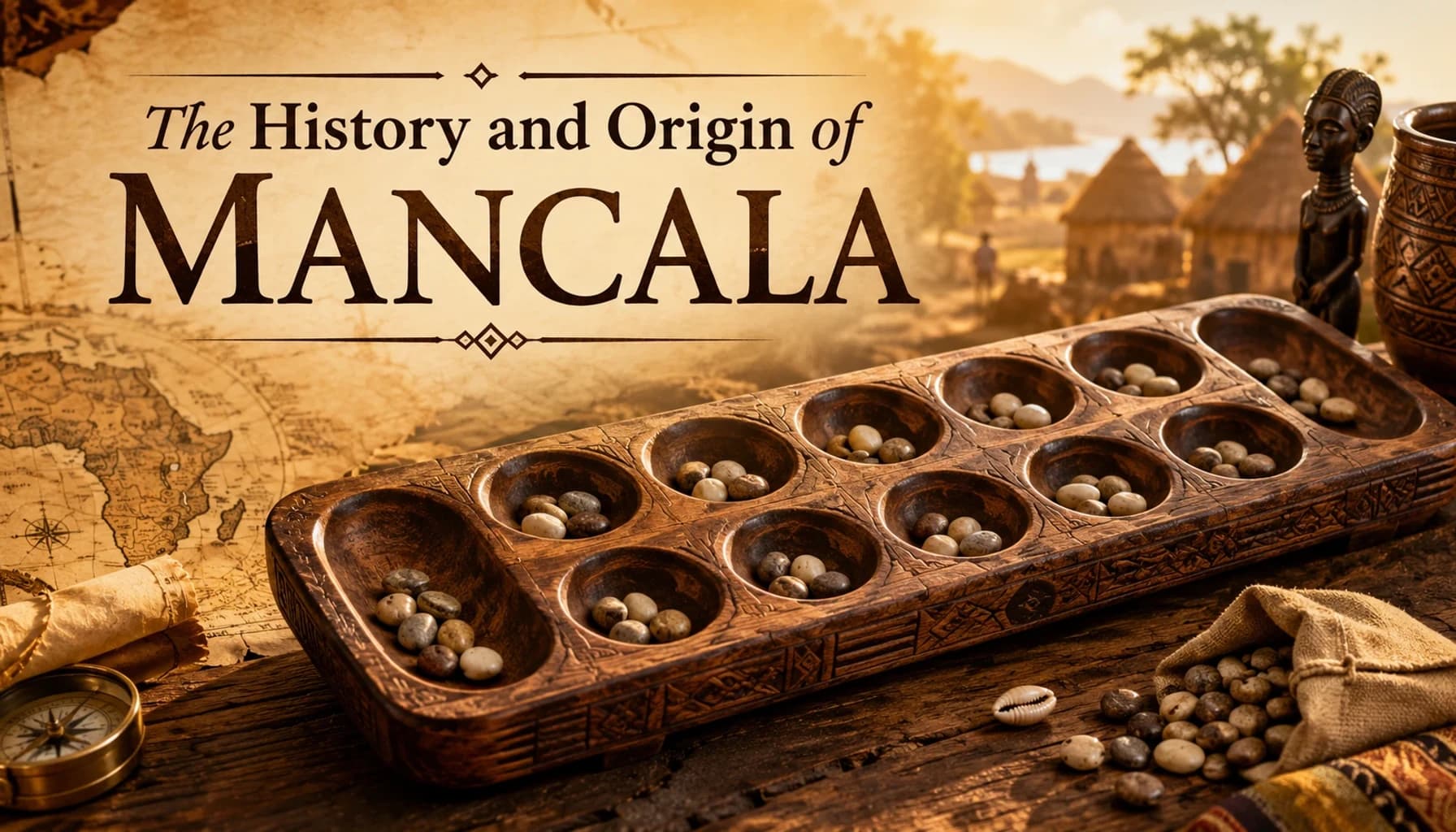
The History and Origin of Mancala
Where mancala really comes from: what the carved stone rows in Egypt and Ethiopia prove, and why the five-thousand-year claim cannot be checked.
Play the game →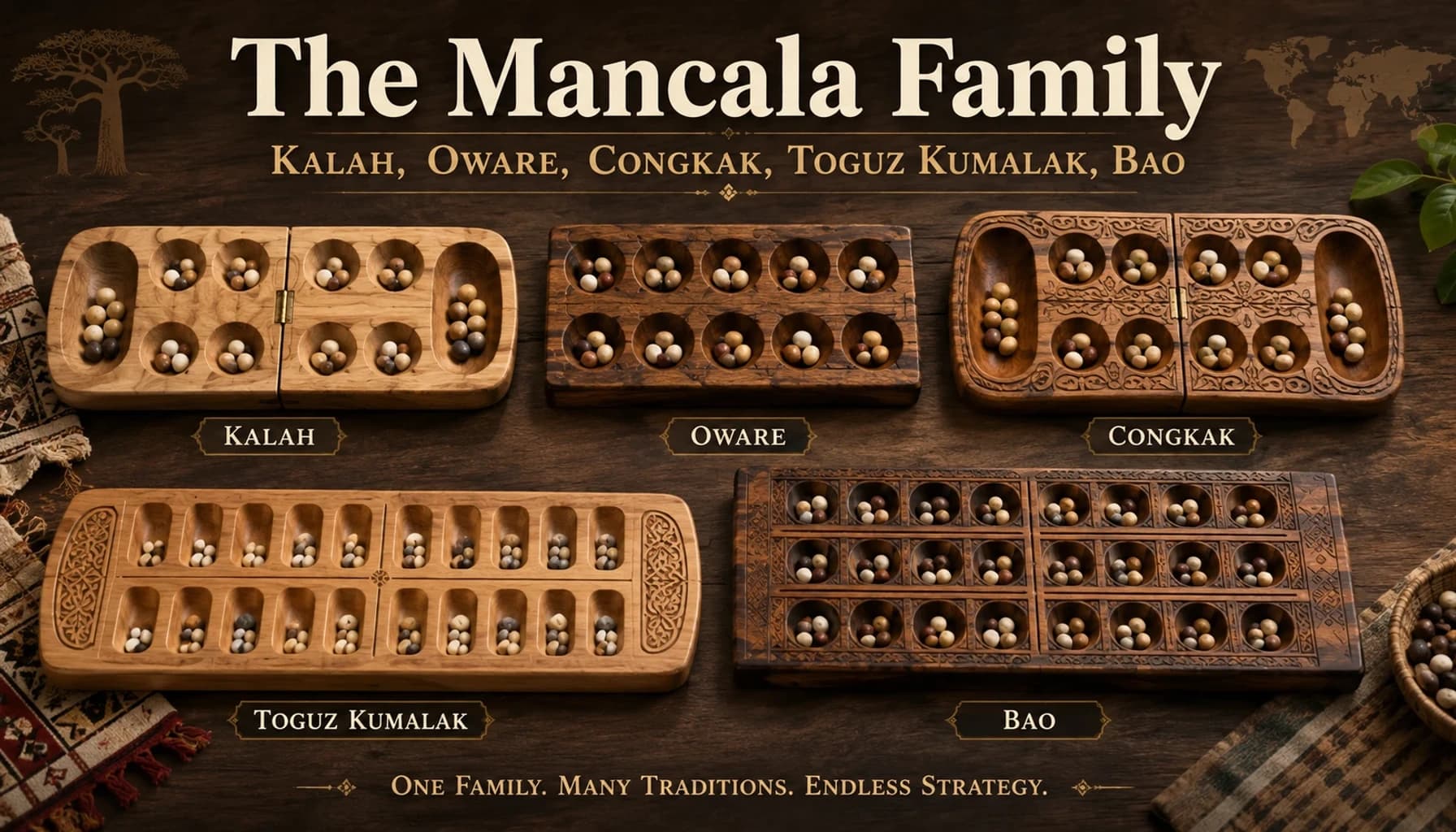
The Mancala Family: Kalah, Oware, Congkak and Bao
Mancala is not a game, it is a family of hundreds. What actually changes between Kalah, Oware, Congkak and Bao — and which is worth your evening.
Play the game →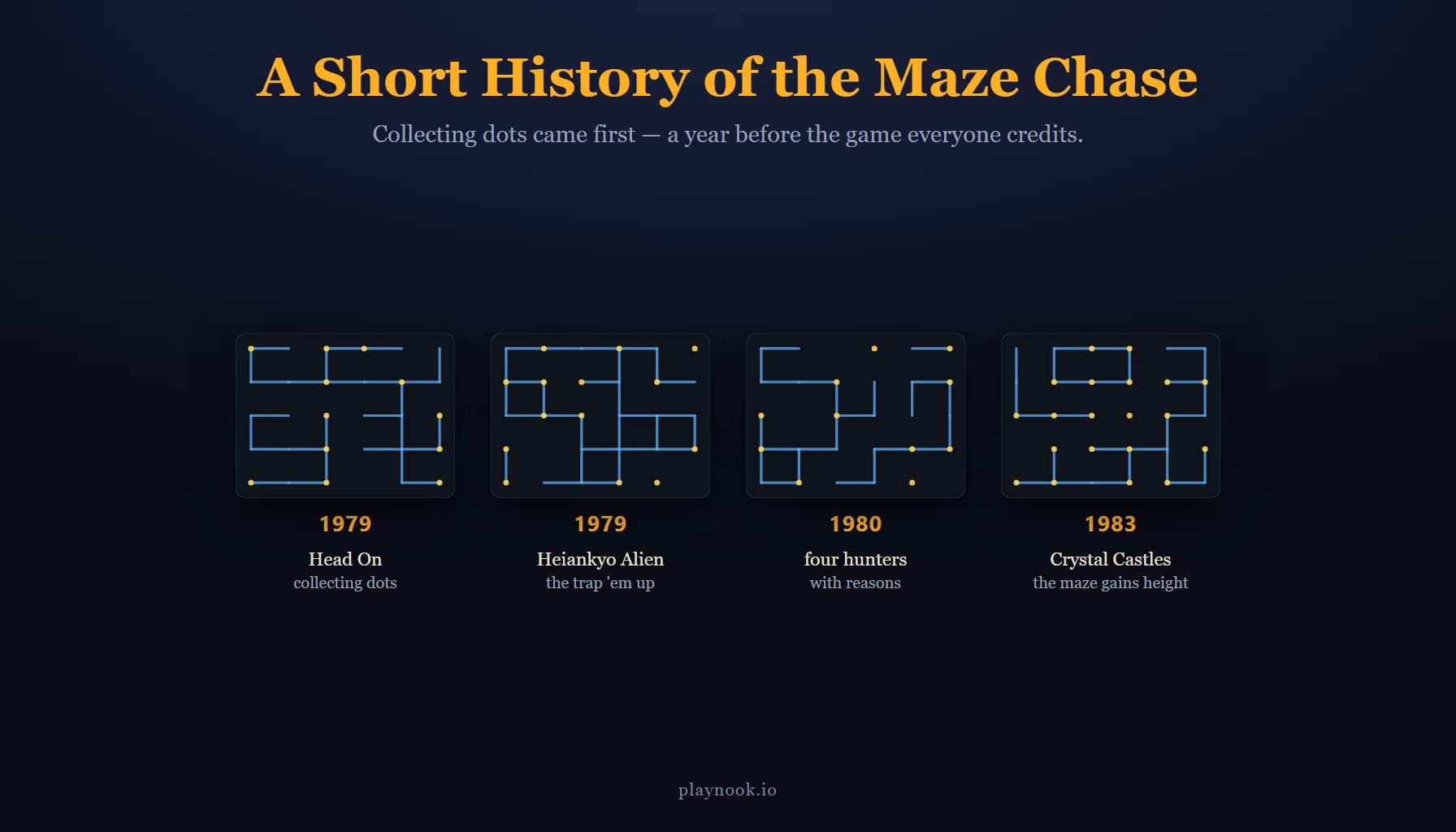
A Short History of the Maze Chase Genre
It did not begin in 1980. Head On invented dot collecting in 1979, and Pac-Man's real contribution was not the maze. What the record actually shows.
Play the game →
How Ghost AI Works in Maze Chase Games
The four hunters are not chasing you. Each solves a tiny arithmetic problem, and the answers only look like teamwork — including the blind spots.
Play the game →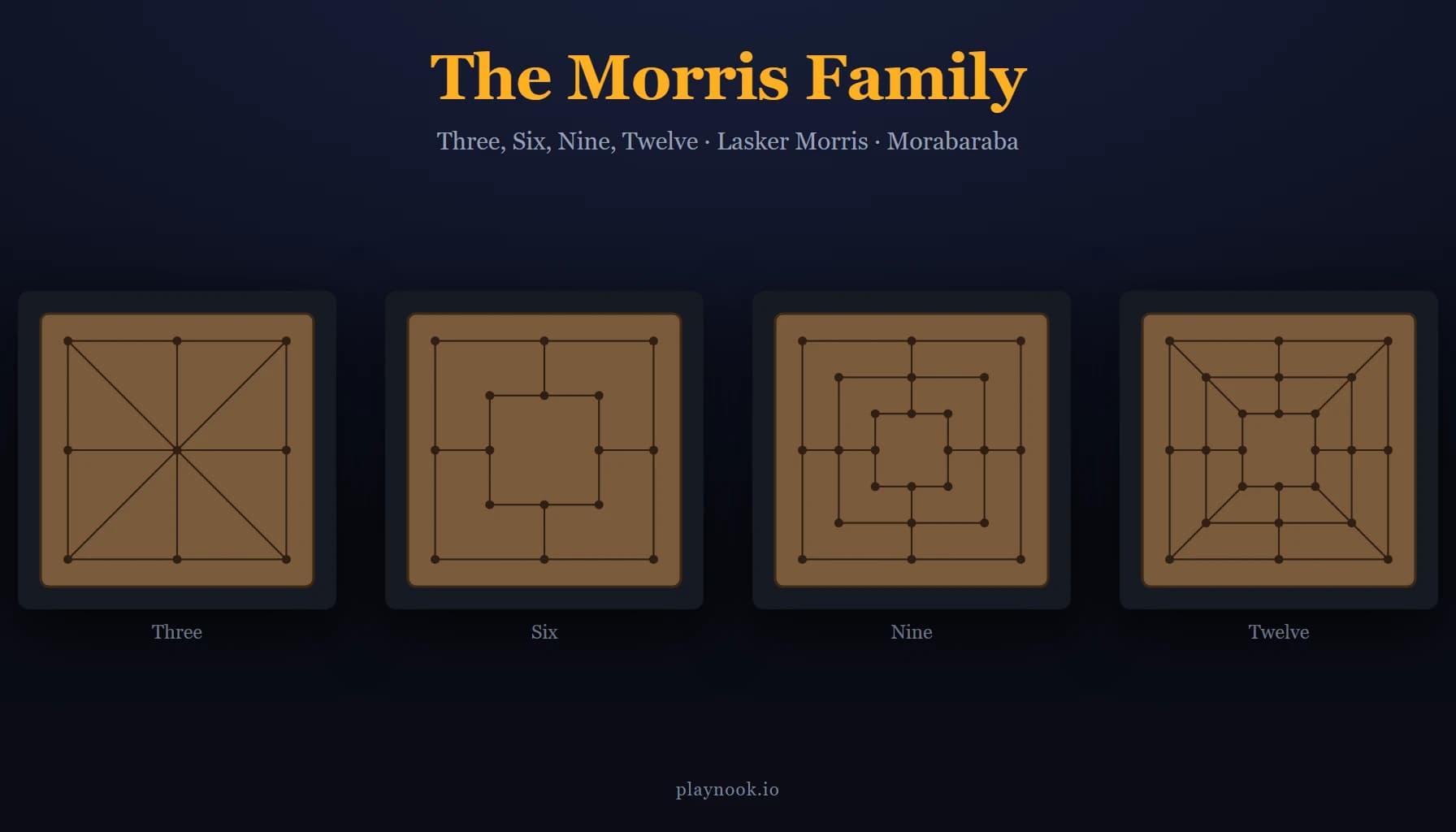
The Morris Family: Three, Six, Twelve and Morabaraba
What changes with three, six and twelve pieces, why Lasker's ten-piece version produces fewer draws, and how Morabaraba became a sport in South Africa.
Play the game →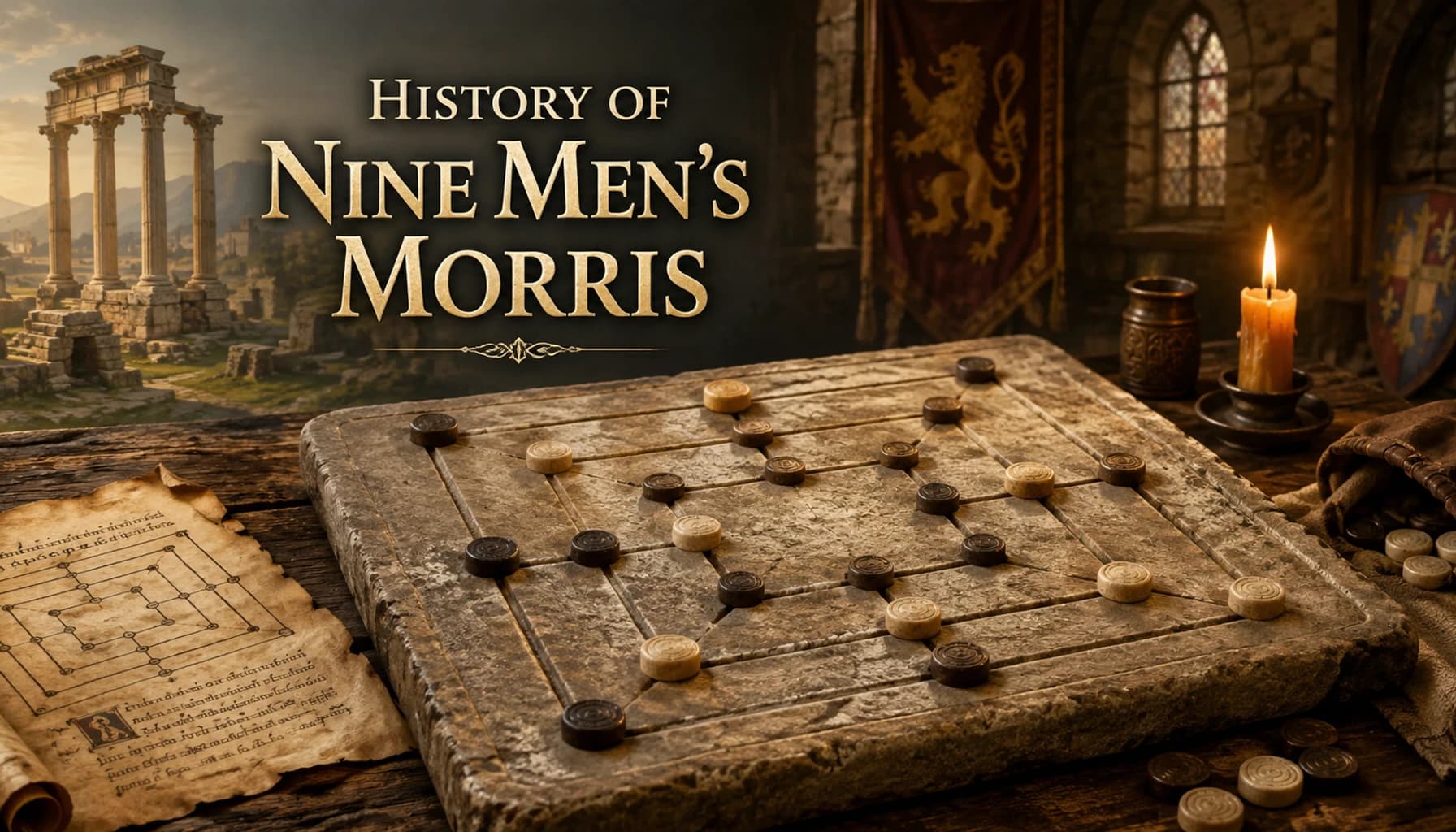
The History of Nine Men's Morris
Two thousand years with the evidence attached: Roman roof tiles, a Viking ship burial, cloister benches — and why the Egyptian date is almost certainly wrong.
Play the game →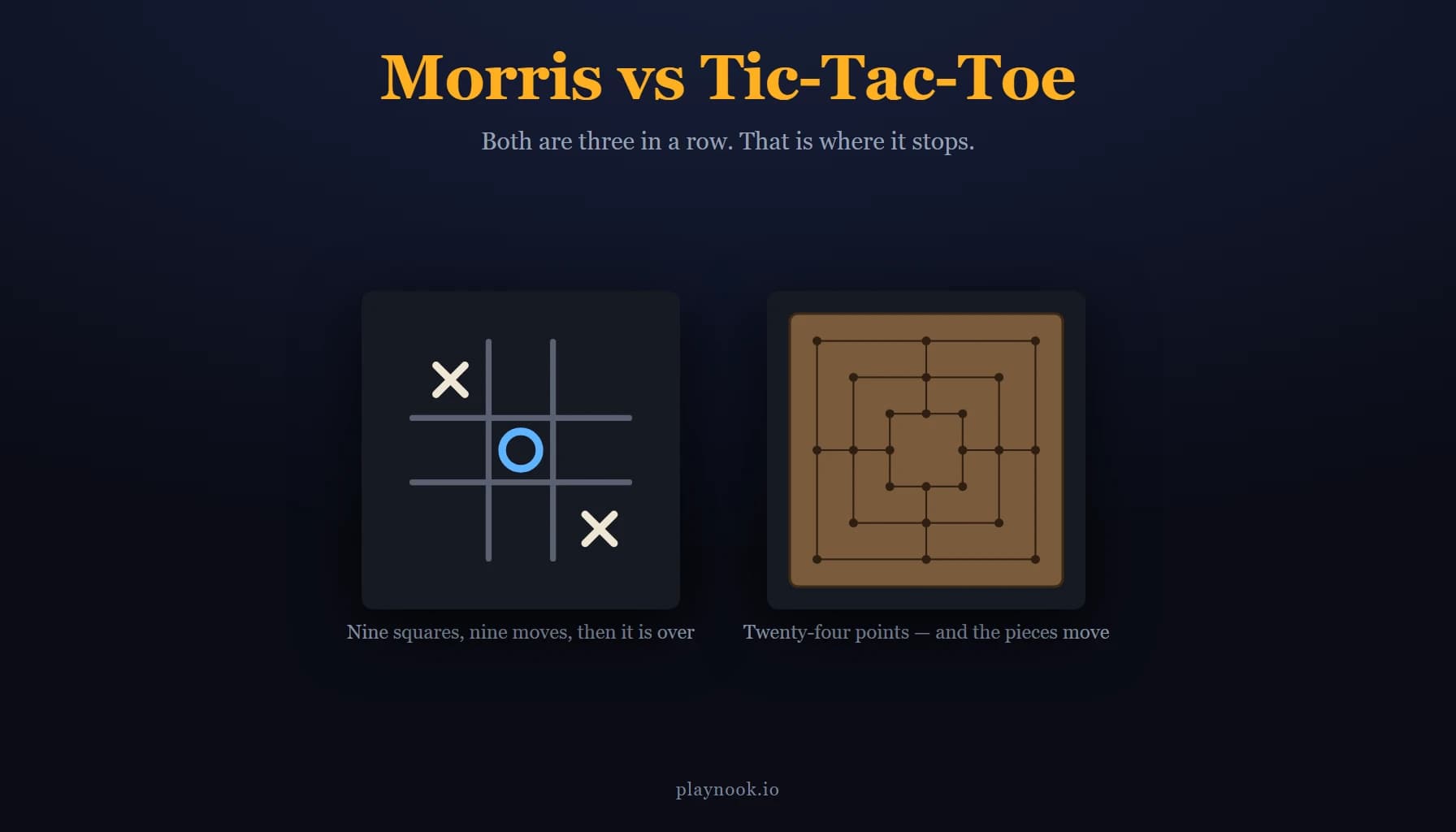
Nine Men's Morris vs Tic-Tac-Toe
Both are three in a row, and there it stops. What the placing phase hides, and the small variant that is the missing link between the two games.
Play the game →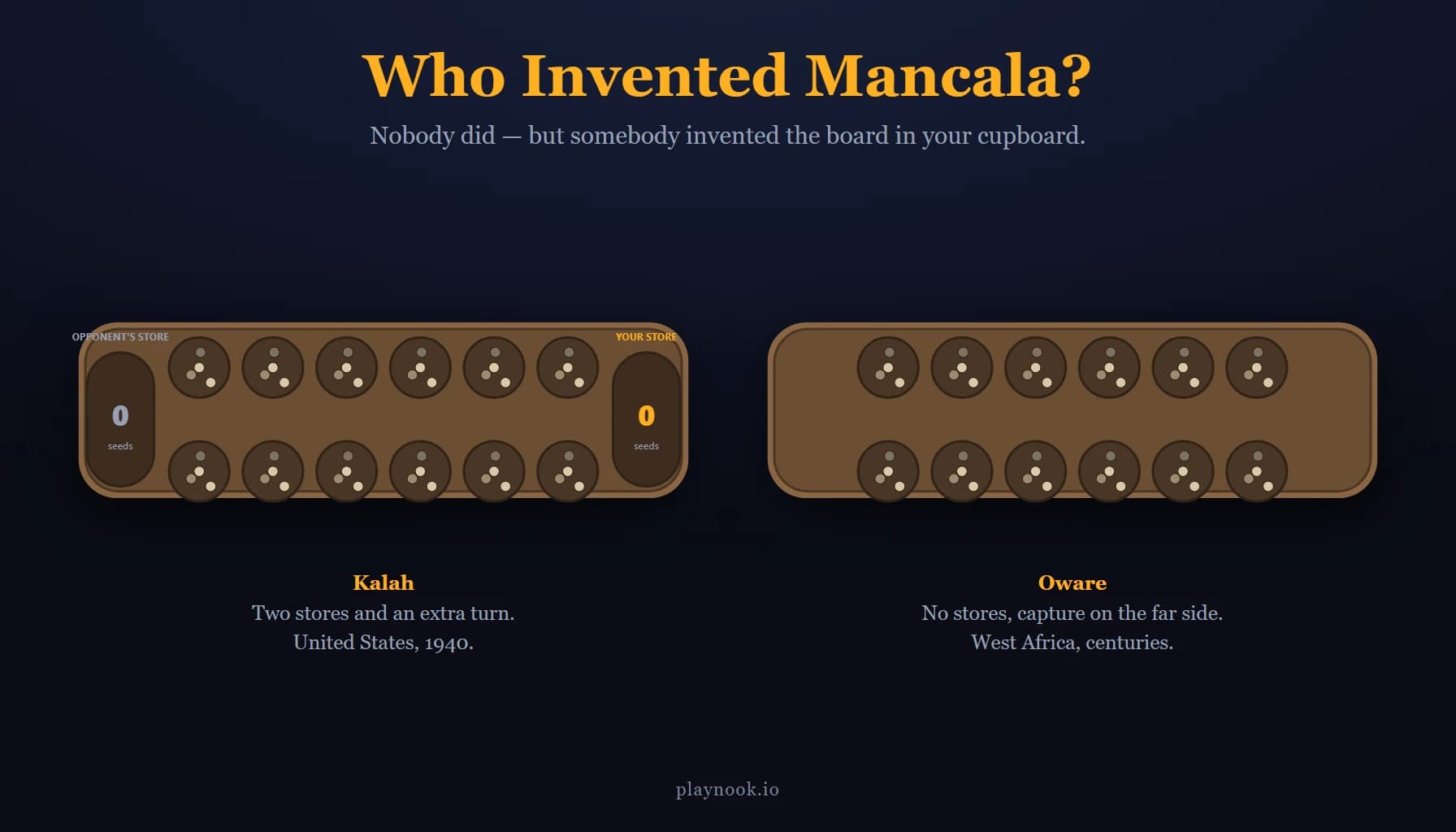
Who Invented Mancala? Nobody Invented Your Board
The two-row board with stores that most people call mancala is Kalah, devised in 1940 by an American and sold as an ancient African game.
Play the game →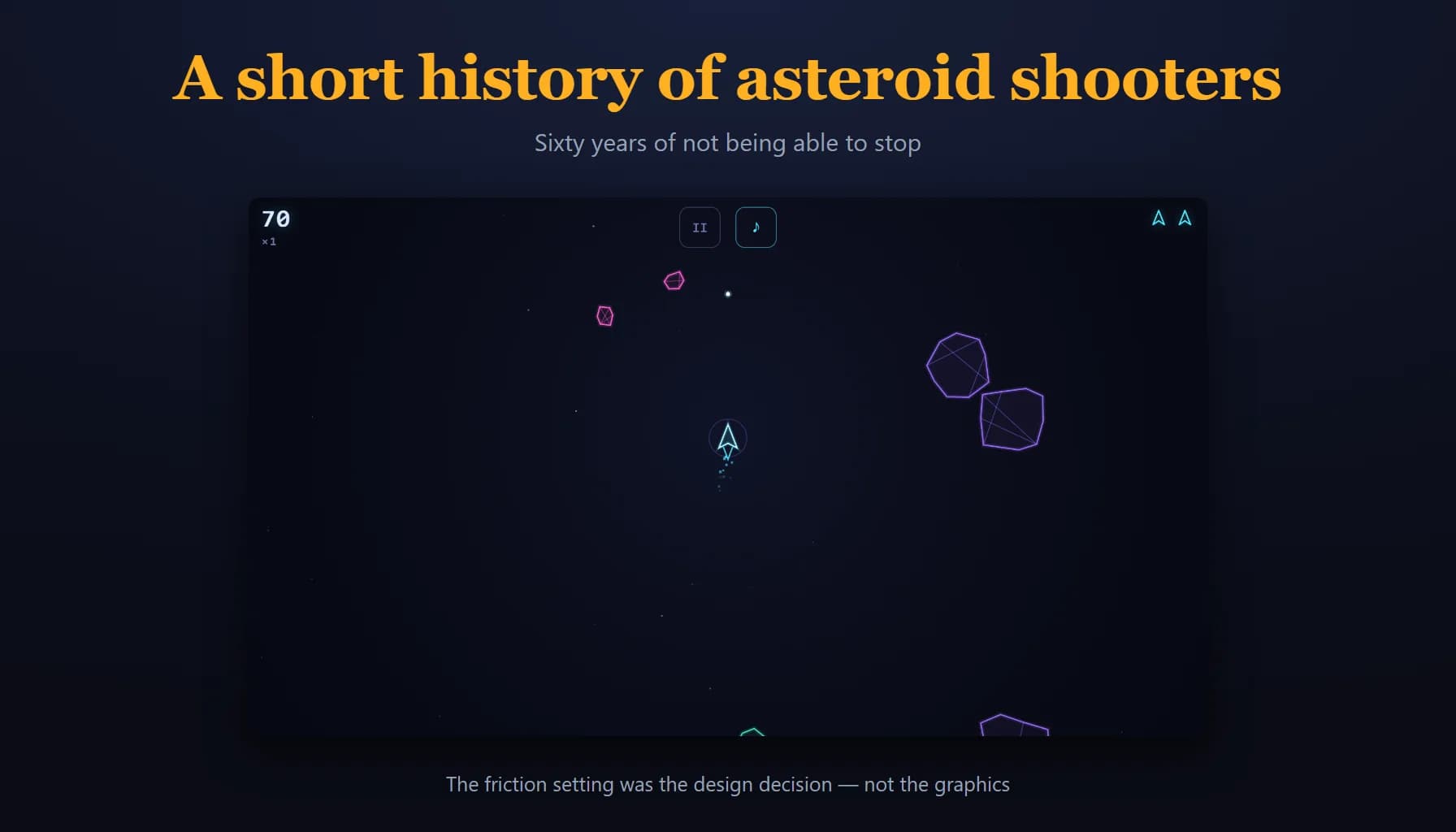
A Short History of Asteroid Shooters
Two students, a mainframe, and a rule that outlived every screen it ran on — plus why the friction setting mattered more than the graphics ever did.
Play the game →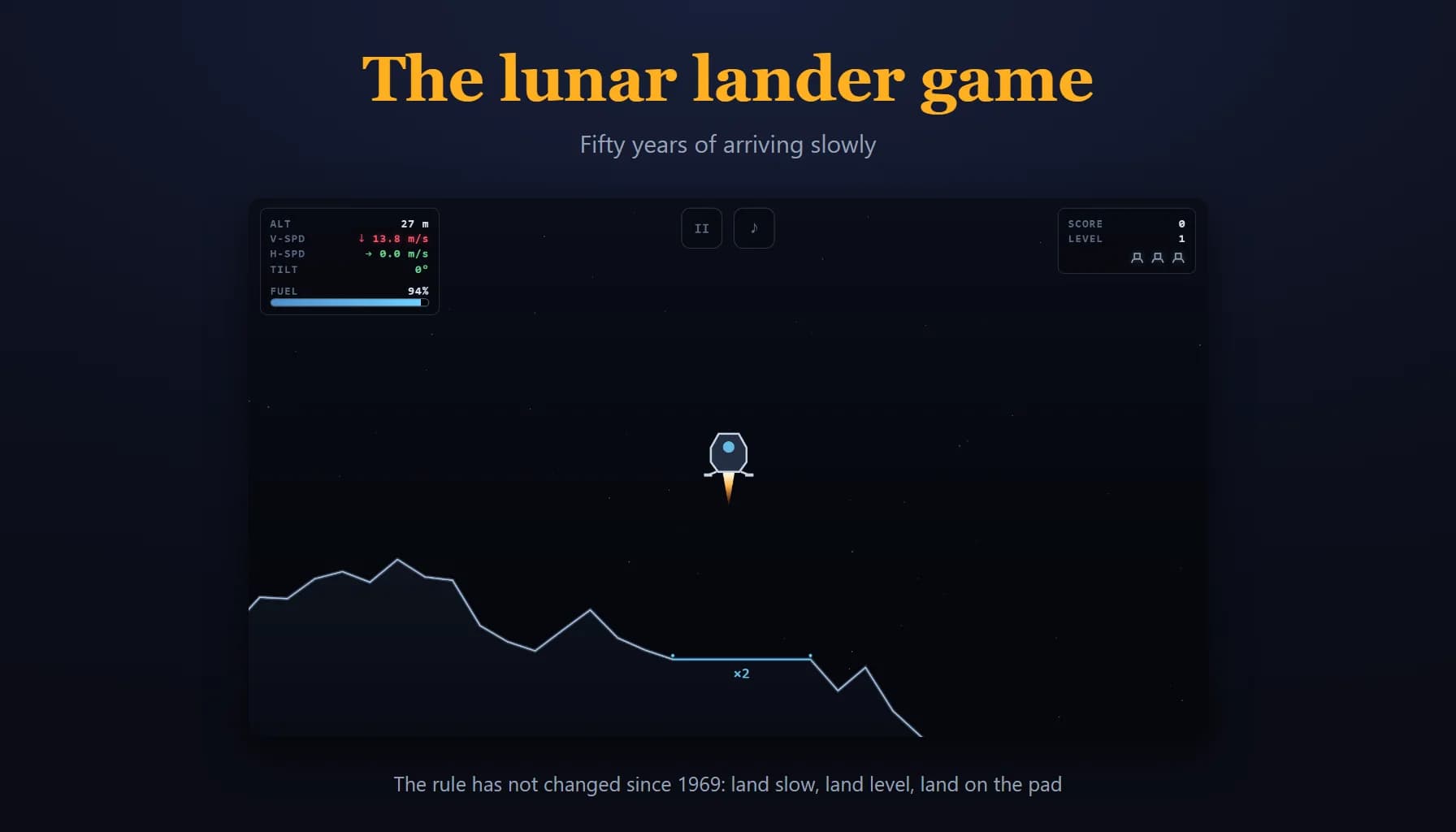
A Short History of the Lunar Lander Game
A high-school student wrote it in 1969, months after Apollo 11. It became an arcade cabinet, then a genre — and the rule never changed once.
Play the game →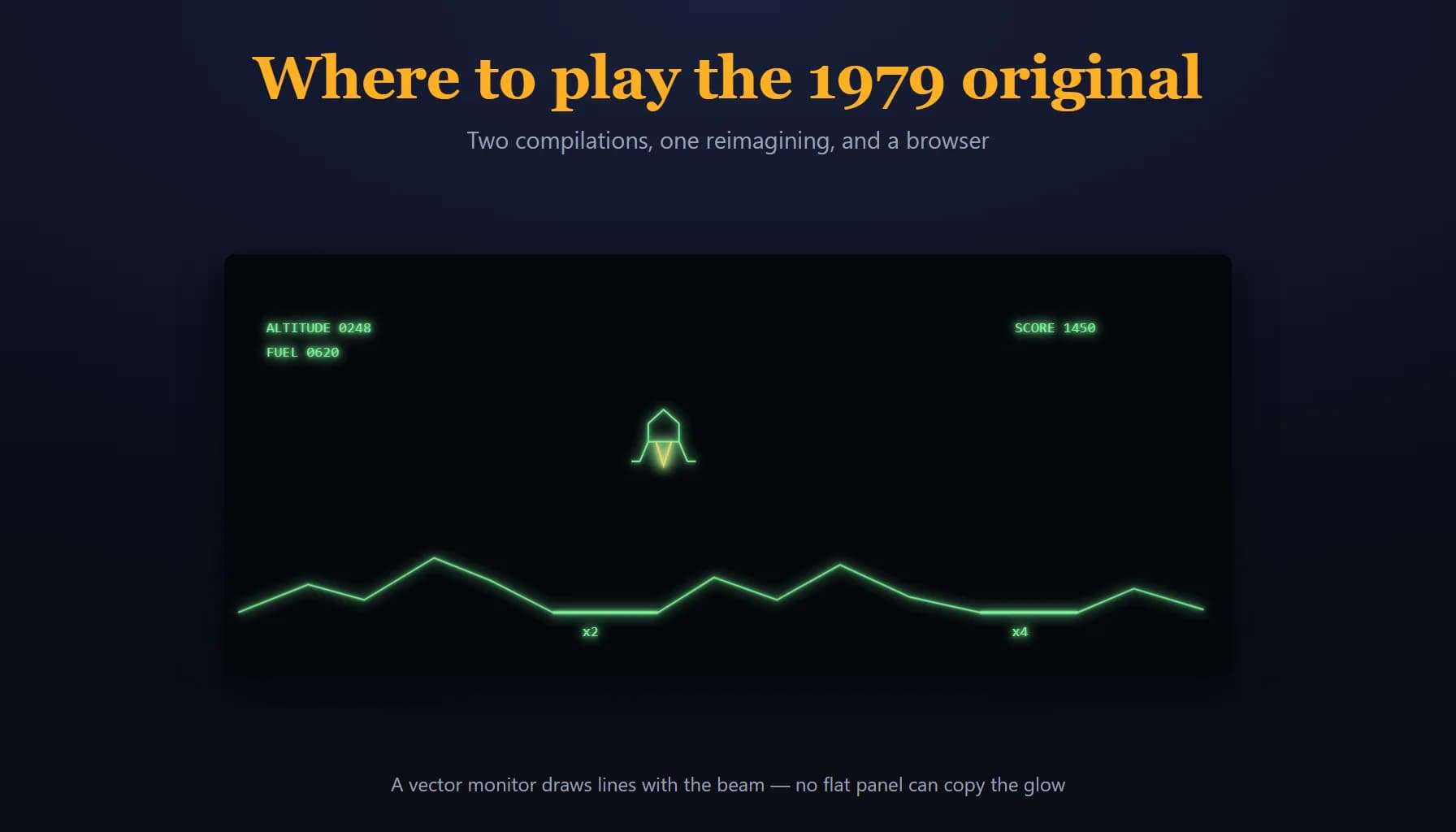
Where to Play Atari's Lunar Lander Today
The 1979 arcade original is still officially available in two compilations, and reimagined in 2024. What each gives you, and what no emulator can.
Play the game →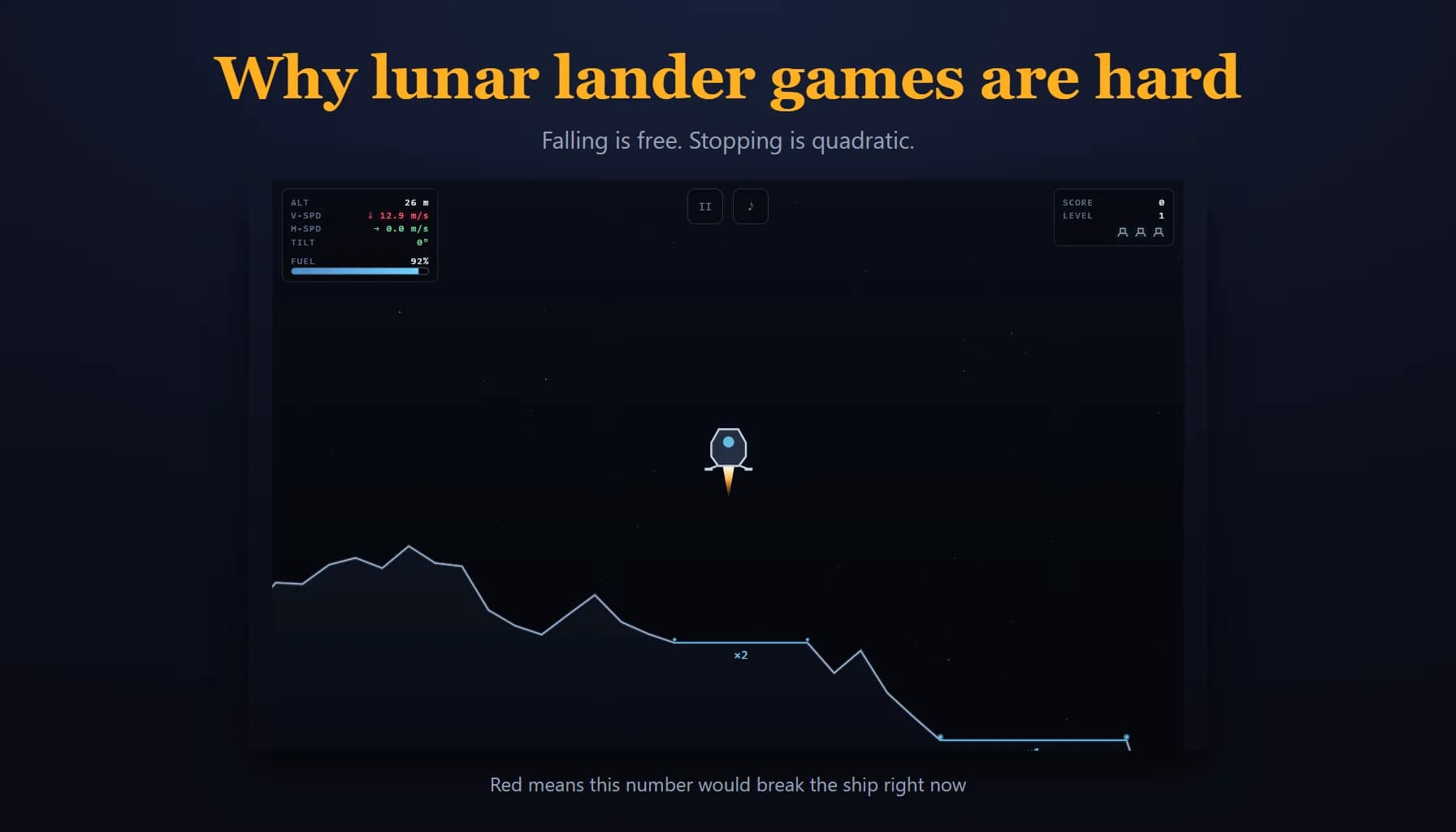
Why Lunar Lander Games Are So Hard
You are not bad at it — the physics is genuinely hostile. Five reasons landing a spacecraft is harder than it looks, with the numbers that explain each one.
Play the game →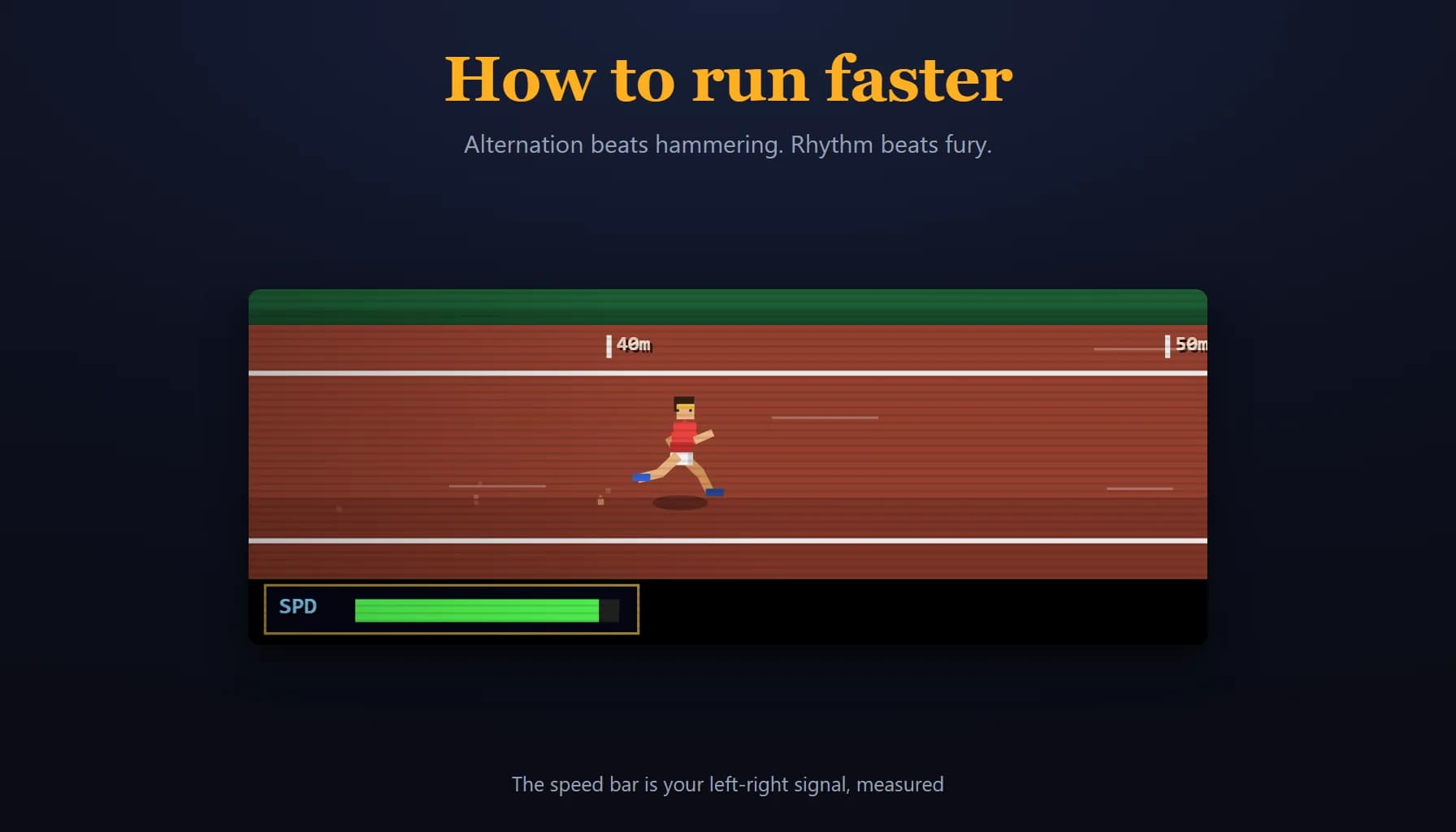
How to Run Faster in Button-Mashing Games
Alternating beats hammering and rhythm beats fury. The techniques that actually add speed in Track & Field-style games, and the old tricks that do not.
Play the game →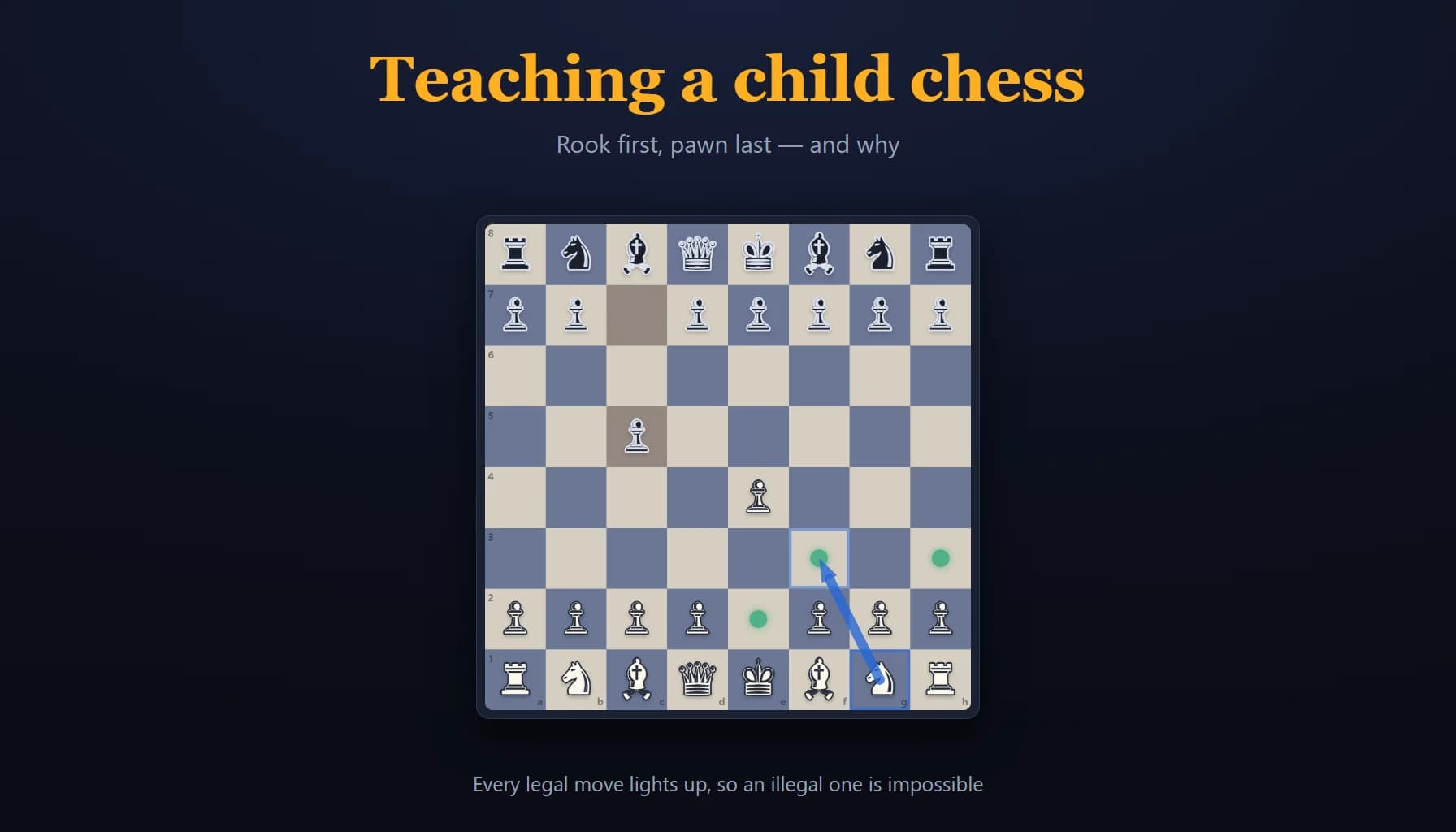
How to Teach a Child Chess When You Barely Play
The order that works — rook first, pawn last — when a child is ready, and why the first game should not be a whole game. A guide that assumes nothing.
Play the game →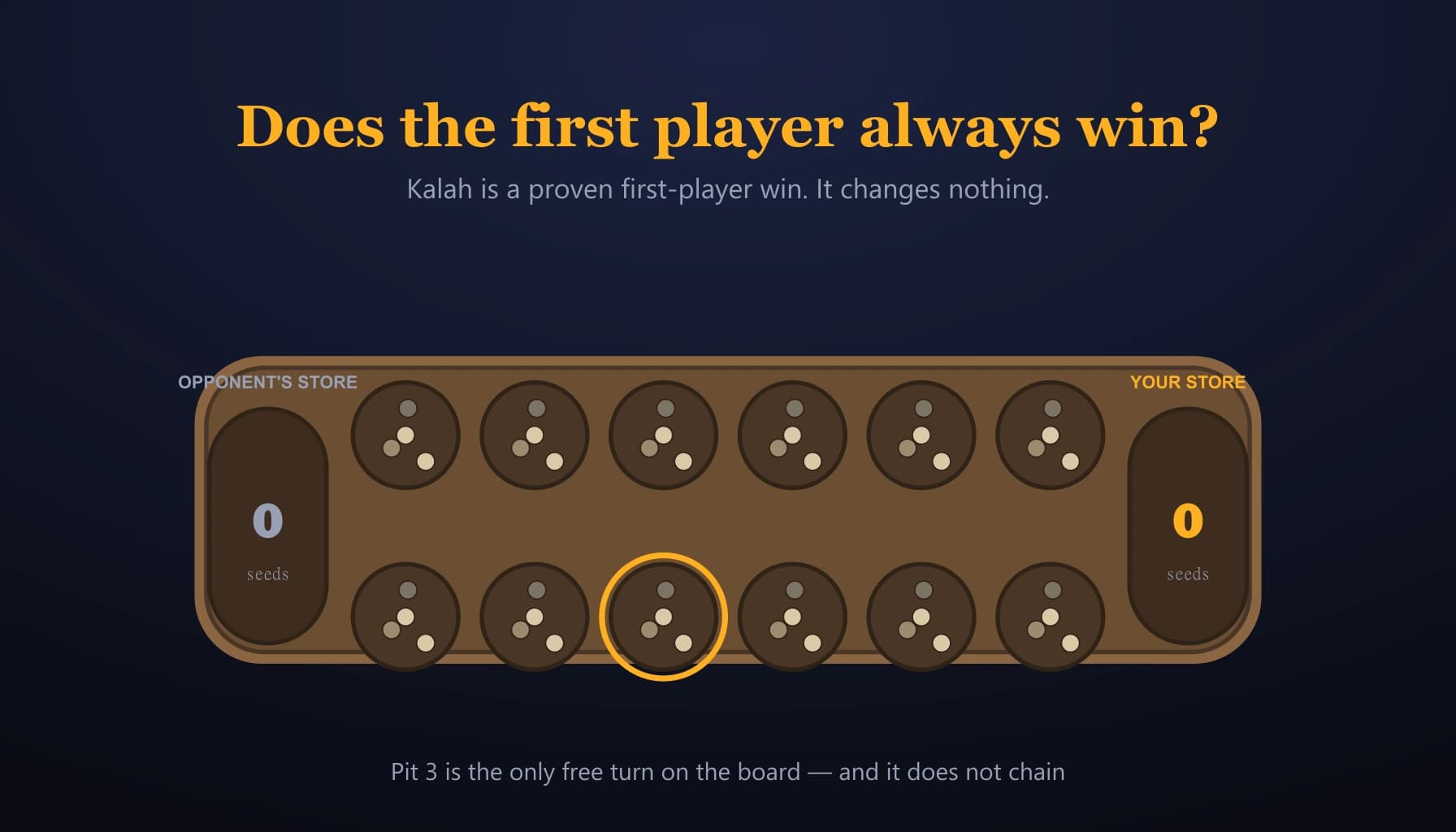
Does the First Player Always Win at Mancala?
Kalah is a proven first-player win, and it makes almost no difference in practice. What the advantage is really worth, and the one rule that removes it.
Play the game →
Oware Rules and Strategy: Awale, Ayo and Warri
Every Oware rule with board diagrams, why you capture on your opponent's side, the two rules that stop you starving them, and the dozen names it carries.
Play the game →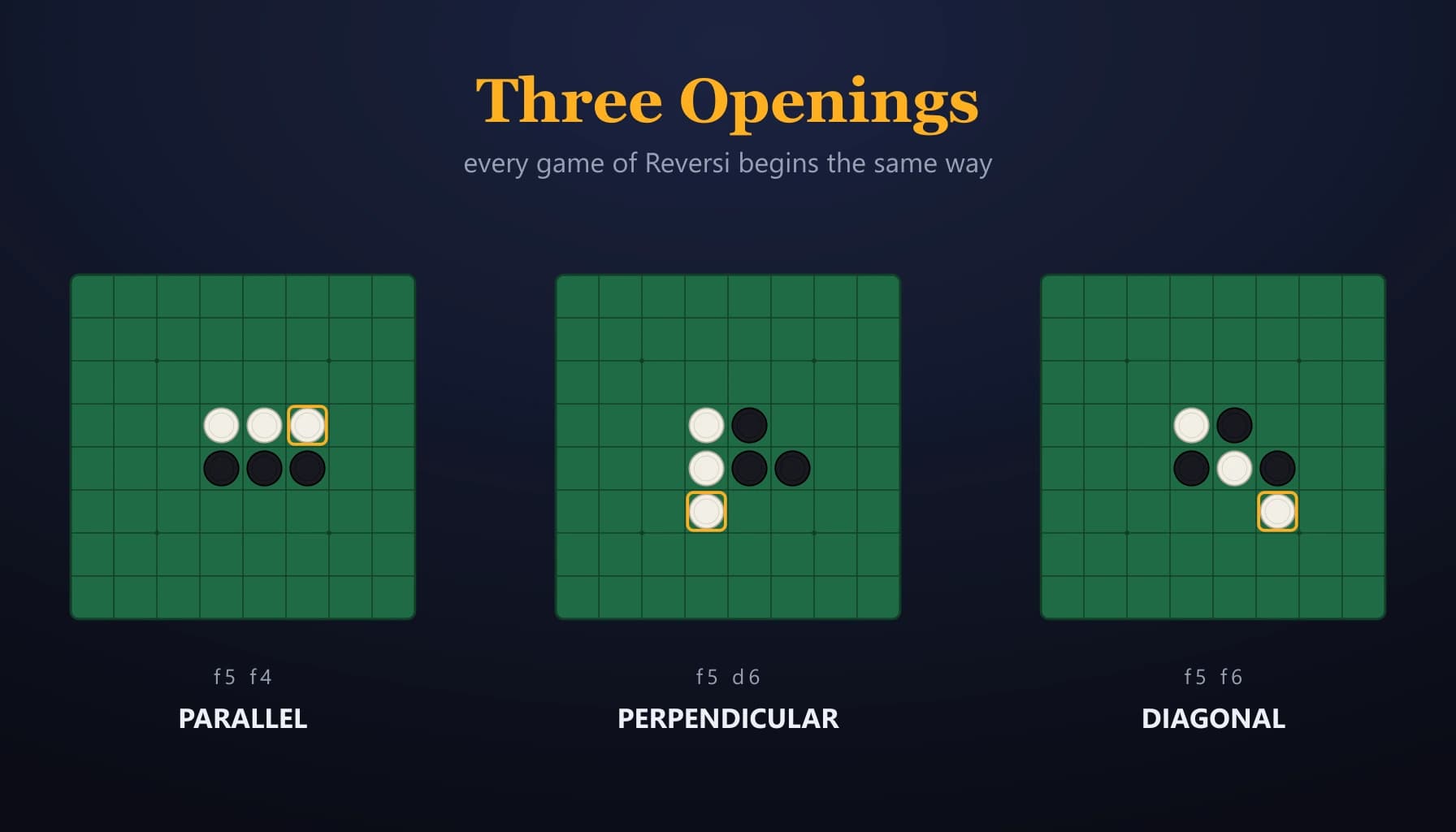
Reversi and Othello Openings: There Are Only Three
Every game of Reversi starts from the same position, and White has exactly three replies. The parallel, perpendicular and diagonal openings, with diagrams.
Play the game →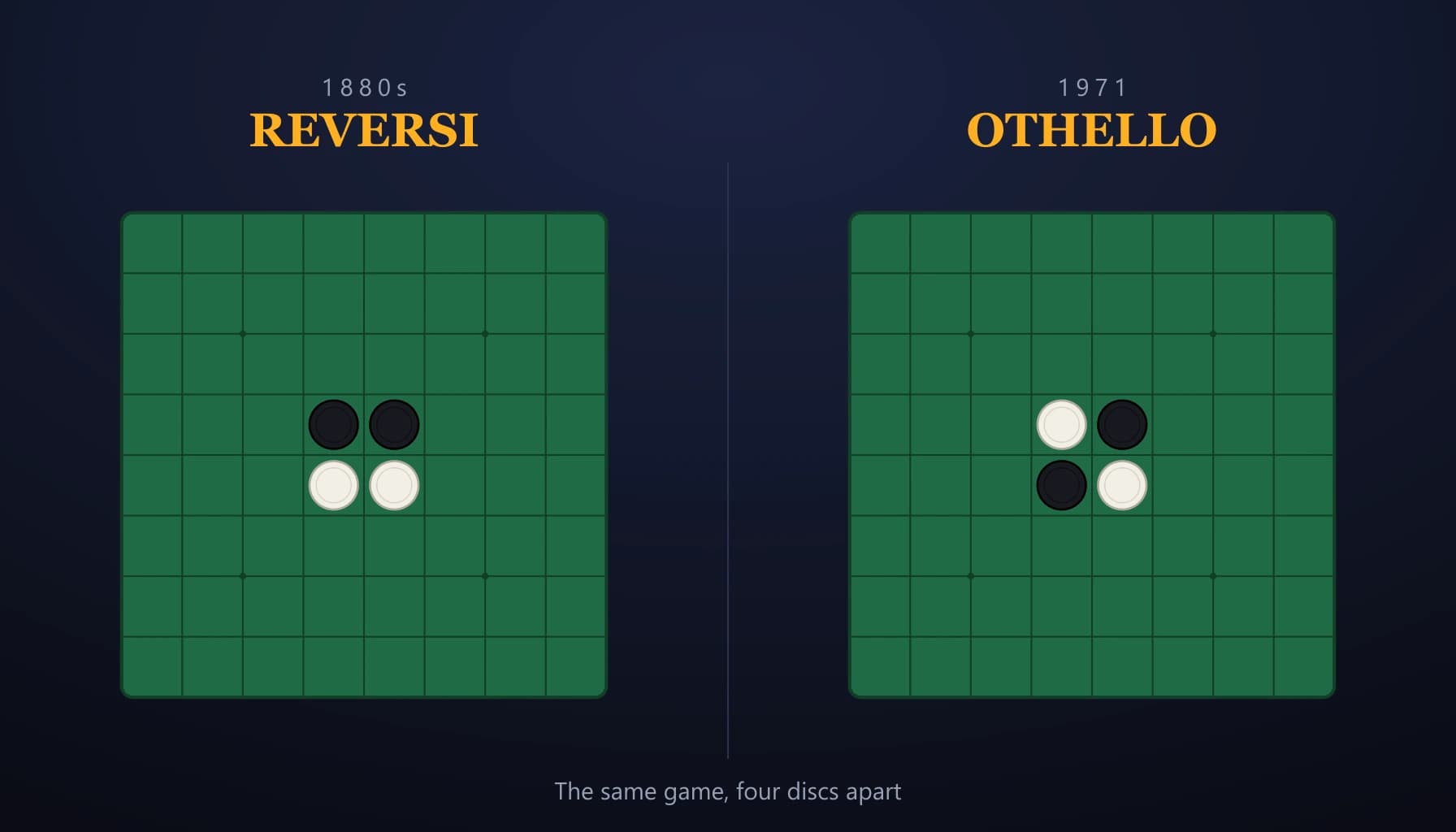
Reversi vs Othello: Are They the Same Game?
Reversi and Othello share a board, a rule and almost a century. What changed in 1971, and why almost every app calls it Reversi rather than Othello.
Play the game →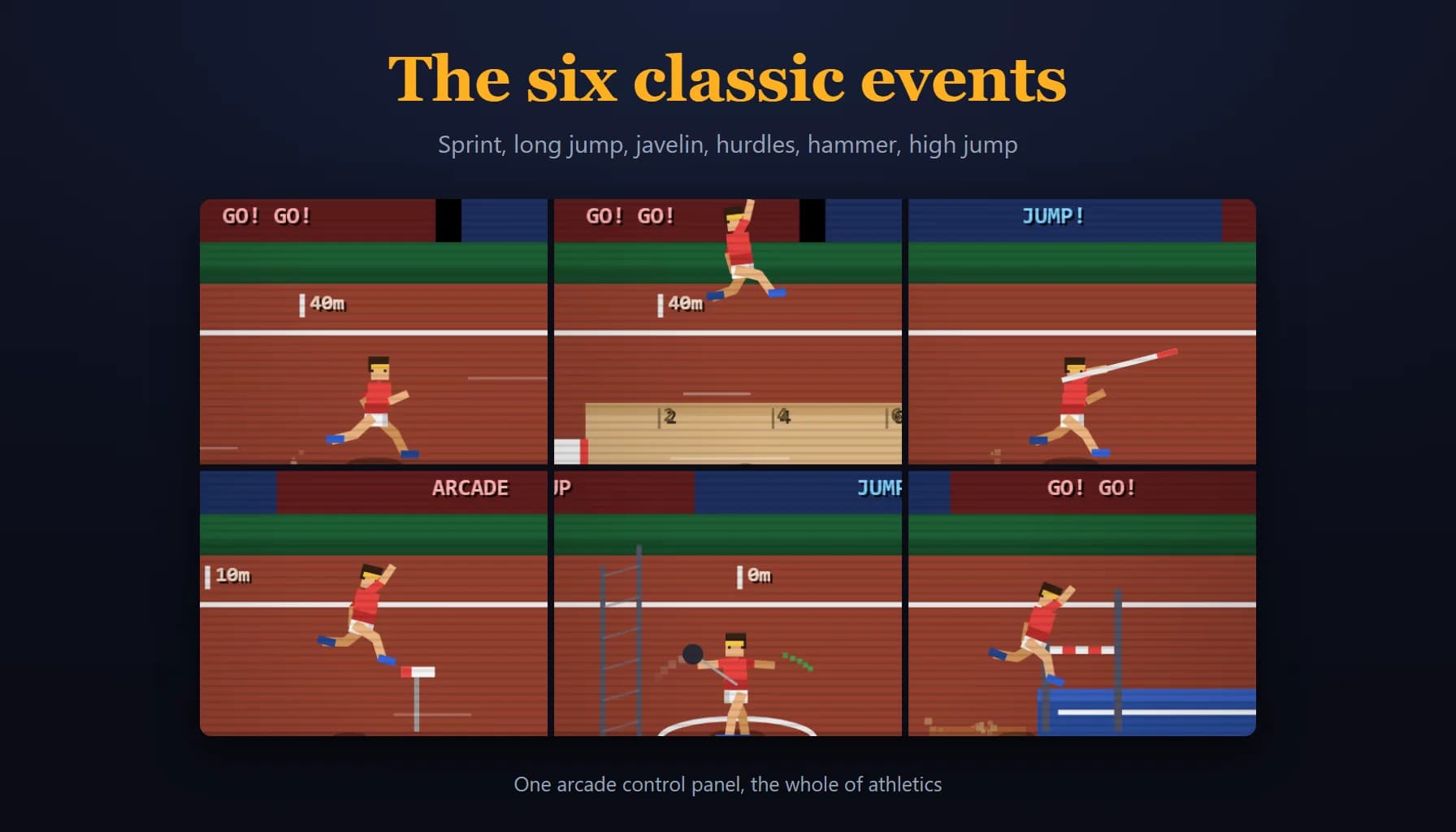
The Six Classic Athletics Events, Explained
Sprint, long jump, javelin, hurdles, hammer, high jump: what each asks of an athlete, and why these six became the video game canon.
Play the game →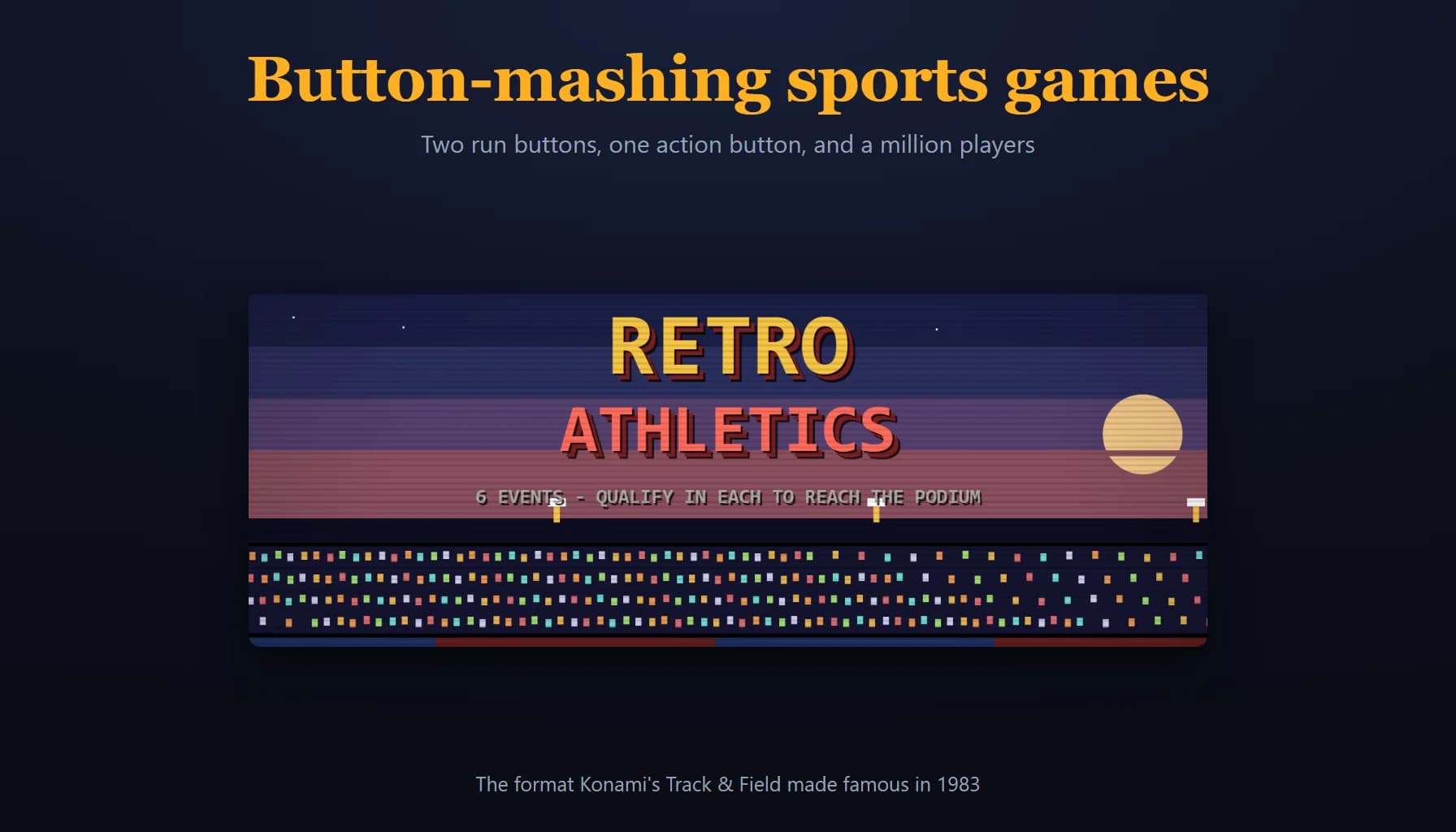
Track & Field and the History of Button-Mashing
How Konami's 1983 hit invented a genre with two buttons, why a million people entered one tournament, and where the button-mashers went afterwards.
Play the game →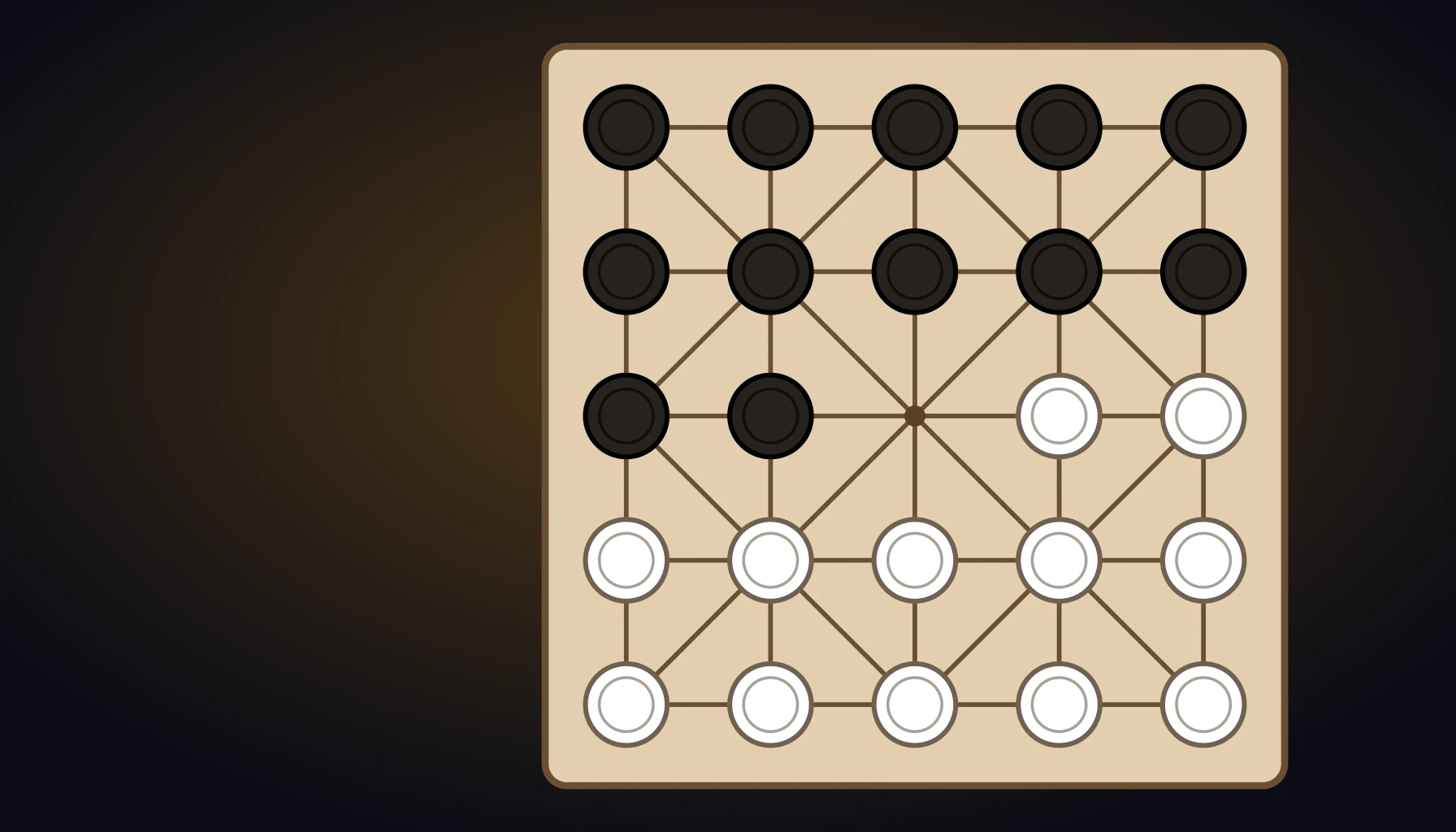
Alquerque: The Board That Became Draughts
The medieval board that turned into checkers: every rule with diagrams, why half the points are twice as valuable, and how a sacrifice becomes a weapon.
Play the game →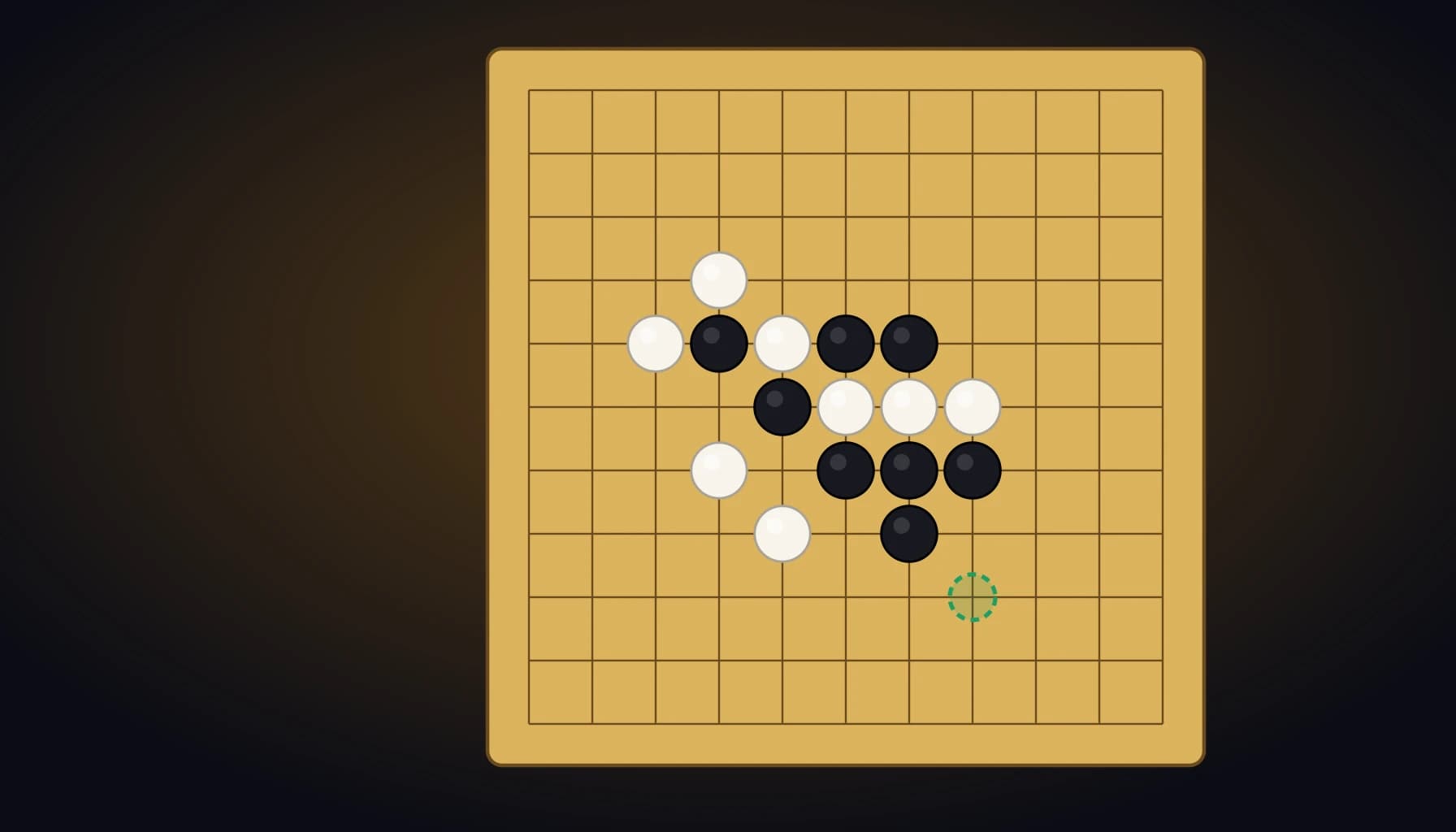
Gomoku Rules and Strategy: The Fork That Wins
Every Gomoku rule, the threat hierarchy from open three to open four, the double threat that decides most games, and why the first player wins.
Play the game →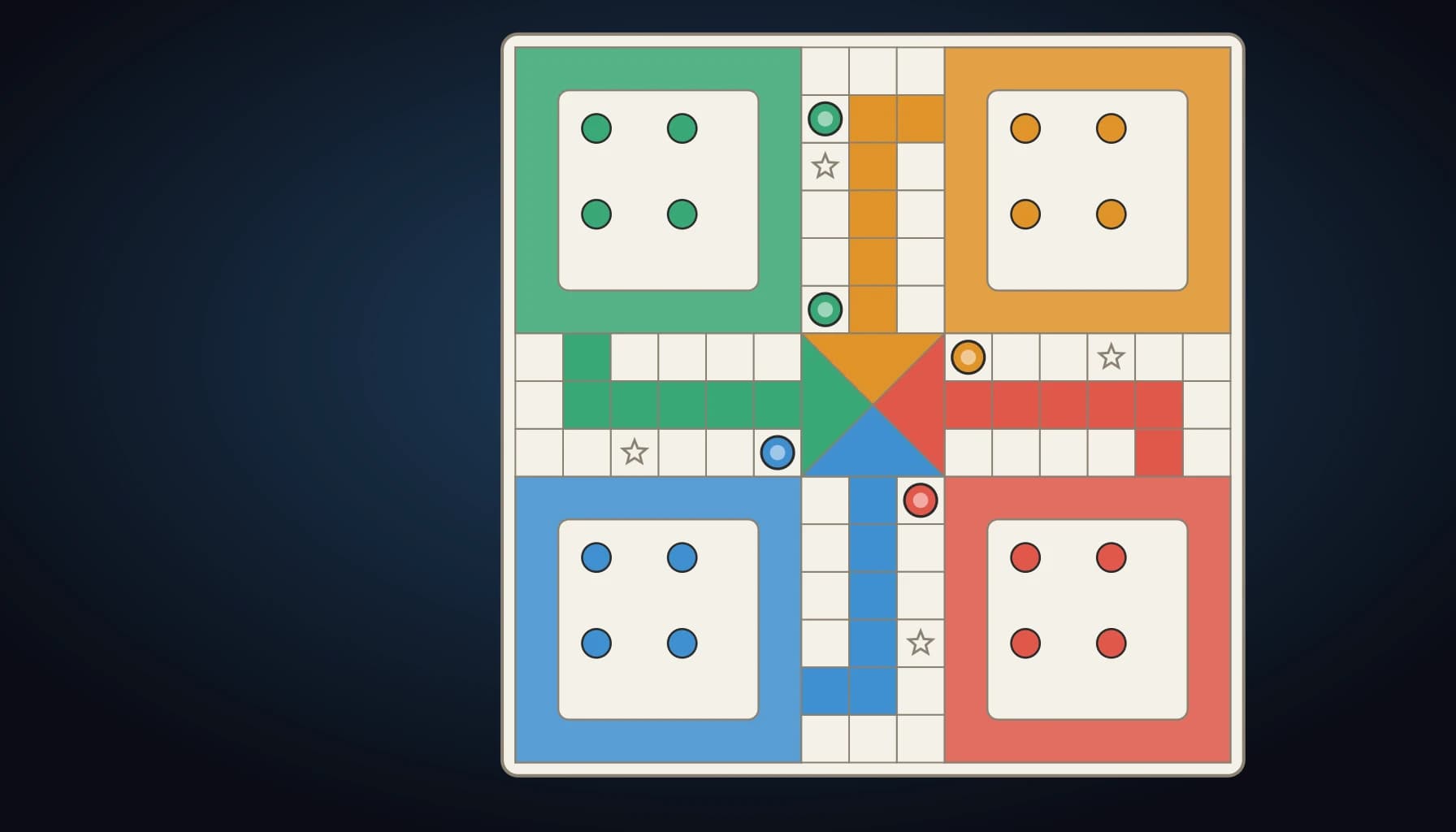
Ludo Rules and Strategy: The Six Squares That Decide
Every Ludo rule with board diagrams, why the six squares in front of an enemy token are the only dangerous ones, and what the dice do to your opening.
Play the game →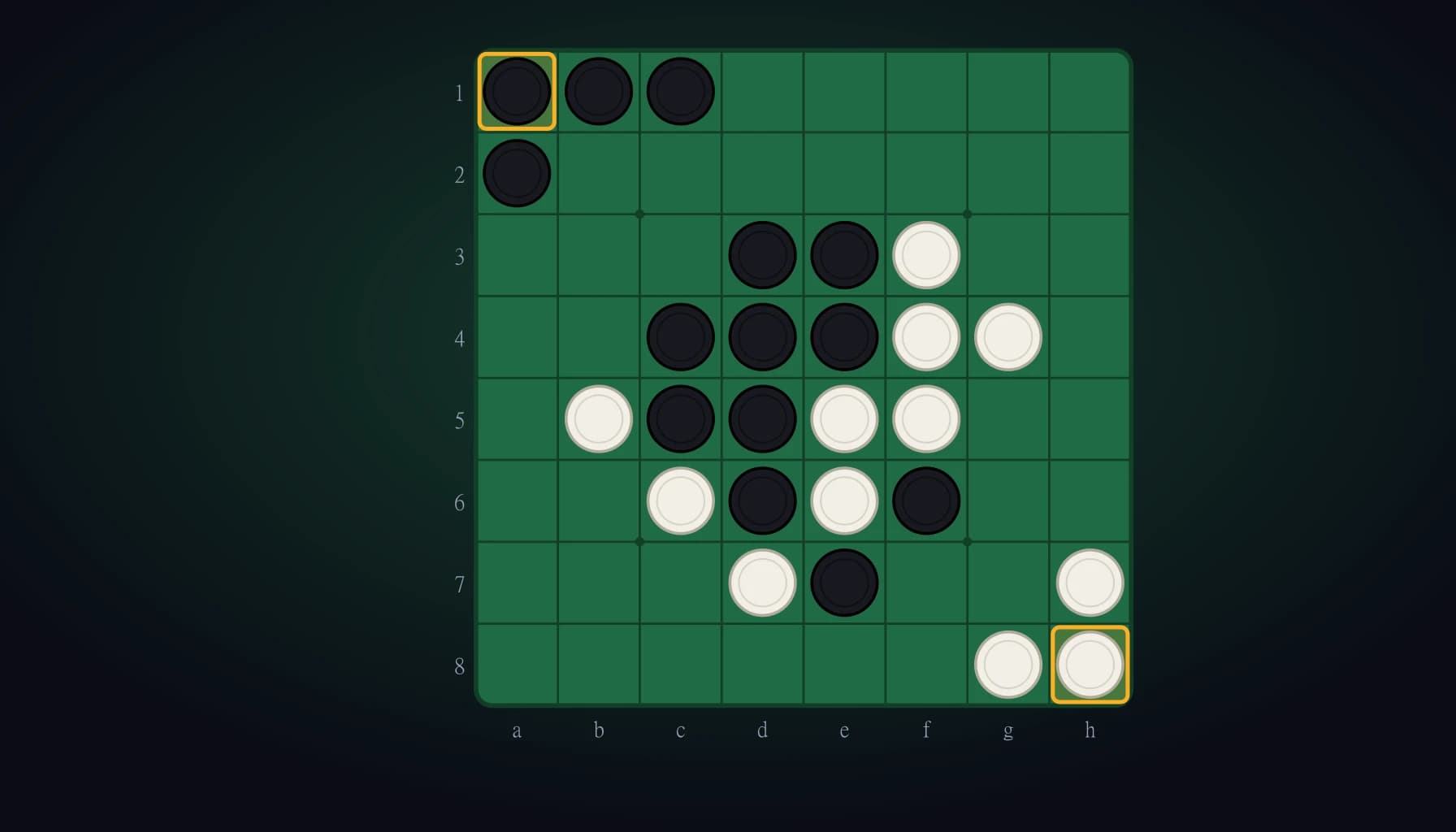
Reversi and Othello Rules and Strategy
Where the two names come from, every rule with board diagrams, why holding more discs in the middle game is usually losing, and the squares that lose corners.
Play the game →
Shisima Rules: Nine Points, One Contested Square
Every rule of the Kenyan pond game with diagrams, why all four winning rows run through the centre, and why the middle is both strongest and useless.
Play the game →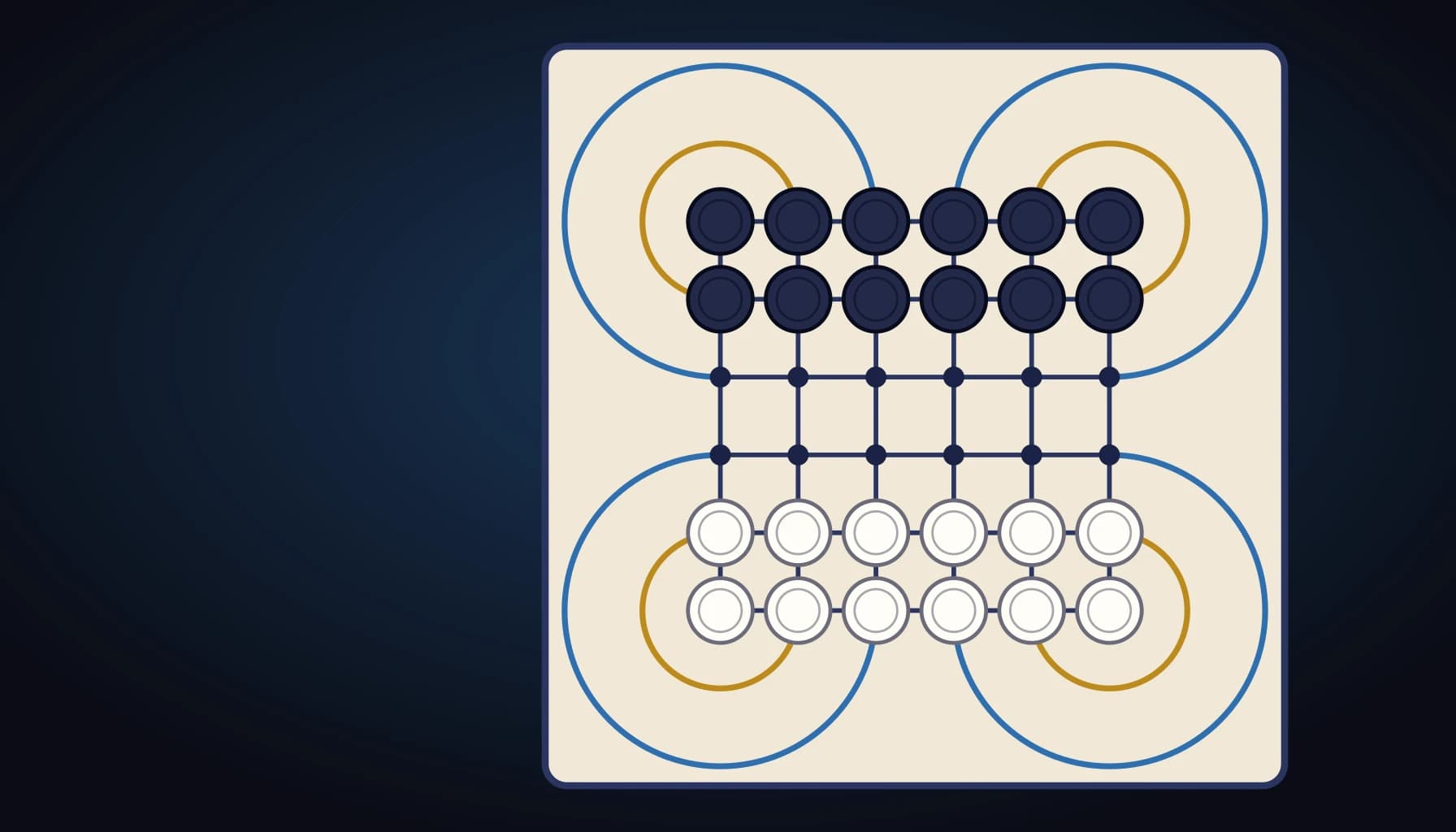
Surakarta Rules: Capturing Around a Corner
The Javanese game with a capture rule found nowhere else: every rule with diagrams, how the two loop circuits work, and why corners can never be taken.
Play the game →
Frogger: The Arcade Game With Nothing to Shoot At
How Konami's 1981 arcade hit was made, why Sega had to sell it, and what a game about crossing a road got right that every shooter of the era did not.
Play the game →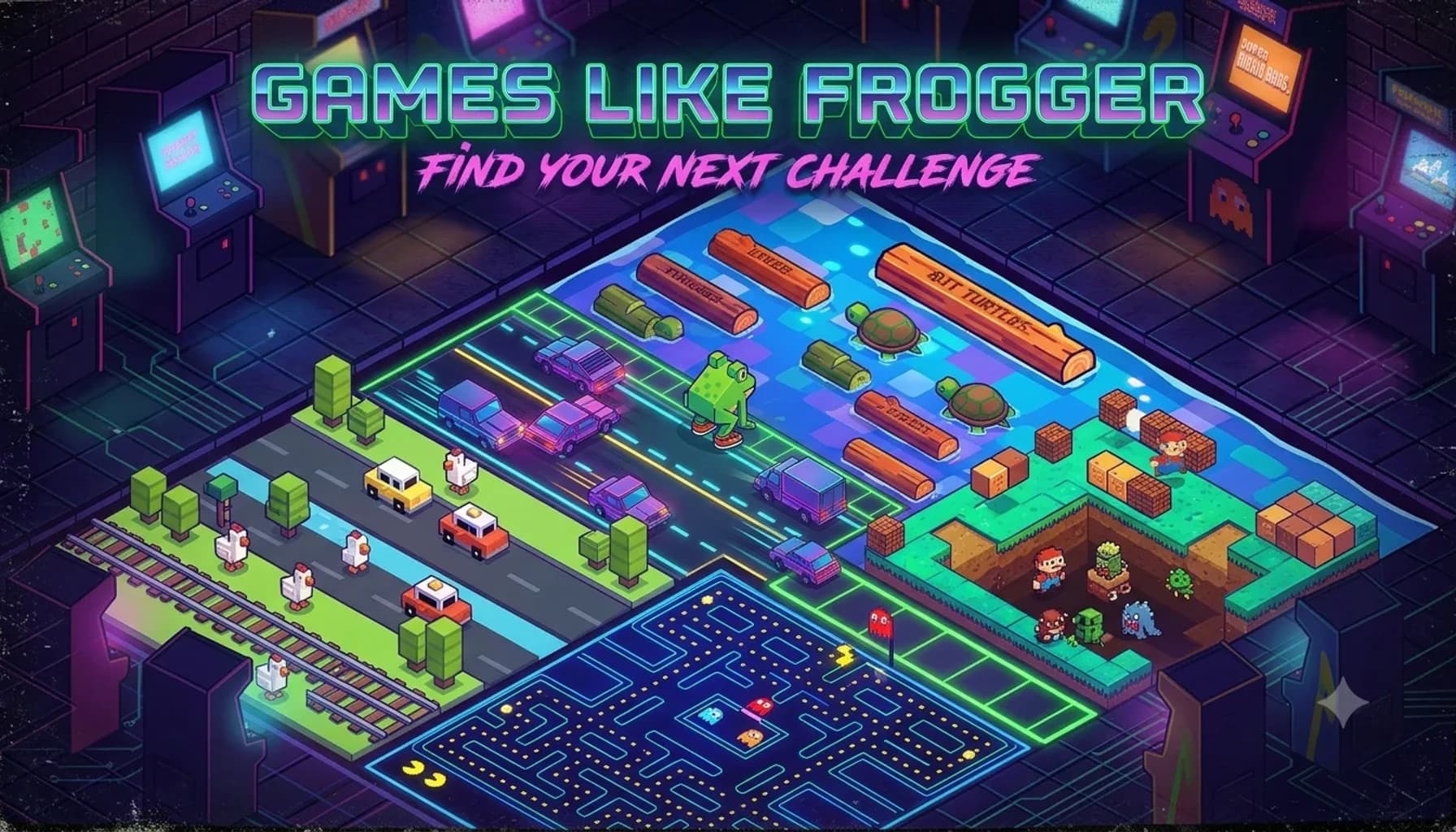
Games Like Frogger You Can Play in a Browser
What is actually available if you want something like Frogger: the licensed original, the browser options, and which keep the rule that made it work.
Play the game →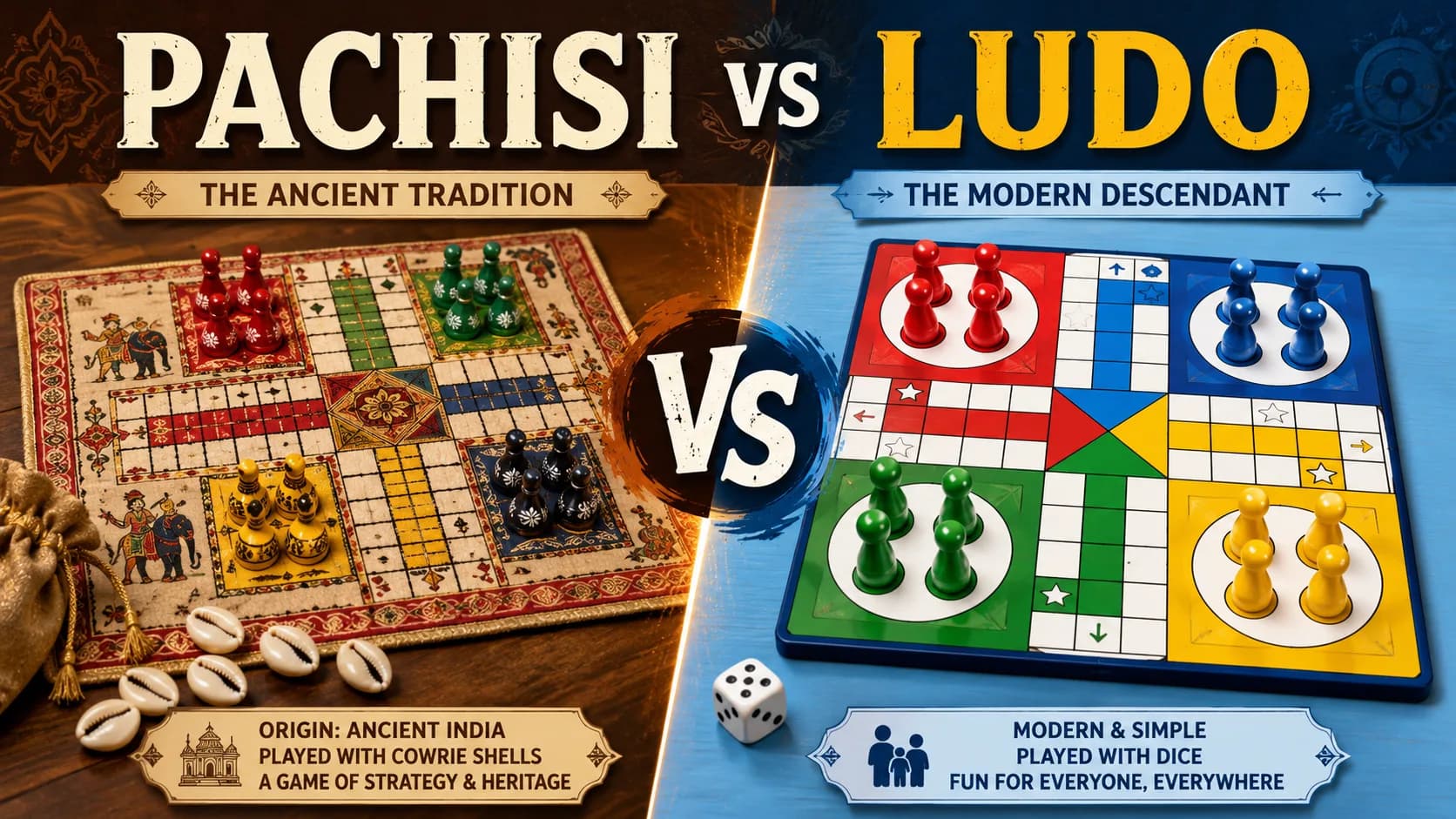
Pachisi vs Ludo: What the Simpler Game Left Out
Ludo, Parcheesi, Sorry! and Trouble all come from Pachisi, and all cut something away. Which kept the most — board, dice, partnerships and capture compared.
Play the game →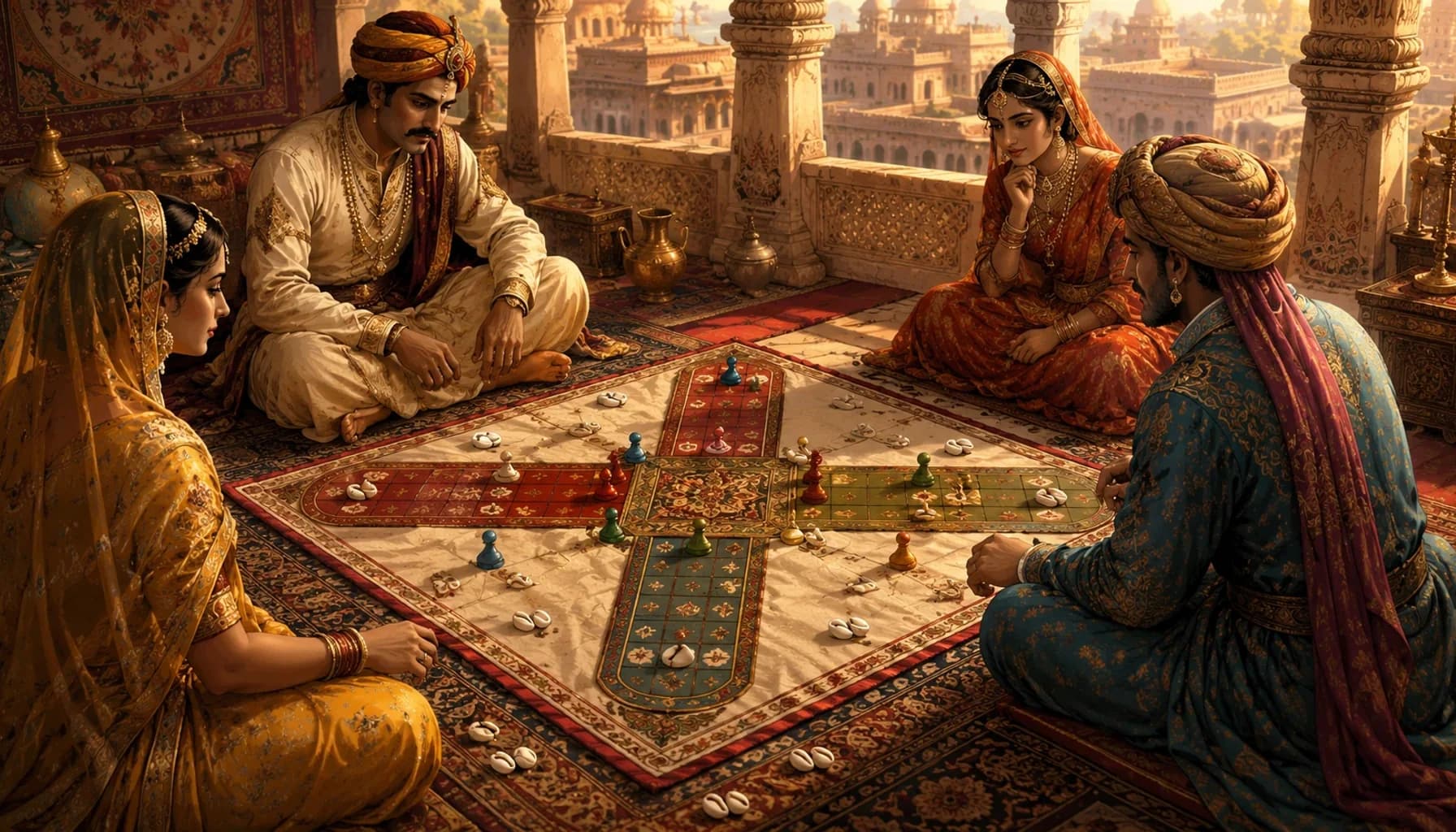
Pachisi: A History of India's Royal Game
Where Pachisi really comes from: what the evidence shows, what the famous story about Akbar is worth, and how the game became Ludo, Parcheesi and Sorry!
Play the game →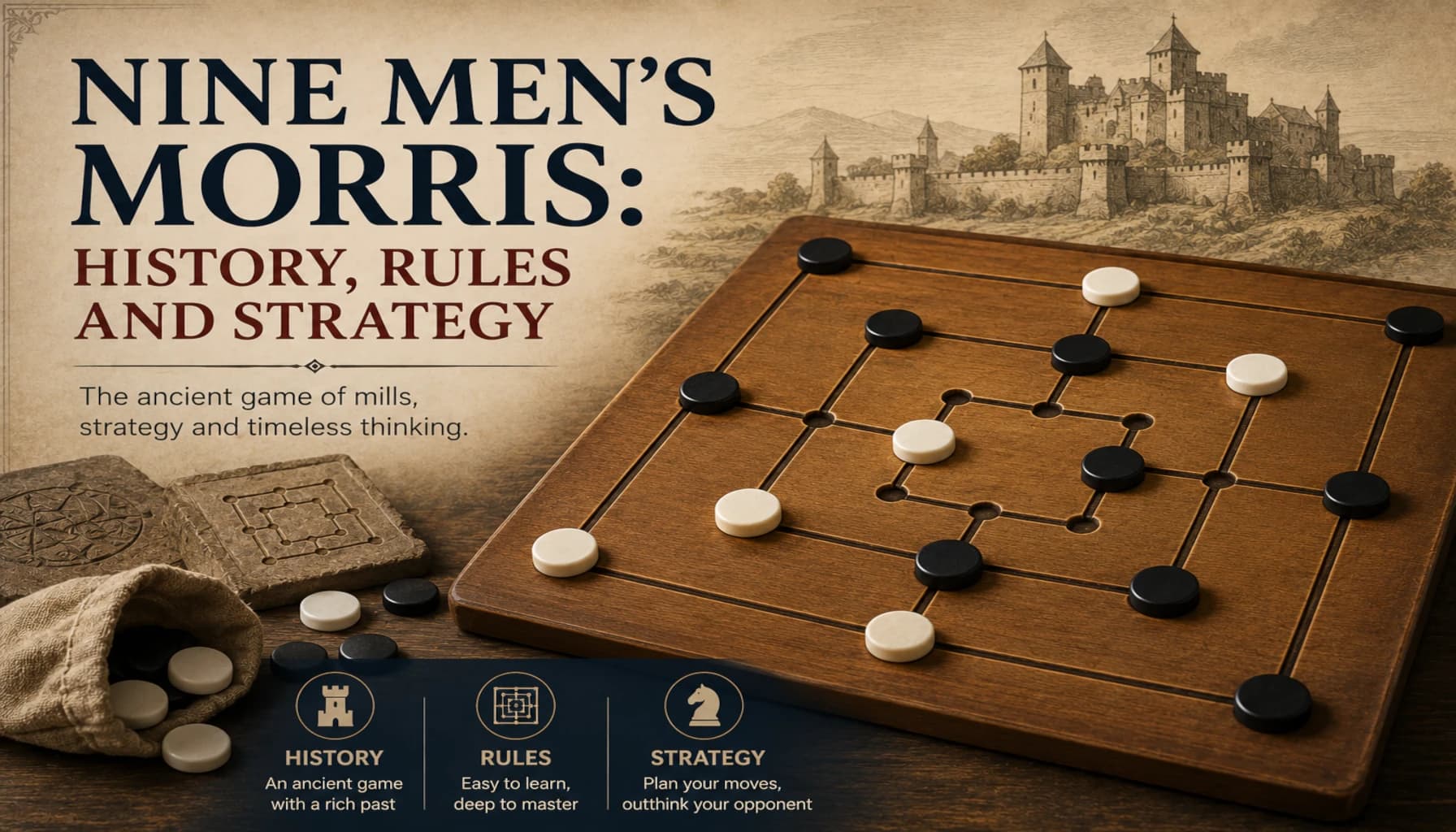
Nine Men's Morris: History, Rules and Strategy
Every Nine Men's Morris rule with board diagrams, the double mill that decides most games, where the rule sets disagree, and why perfect play draws.
Play the game →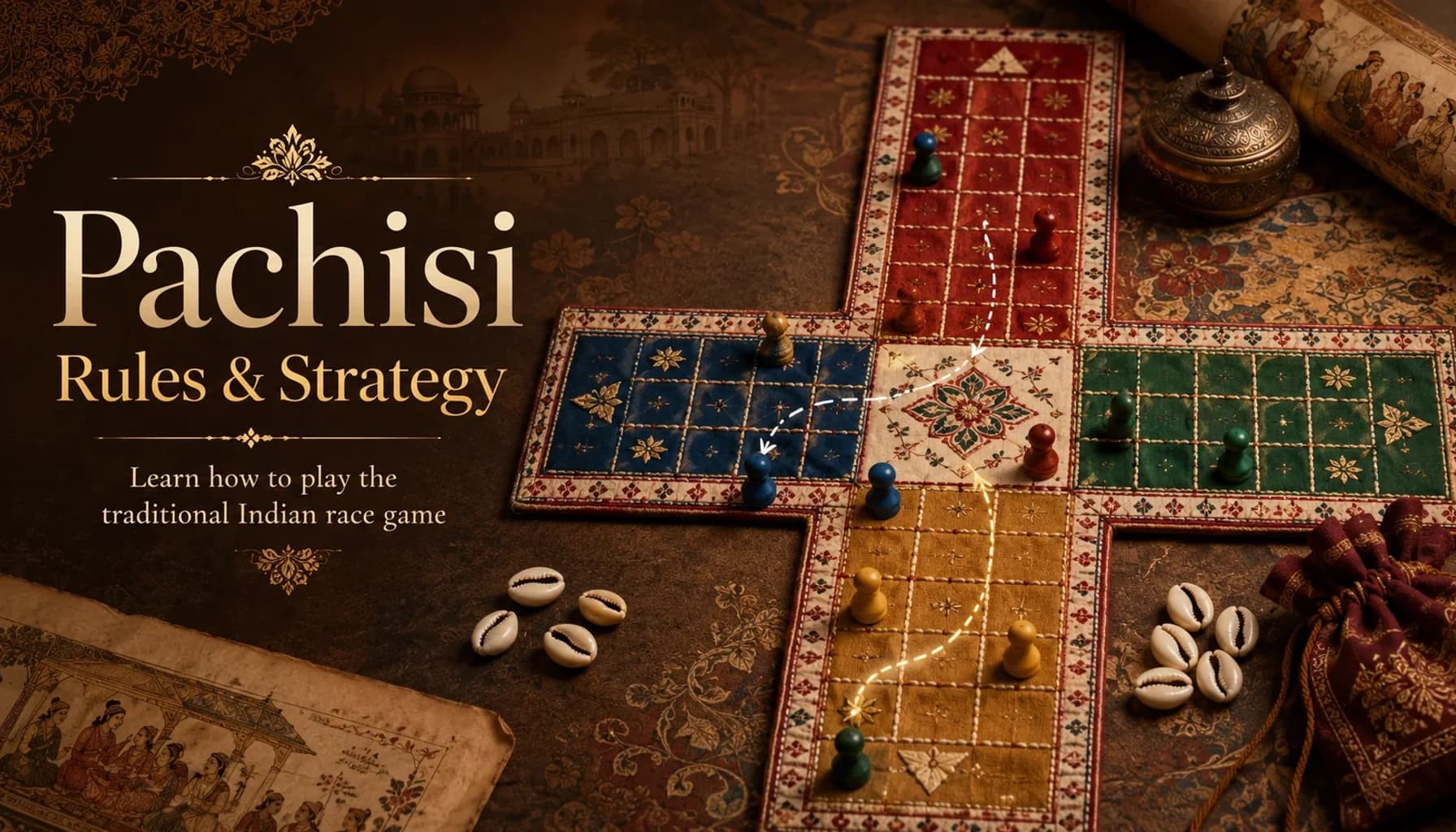
Pachisi: Rules and Strategy
How Pachisi is really played: the cross-shaped board, the six cowries, castles, blockades, and the exact throw home — with the tactics that decide games.
Play the game →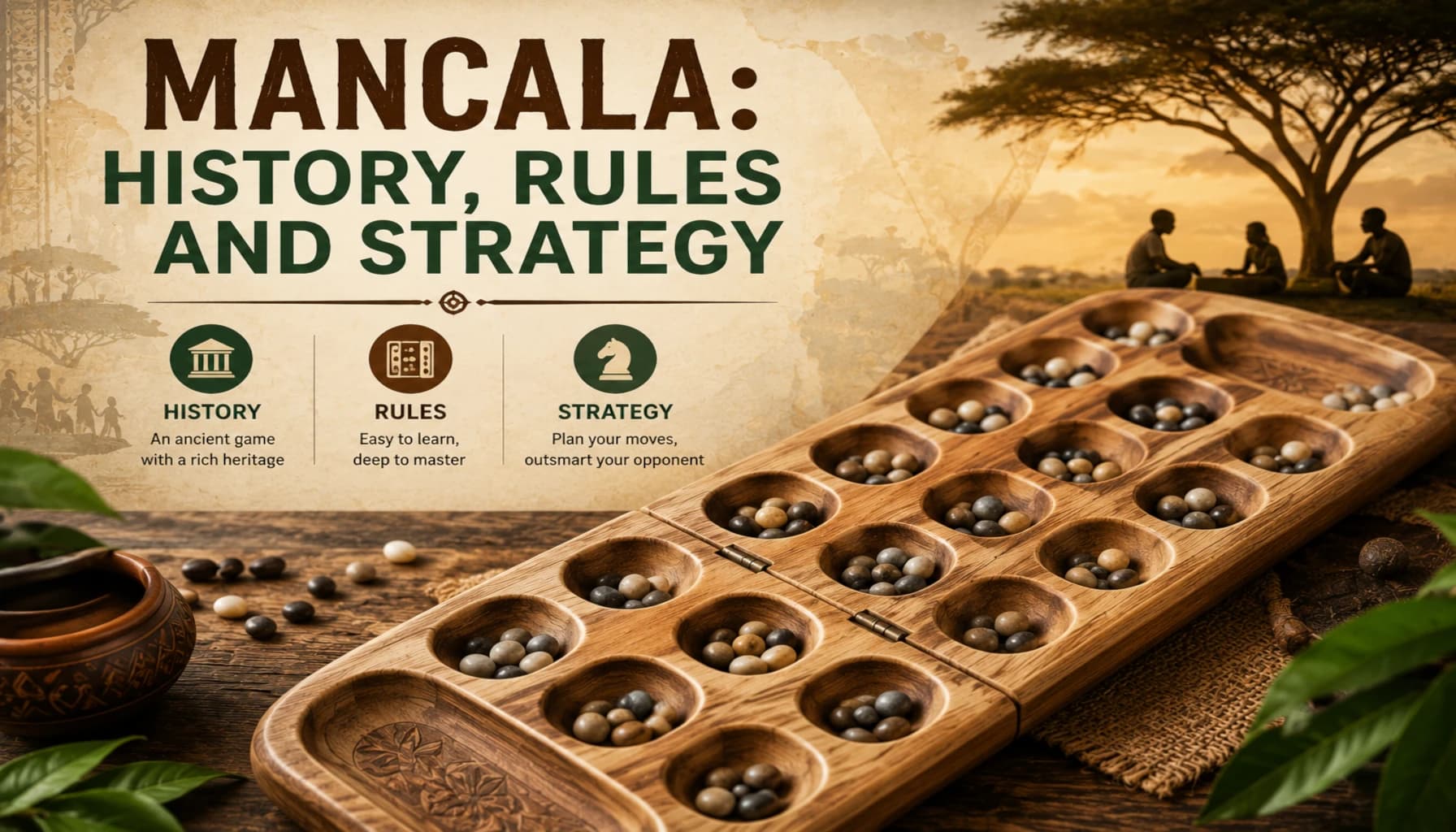
Mancala Rules and Strategy: How to Play and Win
Every Kalah rule with a diagram, the extra turn and the capture explained, the counting that decides games, and what beginners reliably get wrong.
Play the game →
The History of Checkers: From Alquerque to Solved
Where checkers came from, whether it really predates chess, and the eighteen-year computation that proved the game is a draw. The story, not the rulebook.
Play the game →