This is the oldest board game whose rules we can still read. The boards are 4,600 years old; the rules survived separately, on a clay tablet, and were put back together in the 1980s. What came out is not a curiosity — it is a fast, mean little race game where the middle of the board is a knife fight.
How to play the Royal Game of Ur
Seven pieces each. Walk them all down your path and off the far end. First to get all seven home wins.
The board and the two paths
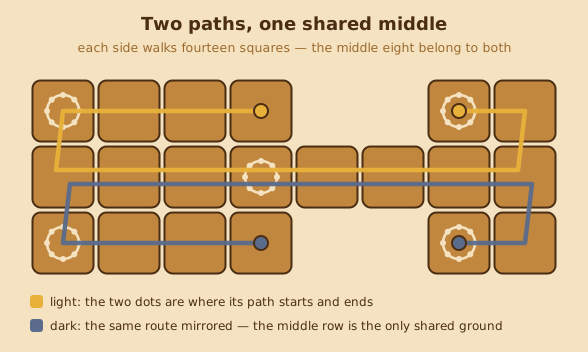
Twenty squares in three rows. Your path runs four squares along your own row, eight along the shared middle, then two more of your own before the exit. Your own rows are completely safe — nothing can touch you there. Everything that happens in this game happens in the middle eight.
The dice, and why they are not a six
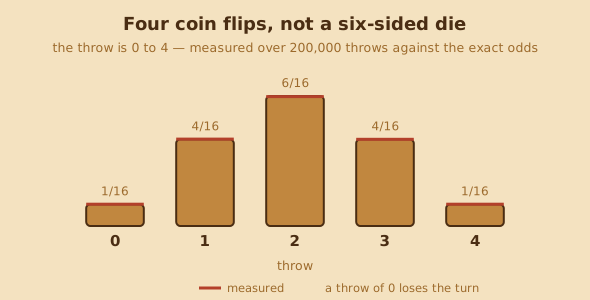
Four tetrahedral dice, two marked corners on each. Your throw is how many marks land upwards, so 0 to 4, and the odds are 1 : 4 : 6 : 4 : 1 out of sixteen. The average throw is exactly 2.
That shape matters more than the average. A four is rare — you cannot plan around one. A zero costs your whole turn and turns up once every sixteen throws. And because most throws are 2, distances of two are the ones you should be counting.
Rosettes and captures
- Any rosette gives you another throw. That is worth more than it sounds: a rosette effectively doubles a move, and a lucky chain of them can carry a piece halfway down the board in one turn.
- The centre rosette is also safe. A piece there cannot be captured at all.
- Land on an enemy piece in the middle row and it goes back to the start — all the way, to walk the whole path again.
- Bearing off needs an exact throw. One more than the last square, not more.
Royal Game of Ur strategy
Where pieces actually get taken
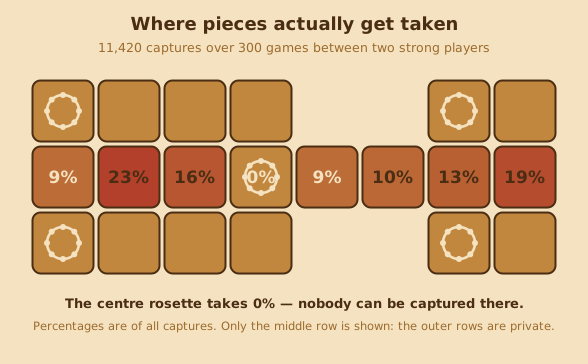
We counted every capture across 2,500 games and put them on the board. The result is not evenly spread at all:
| Shared square | 1st | 2nd | 3rd | 4th (rosette) | 5th | 6th | 7th | 8th |
|---|---|---|---|---|---|---|---|---|
| Share of all captures | 9 % | 24 % | 16 % | 0 % | 9 % | 10 % | 12 % | 20 % |
Two squares hold nearly half of everything. The second shared square is the single most dangerous place on the board — a quarter of all captures happen there, because every enemy piece still sitting safely on its own row can reach it. The last shared square is the second worst at 20 %, which is the cruel one: that is the square you stop on just before you escape into your own row and safety.
The practical lesson is short. Do not stop on the way in, and do not dawdle on the way out. If a throw gives you a choice between those two squares and anything else, take anything else.
The centre rosette is worth the fight
It gives an extra throw and it cannot be attacked. That combination makes it the one square both sides want, and the one place where a piece can sit indefinitely while you sort out the rest of the board. Our measurement puts the value beyond argument: every other shared square collects captures, and that one collects none.
Is it luck or skill?
We measured that too, because "some of both" is not an answer. Every pairing below is 800 games with the sides swapped halfway:
| beats random | beats easy | beats medium | |
|---|---|---|---|
| Easy — sees only the race | 61 % | — | — |
| Medium — sees everything, judges loosely | 78 % | 84 % | — |
| Hard — sees everything | 93 % | 95 % | 67 % |
So judgement decides most games. But look at the top-right number from the other side: the strongest play we have still loses one game in fourteen to an opponent choosing moves at random. With these dice that is not a flaw to fix. It is the game.
The three levels differ in what they weigh, not how far ahead they look. Easy sees only the race — how far along, how many home — and is blind to capture and safety. That is not an artificial handicap; it is exactly the view of somebody who has not yet noticed the middle row is dangerous. It is also, measurably, a terrible way to play: a full judgement with heavy slack beats it 84 % of the time.
Does going first help?
Barely. Two identical opponents, thousands of games:
| Level | Light (throws first) wins |
|---|---|
| random moves | 51.3 % |
| easy | 48.5 % |
| medium | 48.9 % |
| hard | 50.0 % |
Fifty per cent, to one decimal place, at the level that plays best. For a race game where one side throws first, that is a remarkably clean balance — and it is a quiet argument that the reconstruction we are all playing is a sound one.
Where the rules come from
The boards came first. Leonard Woolley dug five of them out of the Royal Cemetery at Ur in the 1920s, dating to around 2600 BC — beautiful things, shell and lapis and red limestone. Nobody knew how they were used.
The rules came from somewhere else entirely: a clay tablet written about 177 BC by a Babylonian scribe named Itti-Marduk-balāṭu, more than two thousand years after the boards were buried. Irving Finkel of the British Museum recognised what it described and worked the game back out in the 1980s.
That gap is the whole point. Almost every ancient game we know is a board with guesses attached. This one has a rulebook.
If you like this one
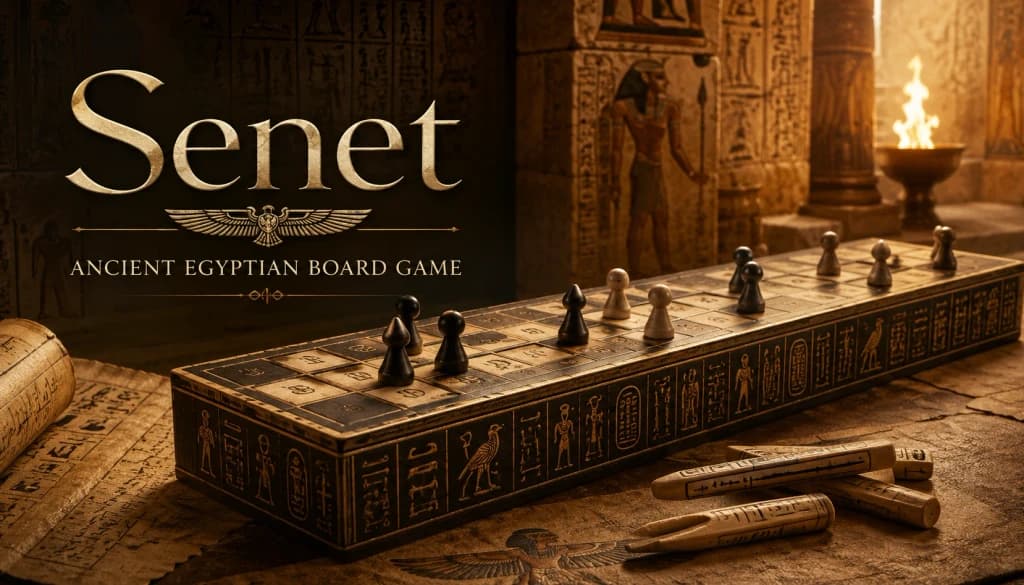
- Senet — the Egyptian race game, the other one where the rules had to be reconstructed, and where the throw also comes from sticks rather than a die
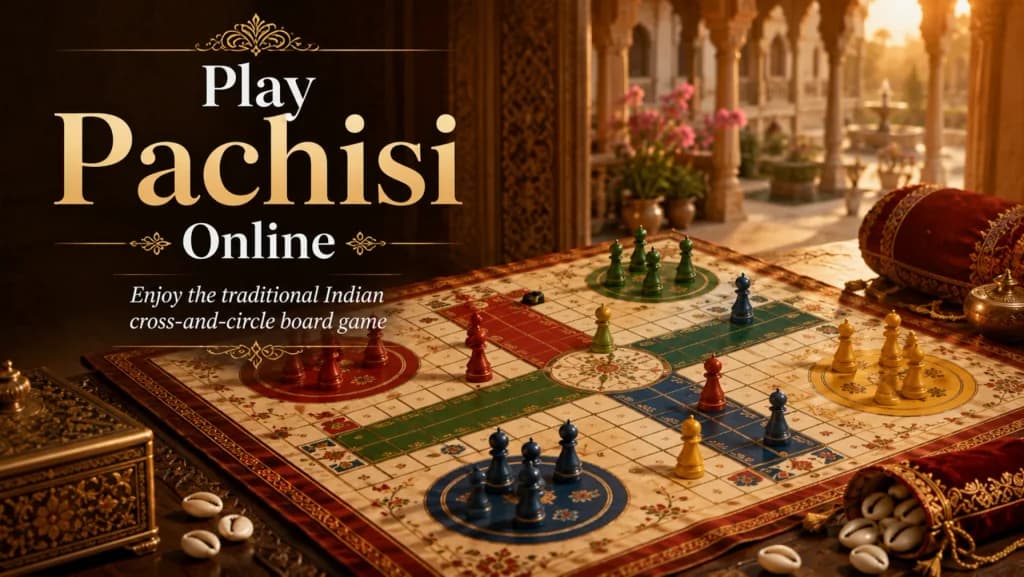
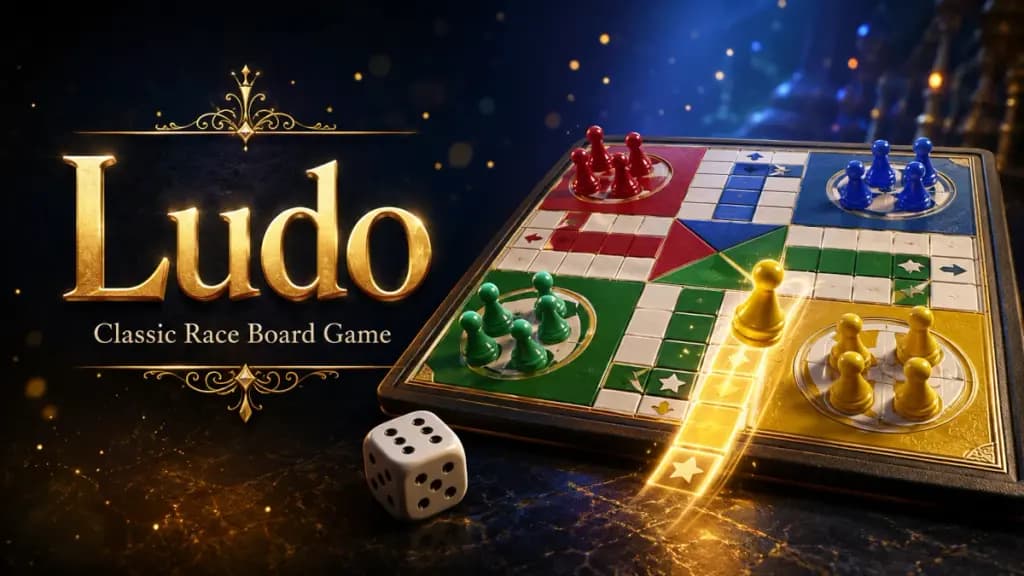
- Ludo and Pachisi — the same race shape four thousand years later, with the same argument about the safe squares
- Alquerque — also Mesopotamian, also very old, and the ancestor of draughts
There is more on how old these games really are in the oldest board game in the world, and a direct comparison in Senet and the Royal Game of Ur.
Which board game came first?
Ur has as good a claim as any and a better one than most. When was the first board game invented? lays out the candidates and the evidence for each, and is careful about the difference between the oldest board found and the oldest game known.