Four sticks, four horses, and a square with two diagonals across it. The rules take a minute. What takes longer is noticing that the whole game is a fight over three particular squares — because stopping on them cuts the board nearly in half.
How to play Yut Nori
Race all four of your horses round the board and off the far side. First one home with all four wins.
The sticks, and why nothing is the best throw
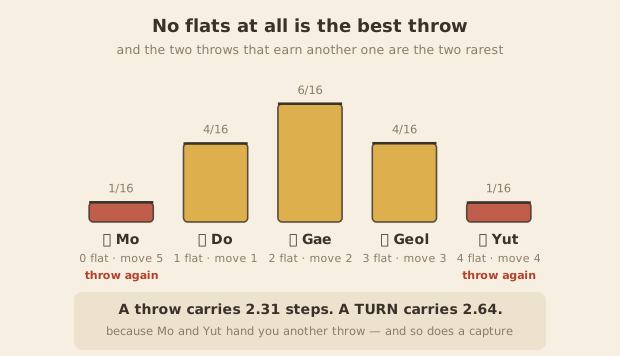
Throw all four sticks and count the flat sides landing upwards. The names do not run in order, and that catches everyone out the first time: no flats at all is the best throw, not the worst.
| Flats up | Name | Move | Another throw? |
|---|---|---|---|
| 0 | Mo (모) | 5 | yes |
| 1 | Do (도) | 1 | no |
| 2 | Gae (개) | 2 | no |
| 3 | Geol (걸) | 3 | no |
| 4 | Yut (윷) | 4 | yes |
That extra throw matters more than it looks. A single throw advances 2.31 steps on average. A whole turn advances 2.64, because Mo and Yut hand the sticks straight back — and so does a capture.
The shortcut is the game
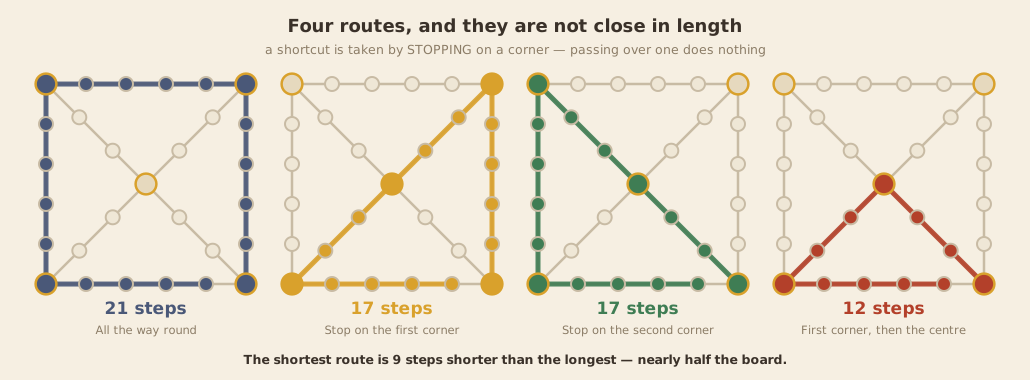
Stop exactly on a corner and your horse takes the diagonal across the middle. Pass over the corner and nothing happens. That single condition produces four routes of very different length:
| Route | Steps |
|---|---|
| all the way round | 21 |
| stop on the first corner | 17 |
| stop on the second corner | 17 |
| first corner, then stop on the centre | 12 |
Nine steps of difference, decided by whether a throw happens to end on one particular station. This is why a Mo on the opening throw is worth cheering about: five steps lands a horse exactly on the first corner.
Capturing and joining up
- Land on an enemy horse and it goes back to the start to walk the whole way again — and you throw again.
- Land on your own and the two join up, moving together from then on. Efficient, and a standing invitation: one capture sends the entire group home.
Yut Nori strategy
The measurements say what strong play does differently, and it is not subtle. Over games between two equal opponents:
| shortcuts taken per game | horses captured per game | |
|---|---|---|
| random moves | 6.6 | 6.3 |
| easy | 11.3 | 8.5 |
| hard | 10.0 | 5.0 |
Two things stand out. Strong play takes about half again as many shortcuts as random play — it steers for the corners rather than simply moving whatever is furthest along. And it loses far fewer horses: five per game against easy's eight and a half, because it can see where the opponent's next throw could reach.
The easy level takes the most shortcuts of all, which is not a mistake in the measurement — it is what the level is. Easy judges the race and nothing else, so it chases the short route regardless of what is standing behind it. Then it gets eaten.
Is Yut Nori luck or skill?
Both, and rather more luck than its cousins. Every pairing below is 1,000 games with the sides swapped halfway:
| beats random | beats easy | beats medium | |
|---|---|---|---|
| Easy — judges the race only | 75 % | — | — |
| Medium — judges everything, loosely | 80 % | 63 % | — |
| Hard — judges everything | 88 % | 76 % | 66 % |
Compare that top figure with the same measurement on the Royal Game of Ur, where the strongest level reaches 93 %. Yut Nori is the more chance-driven of the two, and the reason is exactly the shortcut: it depends on hitting an exact number, and no amount of judgement makes a Mo arrive when you need one.
Does going first help?
Barely — and pinning that down took some care. A first run over 1,000 games gave 52.1 %, which looked like a real advantage. It was mostly noise. Over 12,000 games between two strong opponents:
| First player wins | 51.04 % |
| Standard error | ± 0.46 points |
| 95 % interval | 50.15 % to 51.94 % |
So the edge is real — it clears 50 % by more than two standard errors — but it is worth about one game in a hundred. Worth mentioning, not worth worrying about.
Seollal: the game people actually play
Yut Nori is the game of Seollal, Korean Lunar New Year. It is played on the floor, in families, with the sticks thrown high enough to make a noise when they land — traditionally onto a mat, so the throw is genuinely random and everybody can see it.
Games of this kind are described in Chinese records of the third century, and what makes Yut Nori unusual among ancient games is not its age but its continuity. Senet and the Royal Game of Ur had to be reconstructed by scholars from boards and fragments. Nobody had to reconstruct Yut Nori. It never stopped.
If you like this one
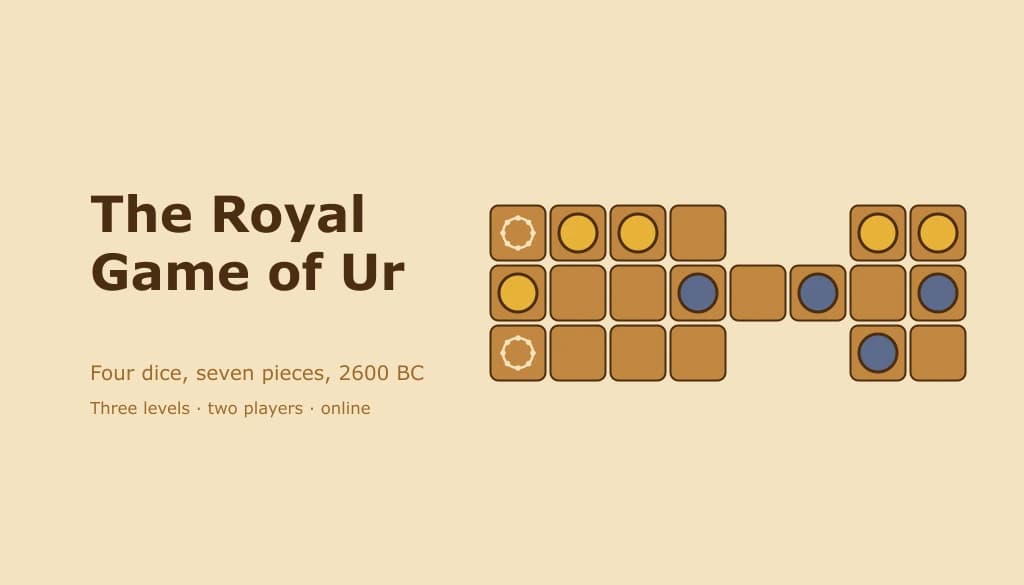
- The Royal Game of Ur — four binary dice, the same 1 : 4 : 6 : 4 : 1 odds, and rosettes that give another throw
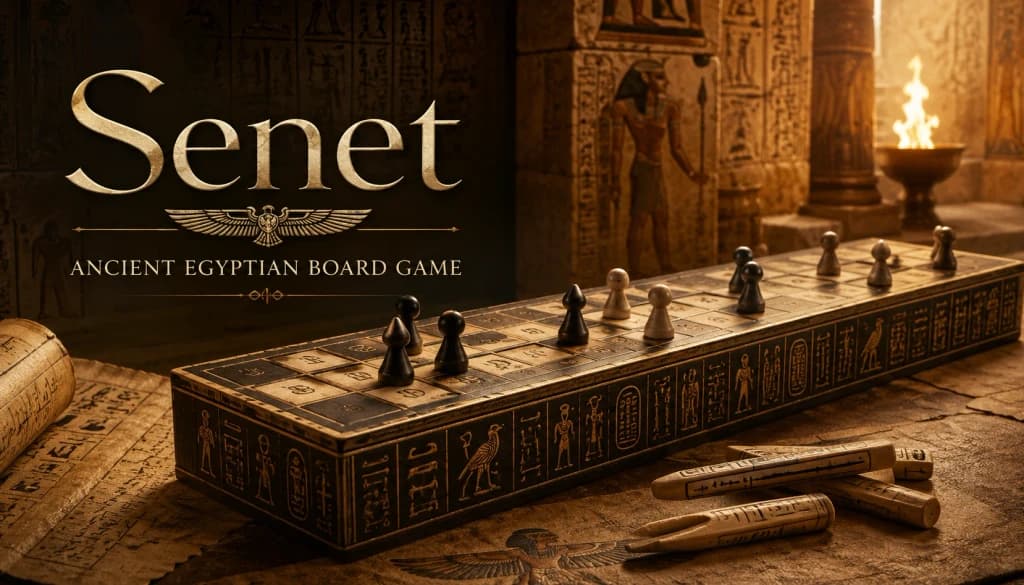
- Senet — the Egyptian race, thrown with sticks rather than dice, where landing on a lone enemy swaps places instead of sending it home
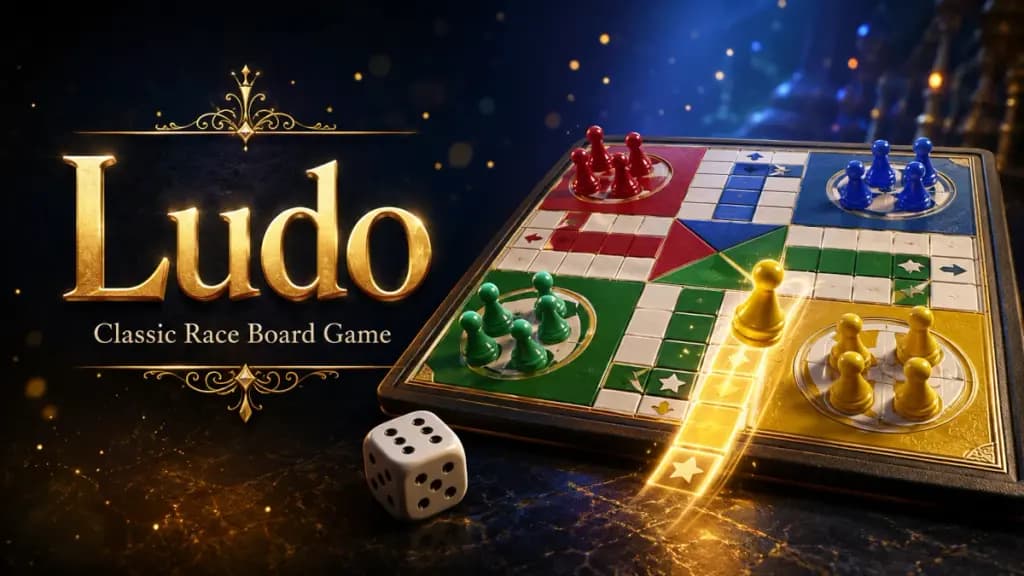
- Ludo and Pachisi — the race game that reached the rest of the world, with the same argument about safe squares
There is more on how far back this family goes in the oldest board game in the world, and the rest of the holiday — jegichagi, tuho, gonggi and Go-Stop — is in what Korea plays at Lunar New Year, along with what a Mo on the opening throw is actually worth.