
40 games
Board Games
Traditional board games from around the world — Mancala, Reversi, Nine Men's Morris, Ludo and more. No download, no account, playable straight in the browser.
 Board Game
Bagh-Chal
Four tigers against twenty goats on the old Alquerque grid. The tigers jump to eat; the goats never capture anything at all and win by leaving the tigers nowhere to go.
- Two sides with completely different jobs — play both
- Measured: four against twenty is fair once both sides know what they are doing
- Play a friend online — share a code and chat
 Board Game
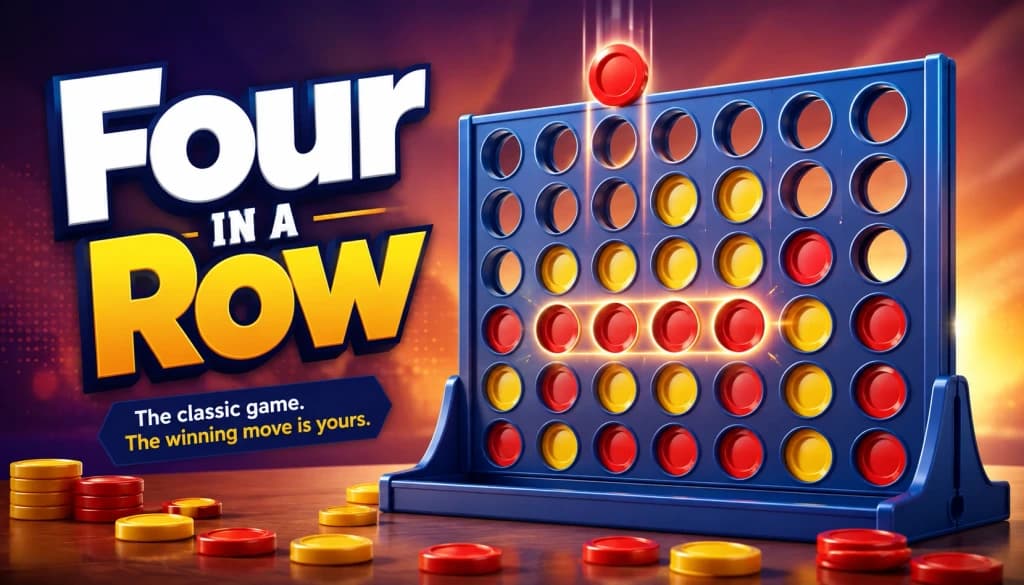
Four in a Row
Drop a disc into a column and it falls to the lowest free space. Make four of your own in a line — across, up or diagonally — before your opponent does.
- Four ways to play, including Pop Out — pull a disc out from the bottom
- Play a friend online — share a code and chat
- A computer opponent that understands threat parity, not just depth
 Board Game
Mancala
Sow seeds around the board using Kalah rules, earn extra turns, capture from your opponent's side and fill your store before they fill theirs.
- Play a friend online — share a code and chat
- Four difficulty levels and three to six seeds a pit
- Extra turns, captures, undo and sound
 Board Game
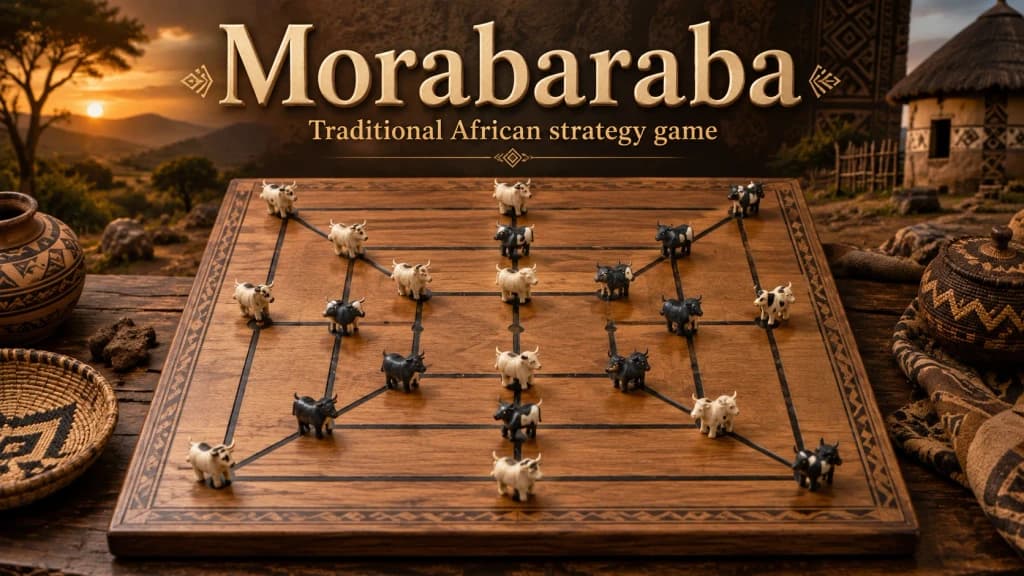
Morabaraba
Place twelve cows, make a row of three on any line — including the diagonals — and shoot one of your opponent's. Reduce them to two cows and you have won.
- Twelve cows a side and four diagonals — twenty mills, not sixteen
- Play a friend online — share a code and chat
- Pick your side: the first move is worth a great deal here
 Board Game
Sea Battle
Hide a fleet on your own ten-by-ten grid, then call squares on theirs. Every miss is a pale dot, every hit a red cross, and the first player to sink the other fleet wins.
- Two rule sets: five ships that may touch, or ten that may not
- Play a friend online — share a code and chat
- A computer opponent that counts positions instead of guessing
 Board Game
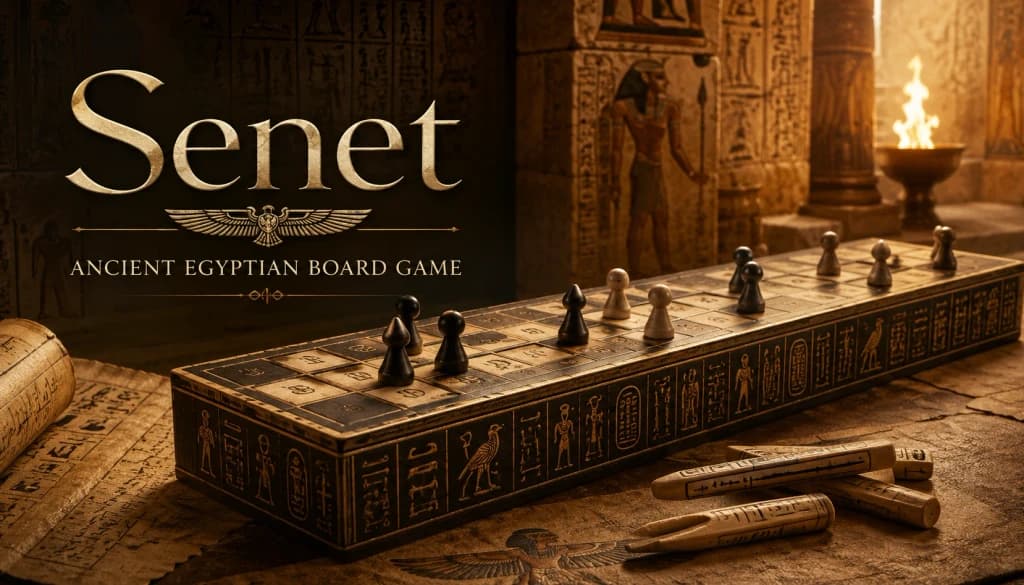
Senet
Race five pieces along thirty squares, throw the sticks instead of dice, swap places with lone enemy pieces and get everybody past the House of Happiness before your opponent does.
- Throwing sticks, not dice — five throws with very uneven odds
- Swaps, protected pairs and three-piece blockades
- Three difficulty levels, measured against each other
 Board Game
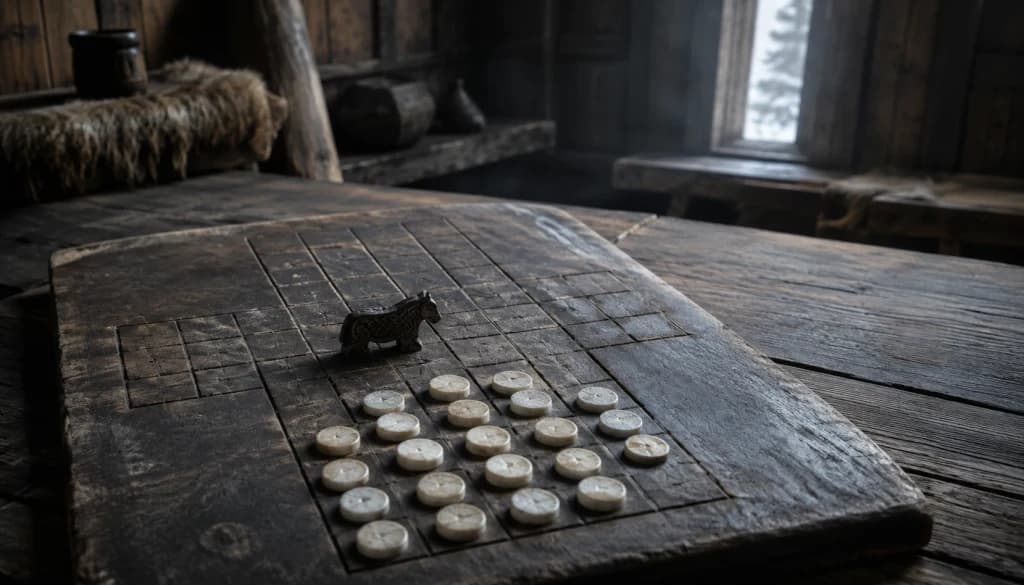
Fox and Geese
One fox against thirteen geese on the old cross board. The fox jumps to eat; the geese cannot capture at all and win by leaving him nowhere to go.
- Thirteen against one, and the one is favourite
- We computed the smallest possible cage — it takes four geese
- Play a friend online — share a code and chat
 Board Game
Reversi
Flank your opponent's discs to flip them to your colour. Hold the corners, keep your position small early on, and win the last few moves.
- Play a friend online — share a code and chat
- Four difficulty levels, from forgiving to no mercy
- Play as Black or White, with undo
 Board Game
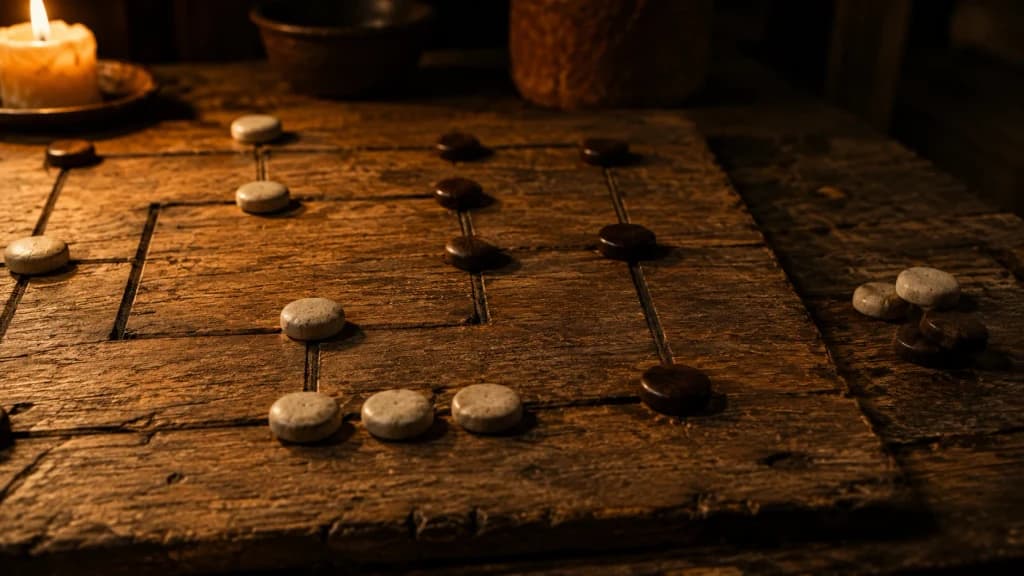
Six Men's Morris
The shortest of the mill games. Place six men on sixteen points, make a row of three and take one of theirs — but there are no diagonals here, and nobody gets to fly.
- Sixteen points and eight mills — the smallest board in the family
- No flying: three men left means you fight your way out along the lines
- Play a friend online — share a code and chat
 Board Game
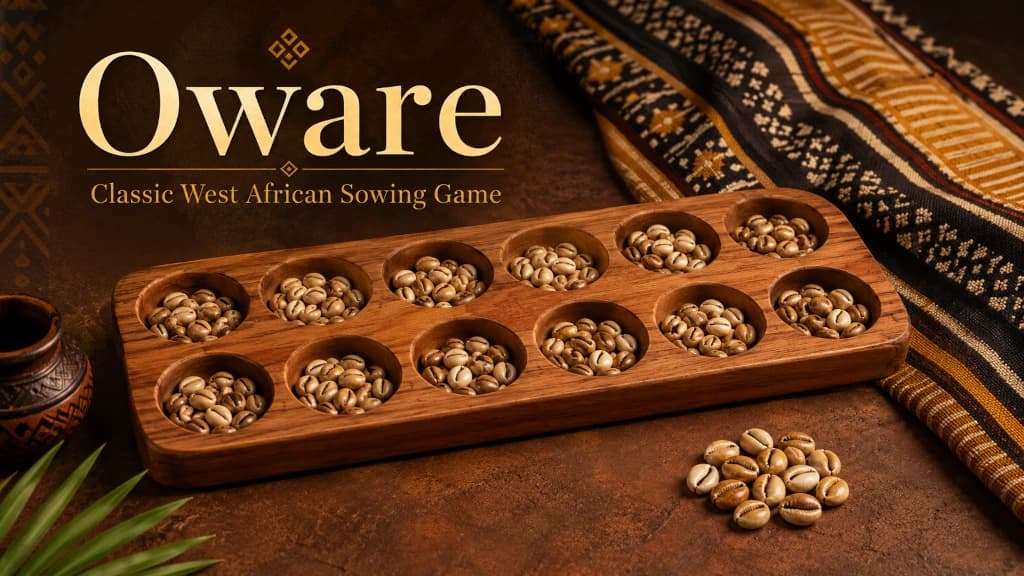
Oware
The West African sowing game. Capture on your opponent's side by leaving a pit on two or three seeds, feed them when they run dry, and take 25 of the 48 to win.
- Play a friend online — share a code and chat
- Four difficulty levels, from forgiving to no mercy
- Abapa tournament rules, including the grand slam
 Board Game
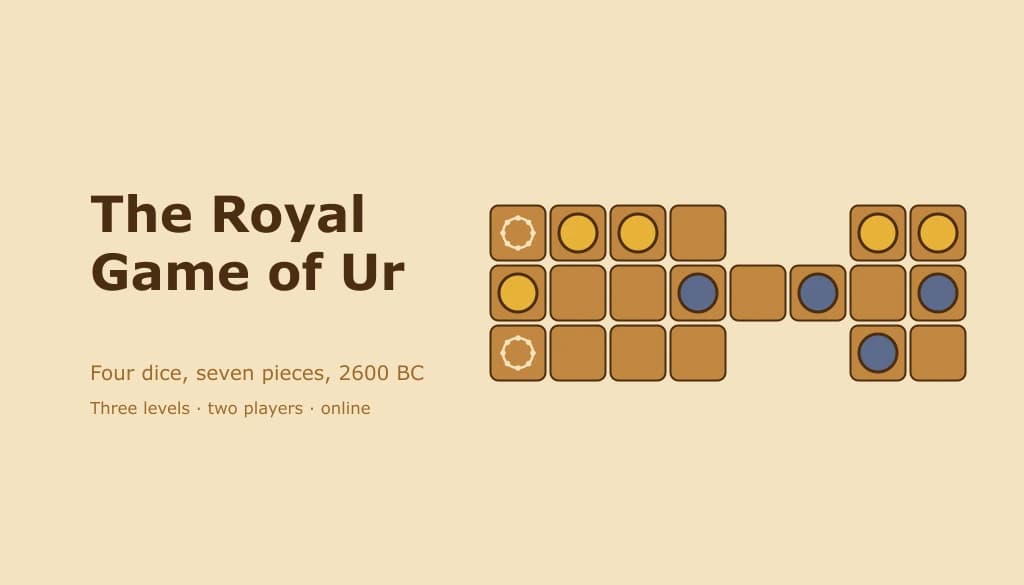
Royal Game of Ur
Seven pieces, four dice and twenty squares — the oldest board game whose rules we can still read, written down on a clay tablet and dug back out in the 1980s.
- The oldest playable rules in the world, from a Babylonian tablet
- We measured where pieces actually get taken — one square holds a quarter of all captures
- Play a friend online — share a code and chat
 Board Game
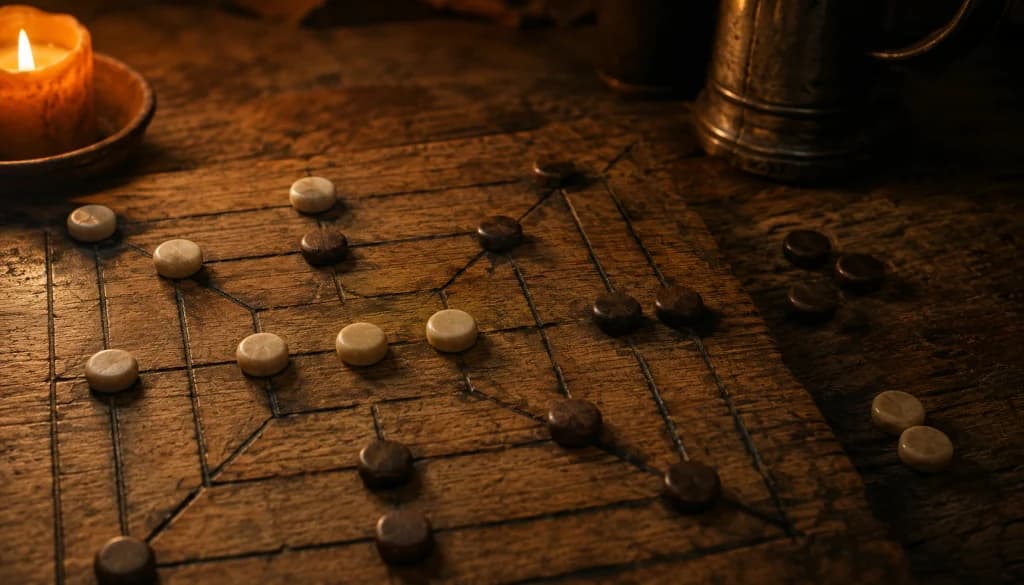
Twelve Men's Morris
The mill board with its corners joined: twenty rows of three instead of sixteen, twelve men a side, and a board that fills completely by the end of placing.
- Four diagonals turn sixteen mills into twenty
- Twelve men each on twenty-four points — the board fills exactly
- Play a friend online — share a code and chat
 Board Game
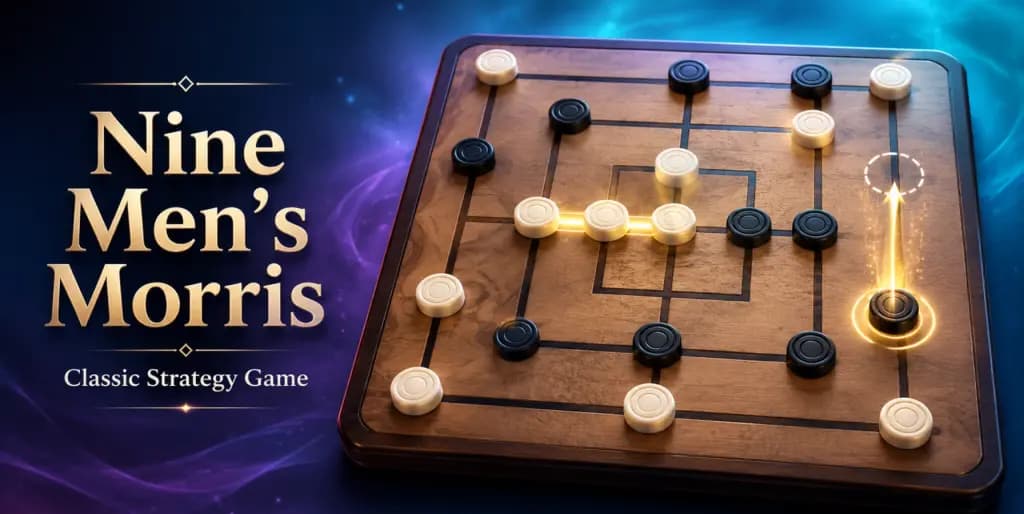
Nine Men's Morris
Place and move your nine pieces, form mills of three, capture enemy pieces and grind your opponent down to two.
- Play a friend online — share a code and chat
- Three computer difficulty levels
- Placing, moving and flying phases
 Board Game
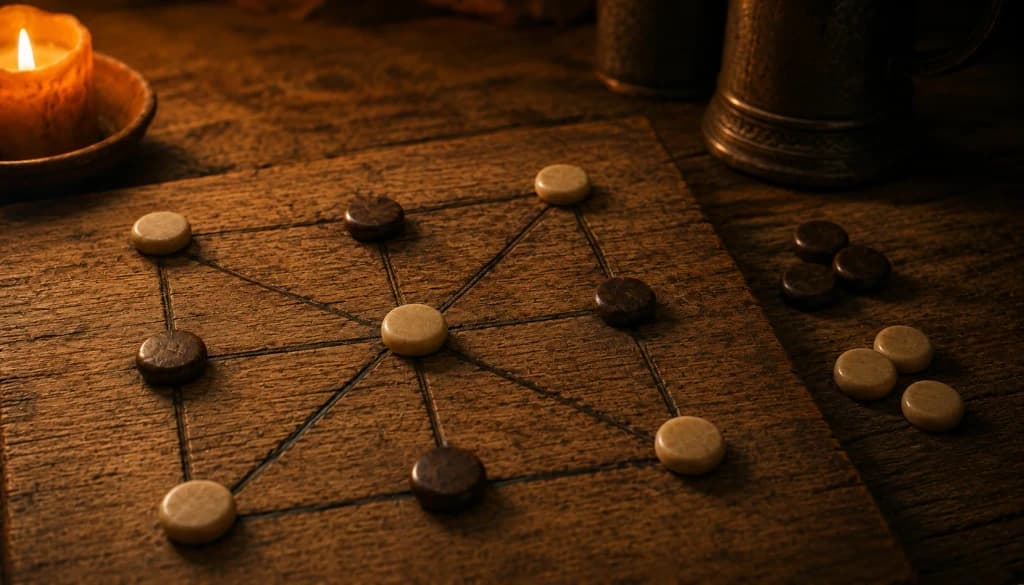
Three Men's Morris
Three men each on a noughts-and-crosses grid. Nothing is ever captured — three in a row simply wins, and when the board fills you start sliding.
- No capturing at all: three in a row ends the game
- The centre is closed on move one — we solved the board to find out why
- Play a friend online — share a code and chat
 Board Game
Yut Nori
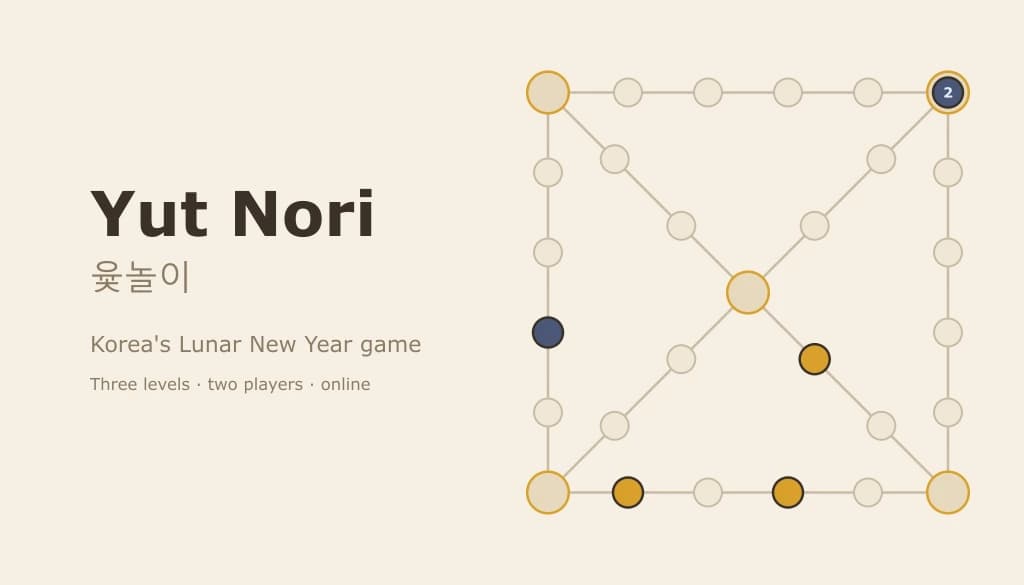
Four sticks, four horses and a square board with two diagonals. The long way round is 21 steps and the short way is 12 — and hitting the shortcut is most of the game.
- The game Korean families actually play at Lunar New Year
- We measured the four routes: 21, 17, 17 and 12 steps
- Play a friend online — share a code and chat
 Board Game
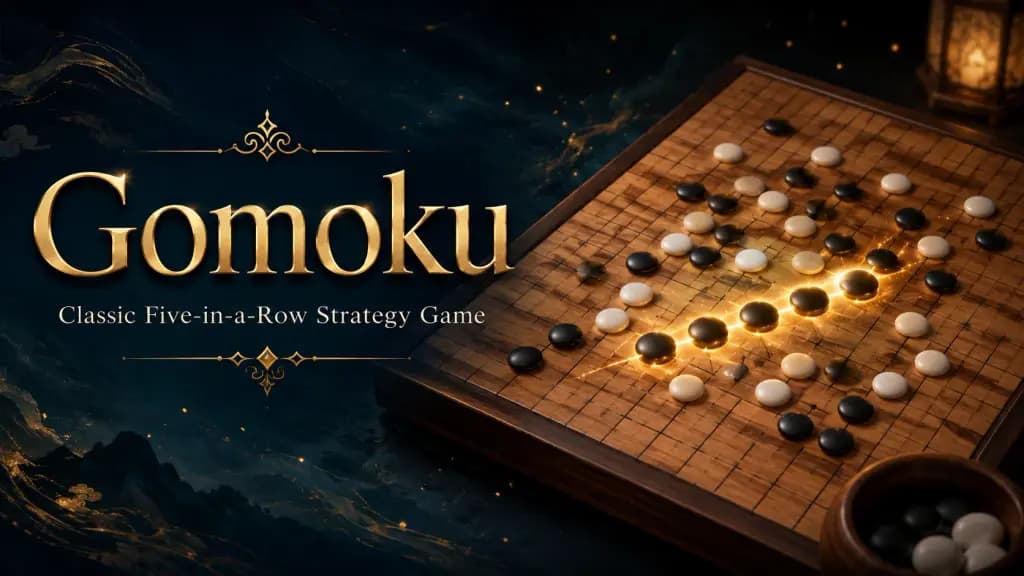
Gomoku
Place stones on the intersections and race to line up five. Block open threes, then win with a double threat your opponent cannot answer.
- Play a friend online — share a code and chat
- Three computer difficulty levels
- Ghost-stone move preview
 Board Game
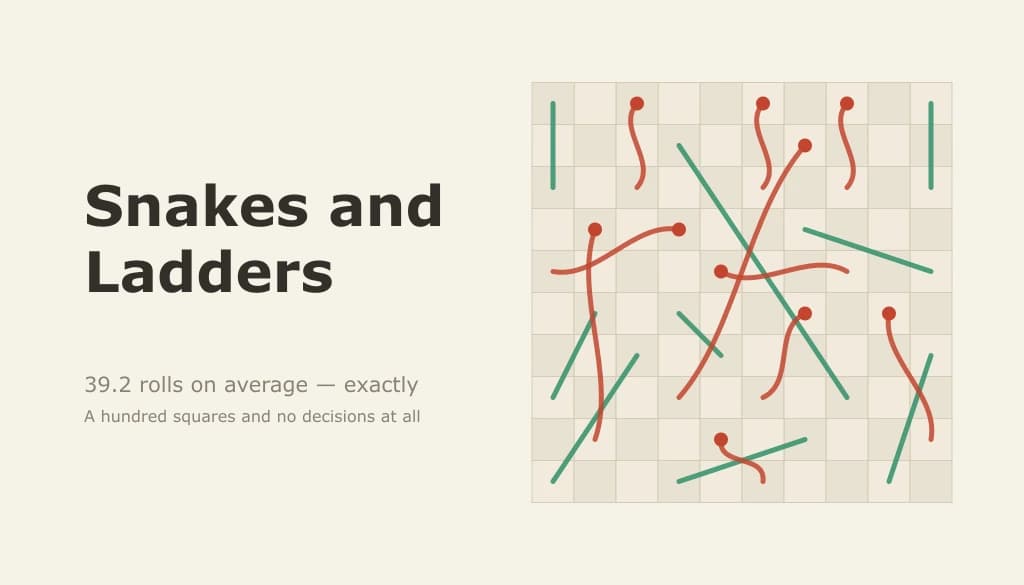
Snakes and Ladders
A hundred squares, nine ladders, ten snakes. The traditional game has no decisions at all, which is why we could solve it exactly — so the board here gives you three pieces and a choice every turn.
- Three pieces each — you choose which one moves, and it matters (measured)
- 2 to 4 players, or against the computer
- Play a friend online — share a code and chat
 Board Game
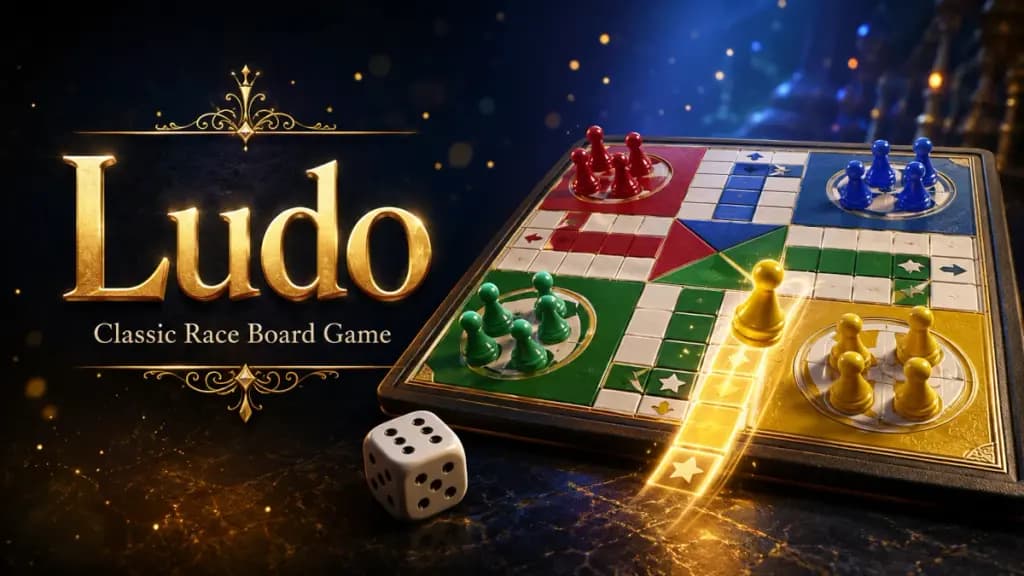
Ludo
Roll a six to leave the yard, race your four pieces around the board and knock your rivals all the way back to the start.
- One to three computer opponents
- Captures and safe star cells
- Exact-roll finish
 Board Game
Pachisi
Toss six cowrie shells and race four pieces out of the centre, once around the cross and back — but capture a rival first, or none of them may come home.
- Six cowrie shells instead of dice
- Play with up to 3 friends — send a link, chat at the table
- Twelve safe castle squares and blockades
 Board Game
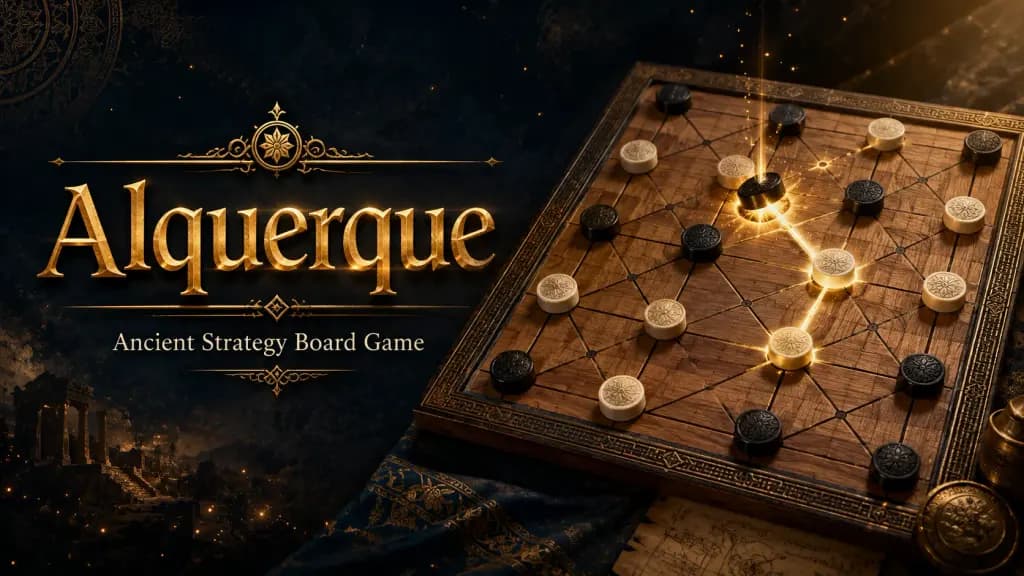
Alquerque
Play the medieval ancestor of checkers. Move across the lined board, make compulsory captures and chain jumps together to clear the board.
- Easy, medium and hard difficulty
- Compulsory captures and chain jumps
- Play as White or Black
 Board Game
Surakarta
Race your pieces around the curved corner loops to strike enemies from directions they never see coming — a capture rule found in no other game.
- Play a friend online — share a code and chat
- Three computer difficulty levels
- Animated loop capture paths
 Board Game
Shisima
Slide three water insects around a Kenyan pond and line them up through the centre. A game takes a minute; winning takes longer.
- Play a friend online — share a code and chat
- Three computer difficulty levels
- Fast one-minute games
 Board Game
Checkers
Three levels of computer opponent, or pass and play with a friend on one device.
- Three difficulty levels of computer opponent
- Pass and play with a friend on one device
- Mandatory captures and multiple jumps
 Board Game
Chess
Learn chess one move at a time with legal-move highlights, helpful hints, opening names and a built-in coach that explains your options.
- Built-in coach and move suggestions
- Three computer difficulty levels
- Local two-player mode
 Board Game
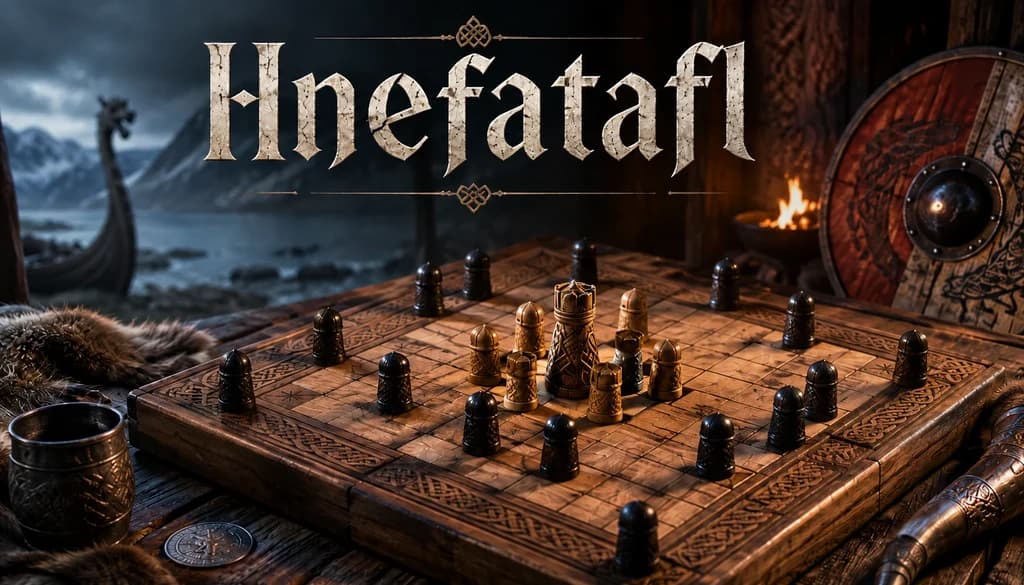
Hnefatafl
The full-size Viking hunt game. Twenty-four attackers seal the board while a king and twelve guards try to break out to a corner. An hour, not ten minutes.
- The full 11×11 Viking board
- Play a friend online — share a code and chat
- Both sides playable, three computer levels
 Board Game
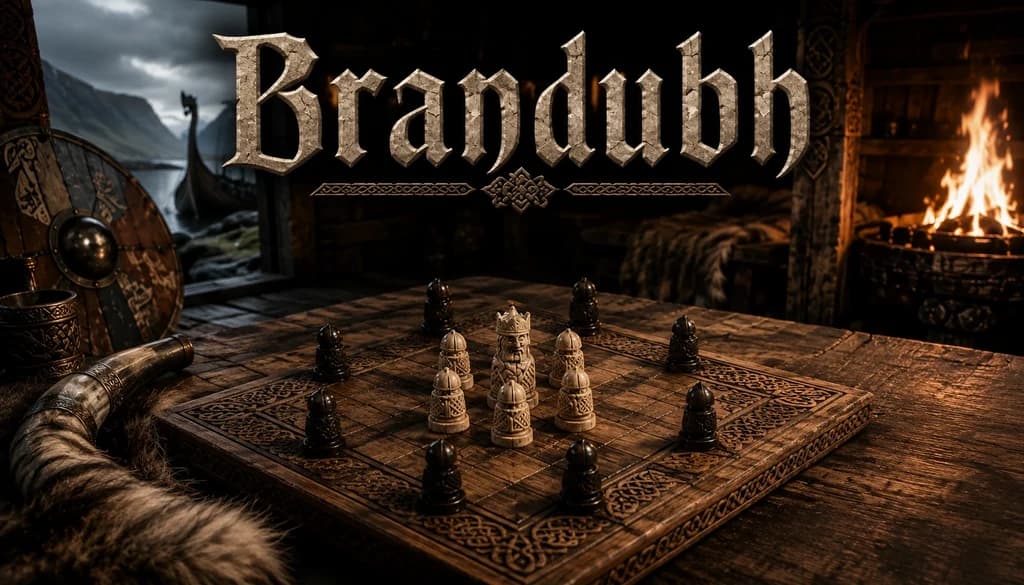
Brandubh
Eight hunters surround a king in the centre. He needs one corner; they need him. The only classic board game where the two sides play by different rules.
- Play a friend online — share a code and chat
- The rare board game where both sides want different things
- Three computer levels, play either side
 Board Game
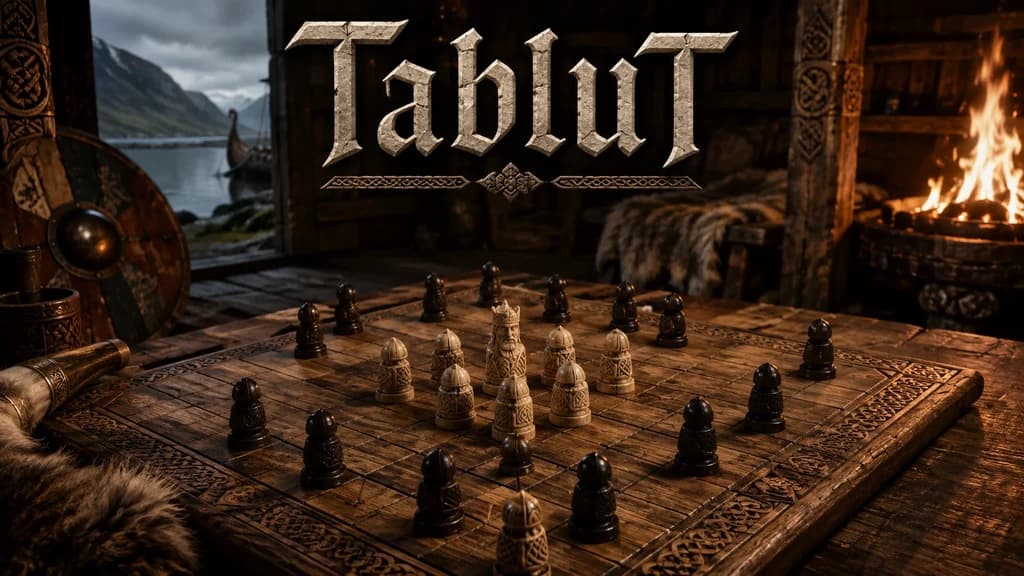
Tablut
Sixteen hunters against eight guards and a king, on the board Linnaeus sketched in Lapland in 1732. Every other tafl game is reconstructed from this one.
- The one tafl game with an eyewitness account
- Play a friend online — share a code and chat
- Middle size: bigger than Brandubh, quicker than Hnefatafl
 Board Game
Halma
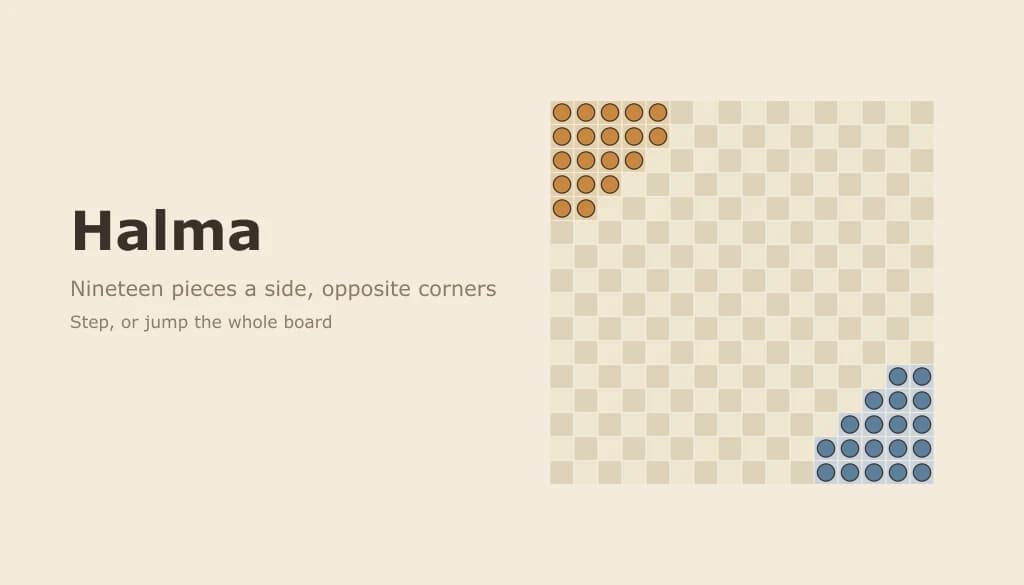
Nineteen pieces each, opposite corners of a sixteen-by-sixteen board. Step one square, or chain jumps clear across it — nothing is ever captured, and the first camp to swap places wins.
- Step one square, or chain jumps most of the way across the board
- We measured it: a jump chain can reach seven squares before the corner, in one turn
- Against the computer, a friend online, or two players on one device
 Board Game
Hex
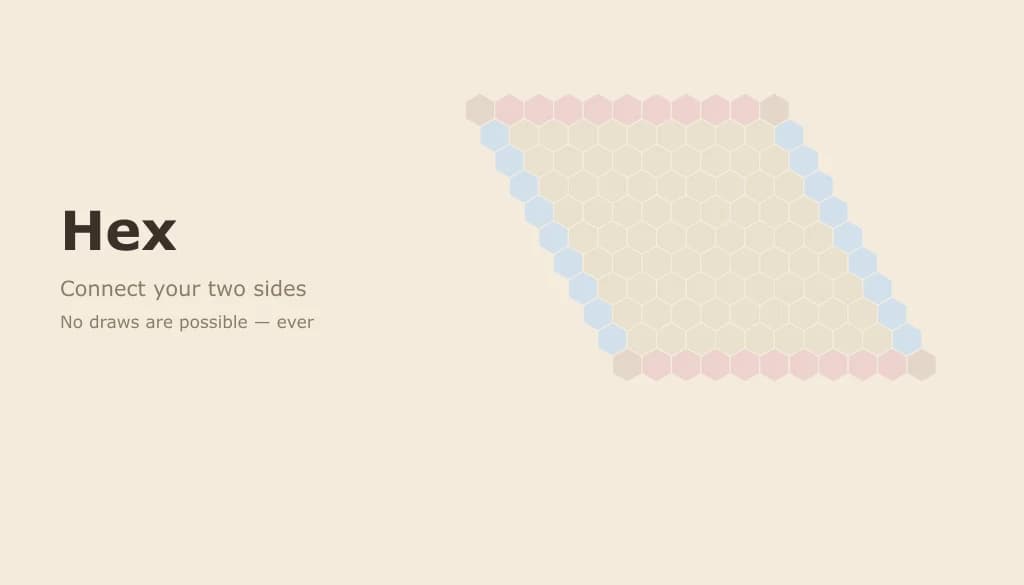
Red connects top to bottom, Blue connects left to right, one stone a turn, no captures. We solved the tiny boards ourselves to show why the swap rule exists at all.
- The swap rule, explained with our own solve of which openings actually win
- No draws — we exhaustively checked all 33.5 million 5x5 fillings
- Against the computer, a friend online, or two players on one device
 Board Game
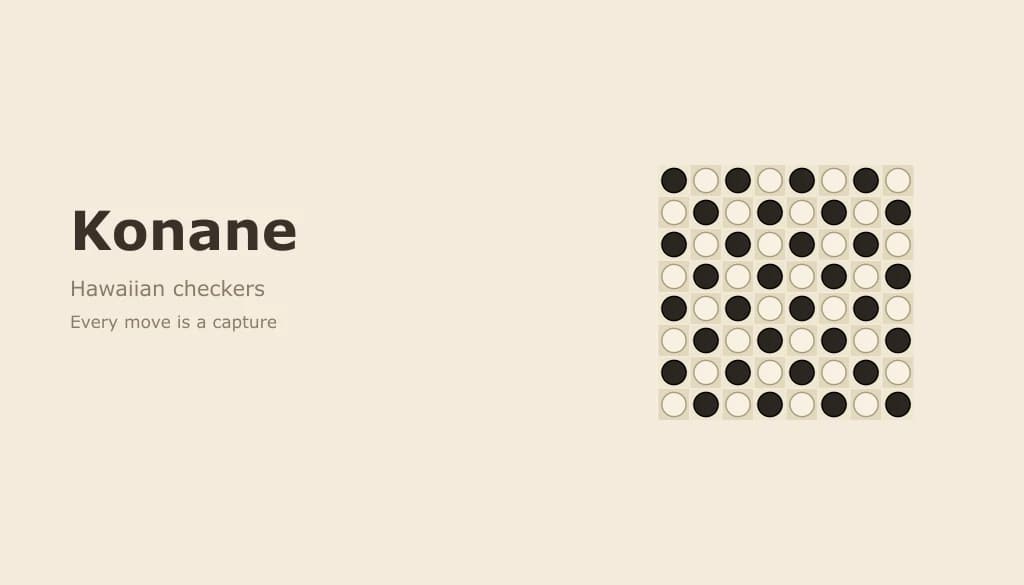
Konane
Every square starts full, black and white alternating. Jump an enemy piece to capture it — that is the only move there is, and whoever runs out of jumps first loses.
- Every move is a forced capture — there is no other kind
- A jump chain can turn corners between turns, never within one
- Against the computer, a friend online, or two players on one device
 Board Game
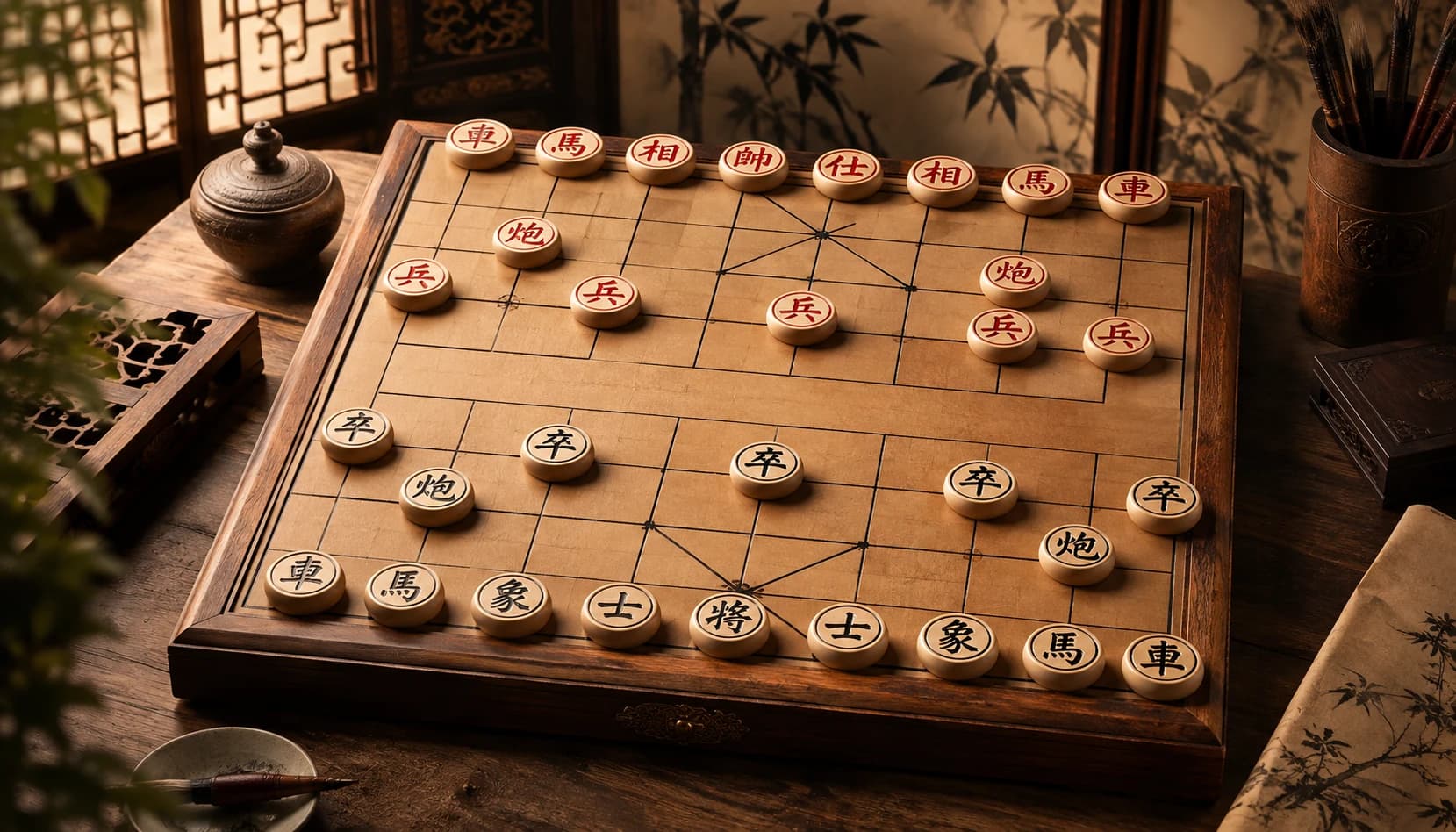
Xiangqi
Nine files, ten ranks, a river down the middle. The cannon needs a piece to jump before it can capture, the elephant can be blocked by a single stone two points away, and having no legal move at all is a loss here — not a draw.
- Every blocking rule tested against hand-built positions before shipping
- The cannon: harmless without a screen, lethal with exactly one
- Against the computer, a friend online, or two players on one device
 Board Game
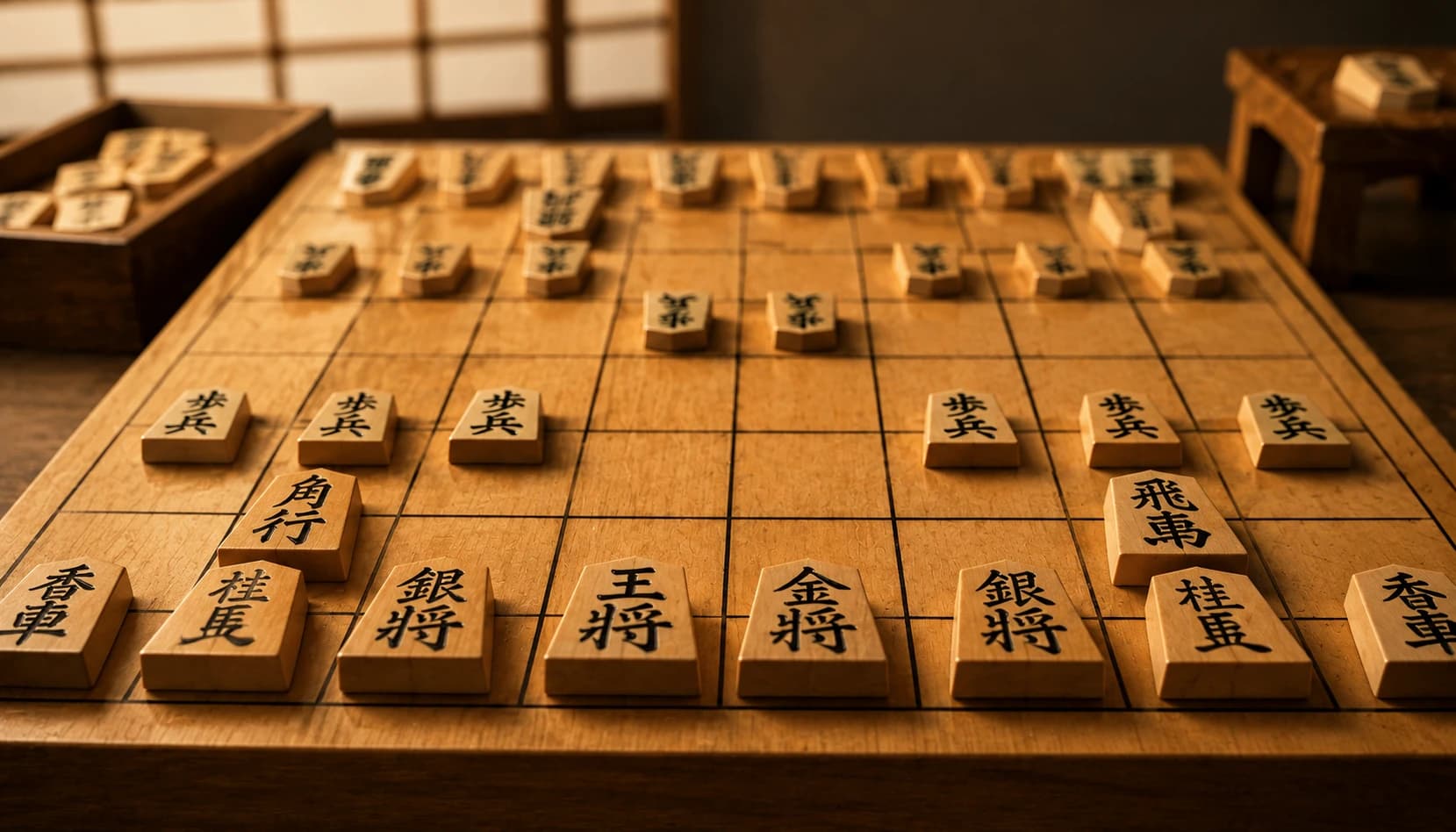
Shogi
Nine by nine squares, and the rule that makes Shogi unlike any other chess variant: a captured piece never leaves the game. It joins your hand, and on a later turn it comes back onto the board as your own.
- The drop rule, tested against nifu, forced-square and pawn-drop-mate edge cases
- Pieces rotate to show who owns them — colour and orientation both
- Against the computer, a friend online, or two players on one device
 Board Game
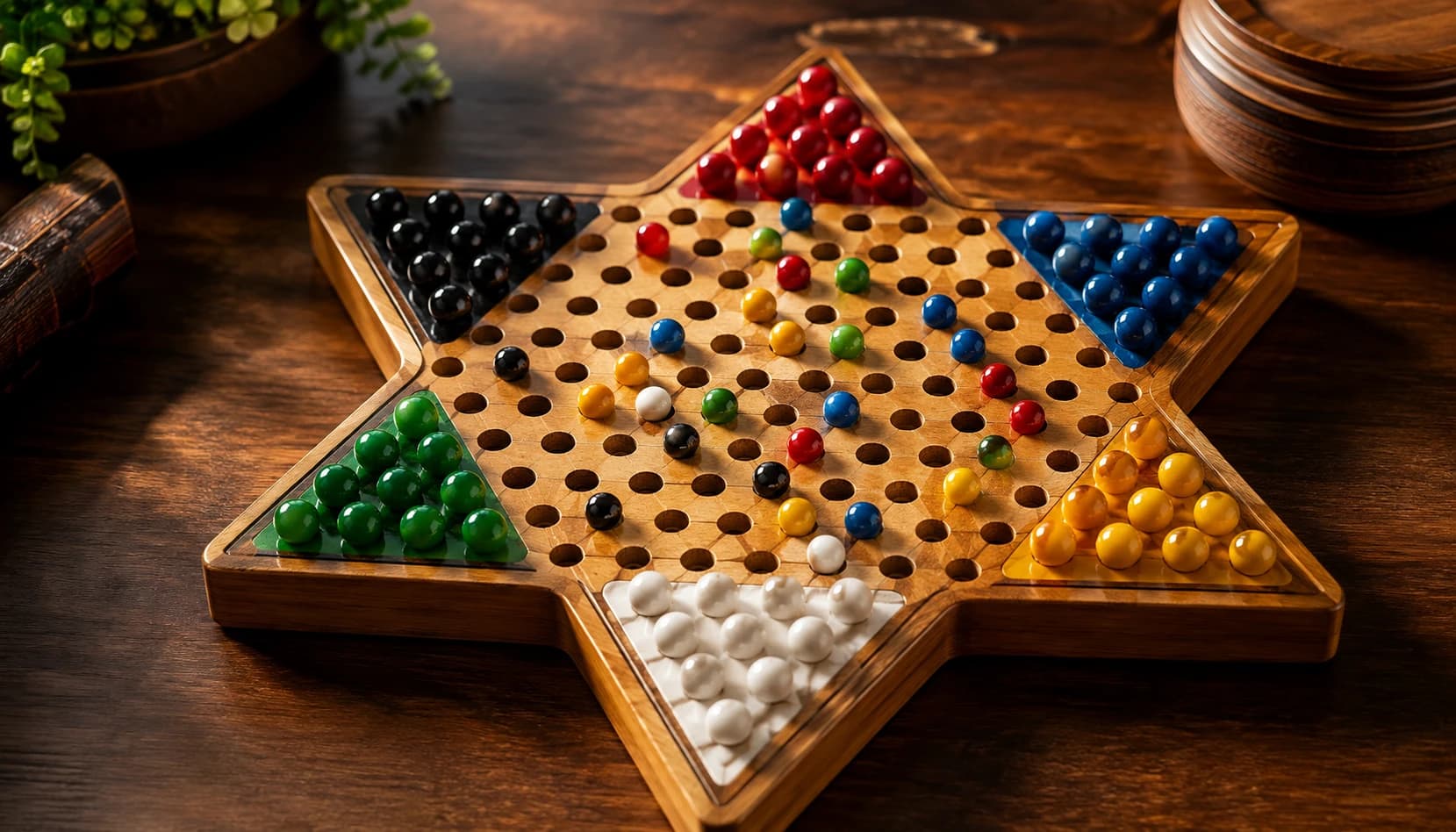
Chinese Checkers
A 121-point star, ten pieces a side, opposite corners. Step or chain-jump across — nothing is ever captured — and be first to fill the point directly opposite your own.
- The real star board — not Halma's square one, on purpose
- A jump chain can turn any direction between hops
- Against the computer, a friend online, or two players on one device
 Board Game
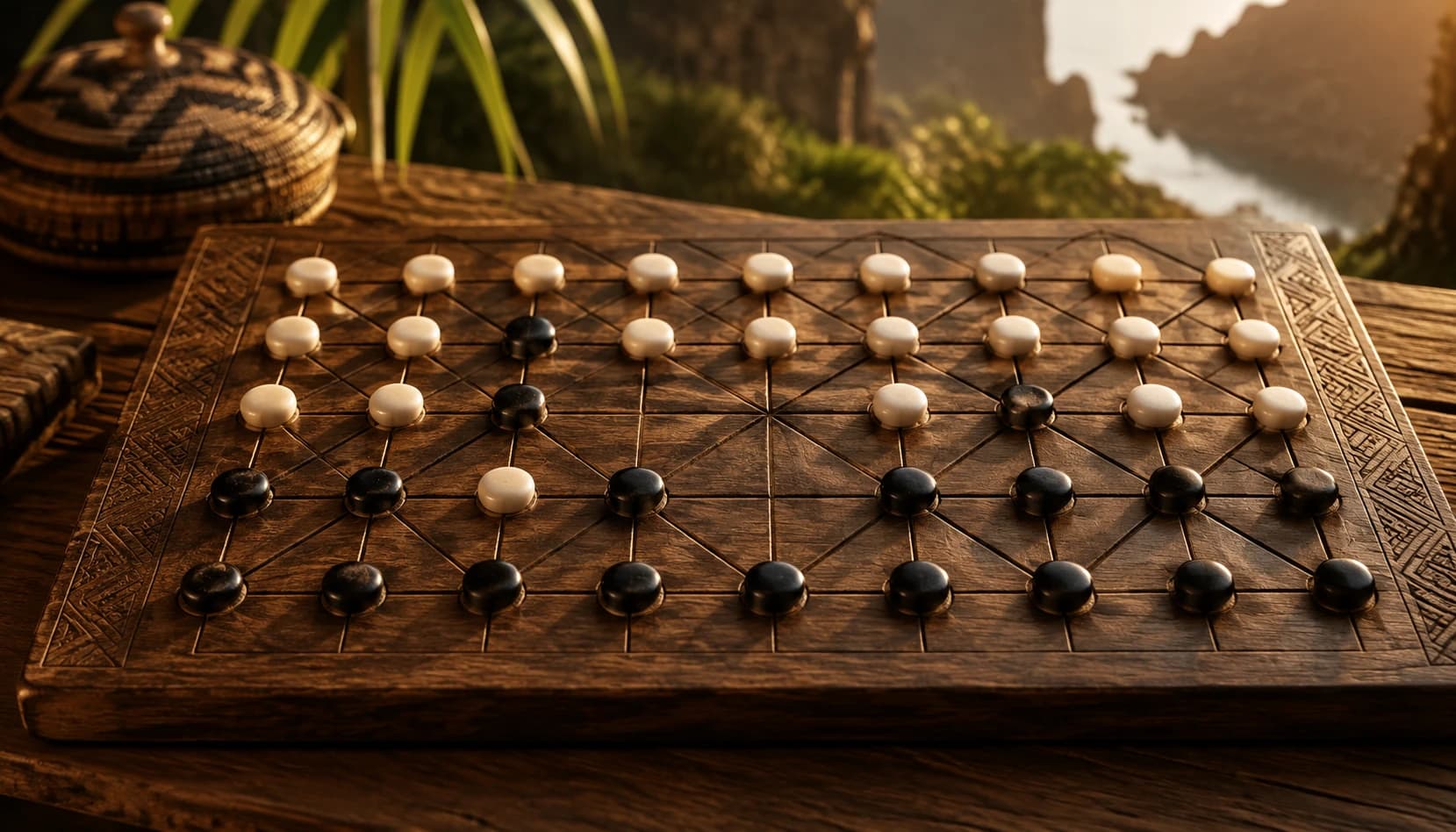
Fanorona
A 5×9 board, 22 pieces a side, all but the centre point full. Capture is compulsory and comes two ways — approach or withdrawal — and a chain can turn corners between captures.
- Two capture directions from a single move — approach or withdrawal, your choice
- Capturing is mandatory whenever it's available, on this board and the real one
- Against the computer, a friend online, or two players on one device
 Board Game
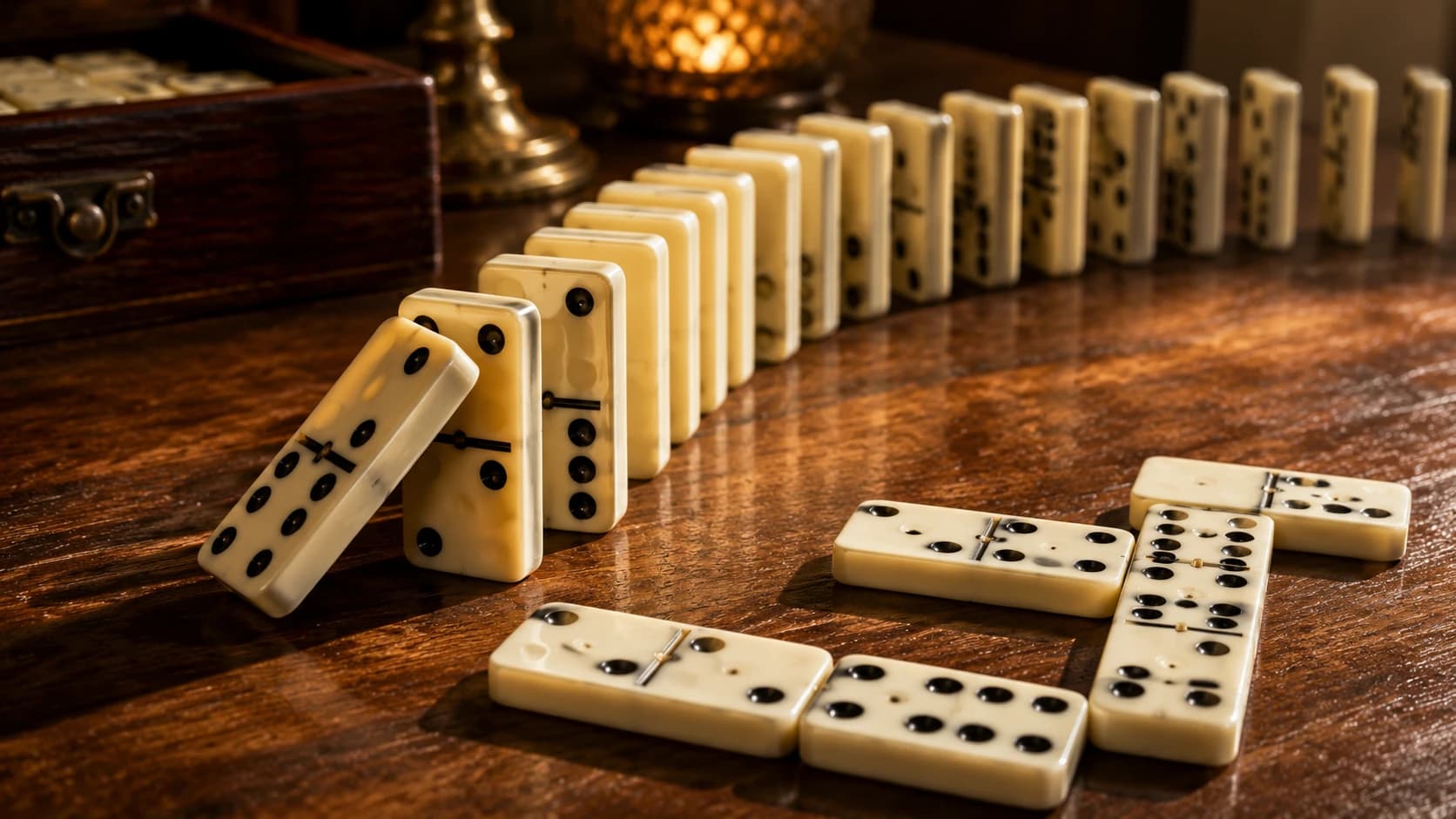
Dominoes
Double-six set, 28 tiles, seven to a hand. Match a tile to either open end of the line, or draw when nothing fits — the first to empty a hand wins.
- Real hidden hands — the computer, and your online opponent, can't see your tiles
- Draw dominoes: no forced passing while the boneyard still has tiles
- Against the computer, a friend online, or two players on one device
 Board Game
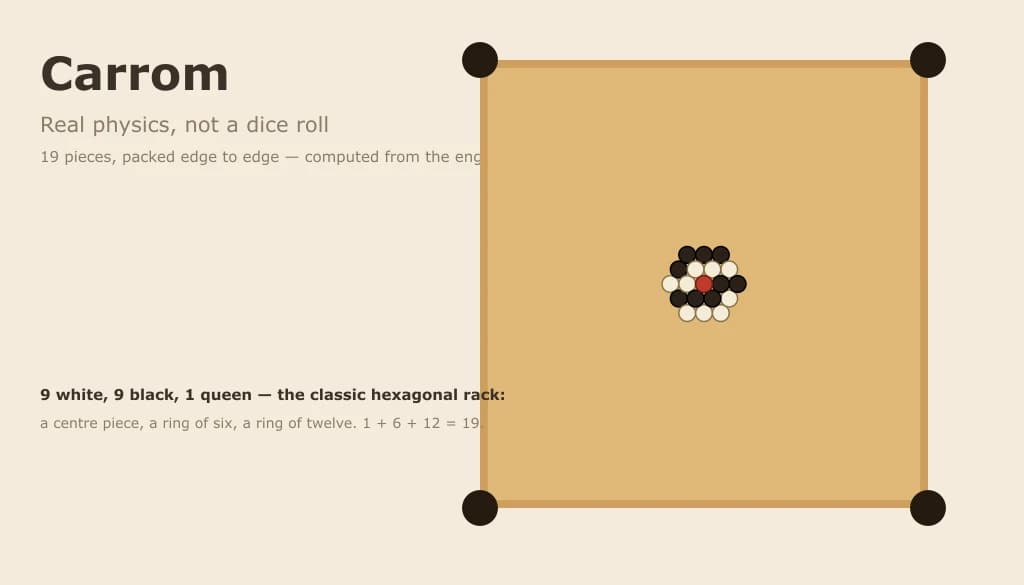
Carrom
Nineteen pieces racked at the centre, four corner pockets, one striker. Drag to aim and set power, and a real physics simulation — collisions, friction, rebounds — decides what happens next.
- A genuine physics engine — collisions, friction and rebounds are computed, never rolled
- The same 'ghost ball' aiming geometry real billiards players use, built into the computer opponent
- Against the computer, a friend online, or two players on one device
 Board Game
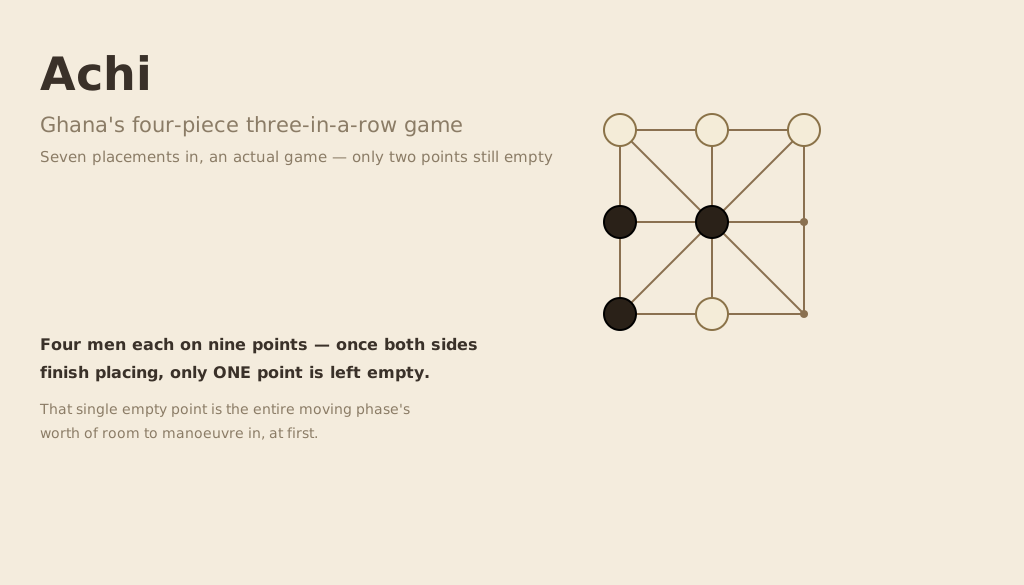
Achi
Four men each on nine points — one more than Three Men's Morris, and just enough that only a single point stays empty once everyone's down.
- Four pieces a side instead of three — only one point stays empty after placing
- A row formed while still placing doesn't win outright — we had to compute why that matters
- Against the computer, a friend online, or two players on one device
 Board Game
Picaria
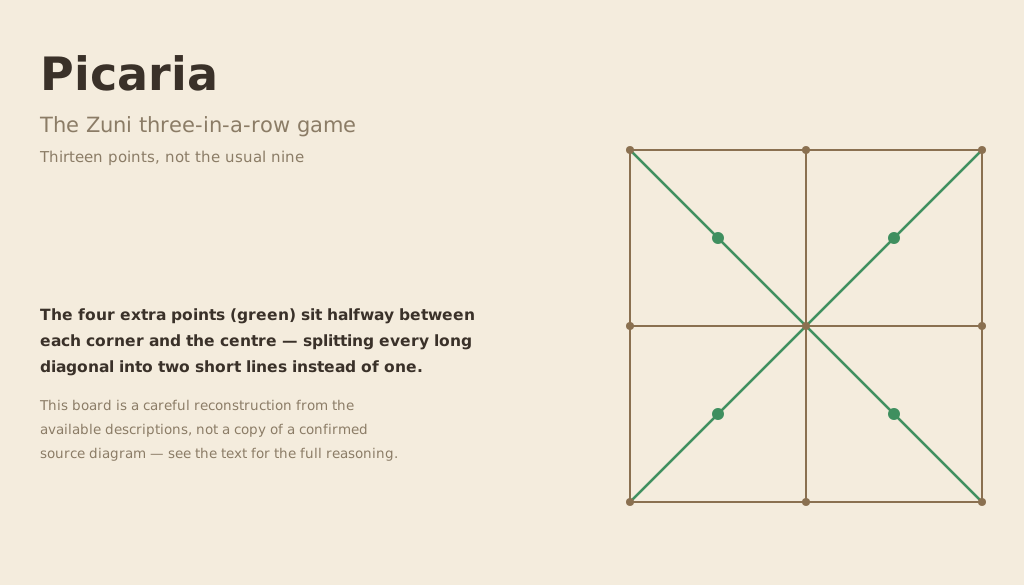
Thirteen points, not the usual nine — four extra points sit halfway between each corner and the centre, splitting every long diagonal into two short lines instead of one.
- A genuine thirteen-point board — not a repaint of the same nine-point grid every other game like it uses
- The centre connects to all eight neighbours — every row, column and short diagonal passes through it
- Against the computer, a friend online, or two players on one device
 Board Game
Kaooa
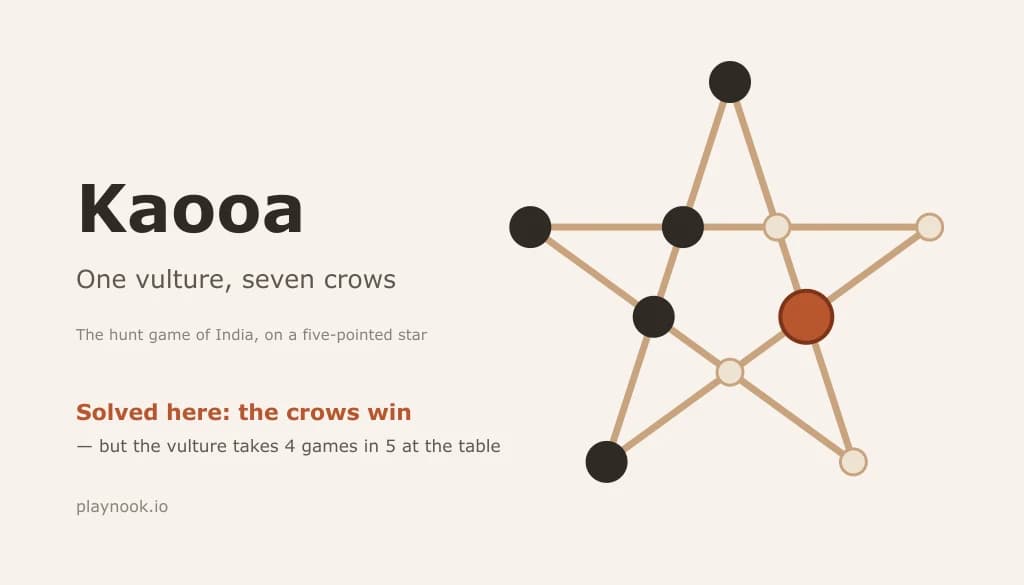
One vulture against seven crows on a five-pointed star. The vulture jumps to eat; the crows cannot capture at all and win by leaving it nowhere to go.
- Solved here for the first time — and the crows win, which nobody had written down
- Measured: the vulture wins 4 games in 5 at casual strength, and none at all against perfect play
- Play a friend online — share a four-letter code, no sign-up
 Board Game
Pong Hau K'i
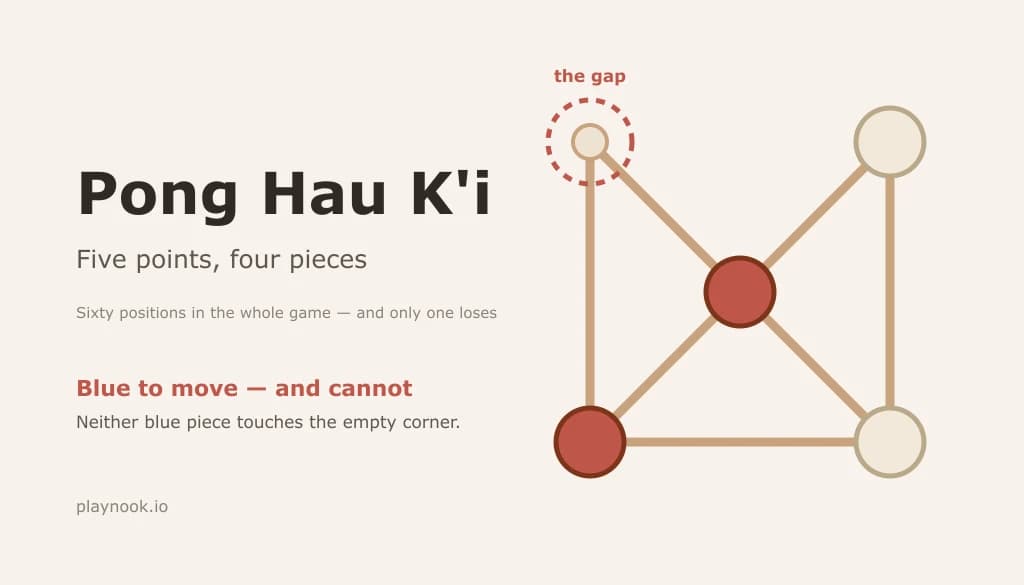
Five points, four pieces, and never more than two moves to choose from. Slide into the gap; if you cannot move, you lose. The whole game is one shape you must never enter.
- The entire game solved and shown: all sixty positions, and the four that lose
- Measured: knowing one shape turns a coin toss into a 97.8 % win
- Play a friend online — a four-letter code, no sign-up