
4 games
Dice Games
Dice games in your browser: Pig, Farkle, Shut the Box and Yatzy. Free, no sign-up, playable against the computer or a friend over the internet.
 Dice Game
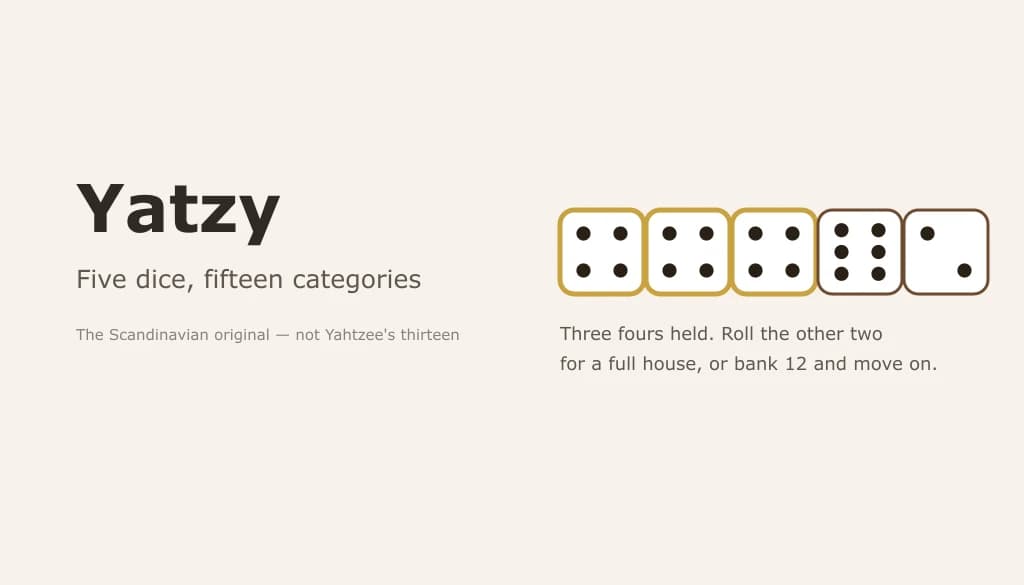
Yatzy
Five dice, three rolls a turn, fifteen categories to fill. Two extra rows Yahtzee doesn't have, and several categories that score differently even where the names match.
- The real Scandinavian scorecard — fifteen categories, not Yahtzee's thirteen
- One Pair, Two Pairs, and a Full House that scores nothing for five of a kind
- Against the computer, a friend online, or two players on one device
 Dice Game
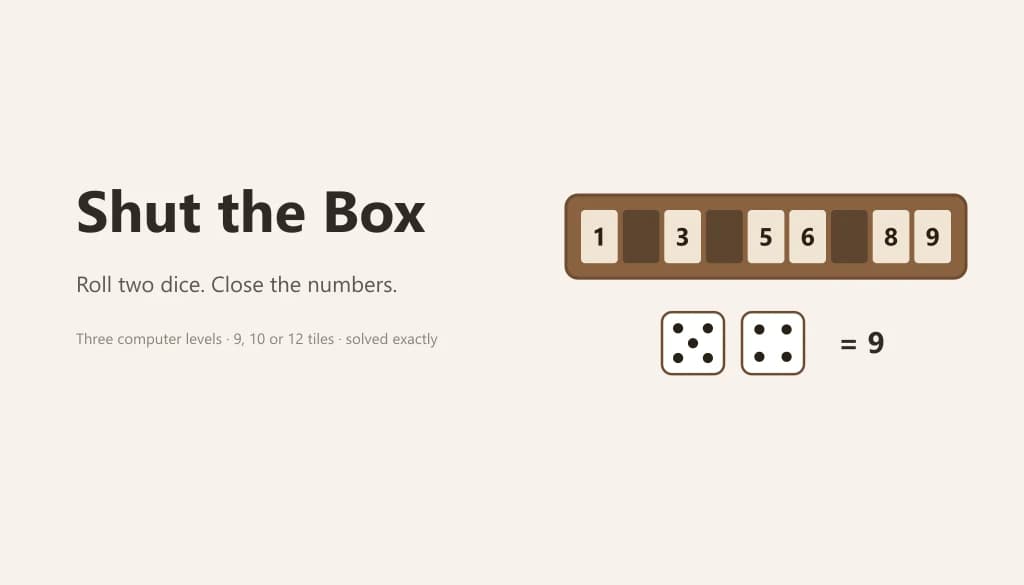
Shut the Box
Roll two dice, close any open numbers adding up to the total, and keep going until nothing covers your roll. What is left standing is your score, and low wins.
- Nine, ten or twelve numbers — the count changes the game completely
- Every position solved exactly, so the odds on this page are computed, not guessed
- Play a friend over the internet — a four-letter code, no sign-up
 Dice Game
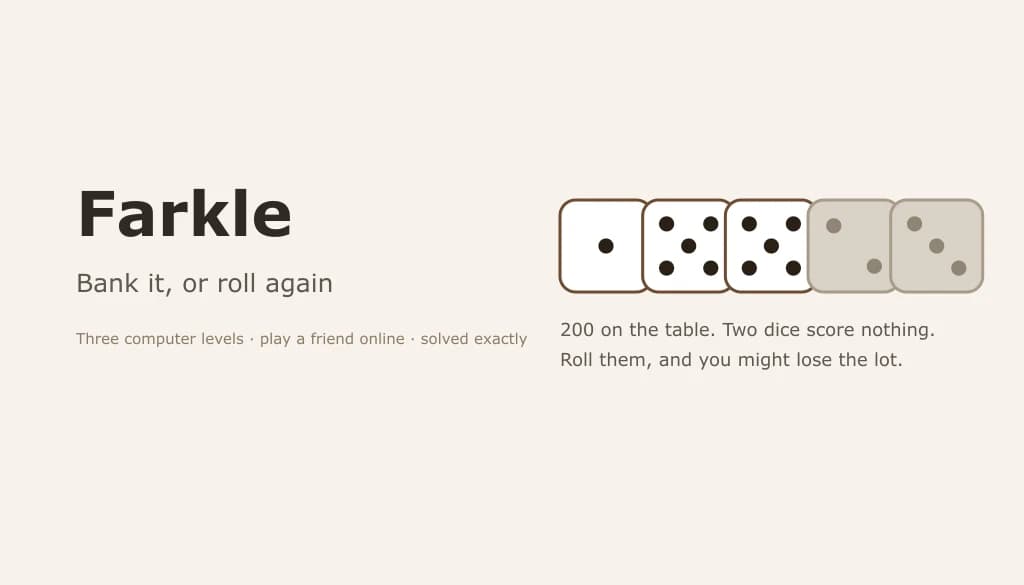
Farkle
Six dice, and one question asked over and over: bank what you have, or roll the rest and risk the lot. Roll nothing that scores and the whole turn is gone.
- Play a friend over the internet — a four-letter code, no sign-up
- The bank-or-roll decision solved exactly, and the answer is not 300
- Three computer levels; the strongest holds the whole value table
 Dice Game
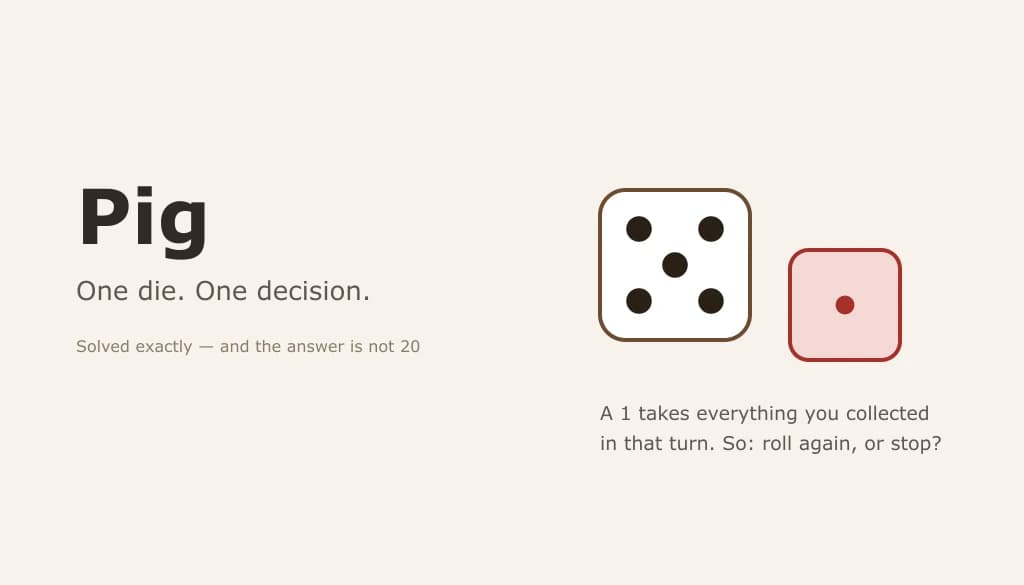
Pig
Roll one die and keep adding. Roll a 1 and the whole turn is gone. Stop whenever you like — and knowing when is the entire game.
- Every one of the million positions solved — the game can show you the right answer
- Play a friend over the internet, a four-letter code, no sign-up
- Three computer levels; the strongest plays the exact solution
Games where the dice are the game, not the movement. There is no board to think about and nothing to develop — there is a pot of points growing in front of you, and one question asked over and over: take it, or roll again.
That makes them different from the race games next door in Board Games. Ludo and Snakes and Ladders use dice too, but there the throw tells you how far to move and the thinking happens on the board. Here the throw is the whole position.
Every one of these has been worked out rather than guessed. Pig and Shut the Box are small enough to solve completely, so the odds on those pages are computed and not repeated from somewhere else — including the two most useful findings, that "stop at 20" is right in one situation in eighteen, and that a single die in Farkle is worth more than two.