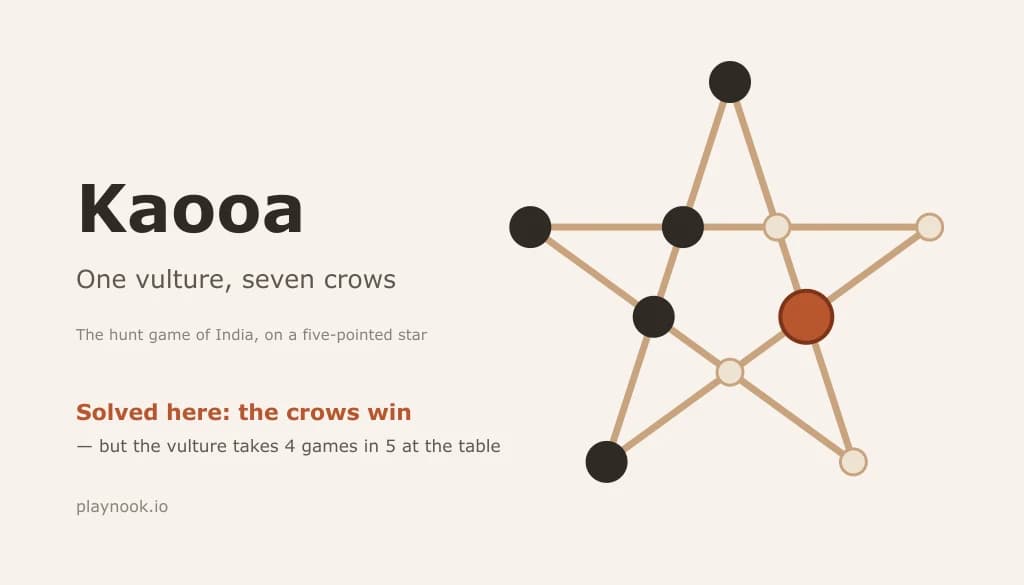
Bagh-Chal — moving tigers — is the national game of Nepal and one of the clearest examples of a family that almost nobody in Europe plays: the hunt games, where the two players do not have the same pieces and are not trying to do the same thing.
Four tigers. Twenty goats. The tigers eat; the goats cannot capture anything at all. And it works.
The opening
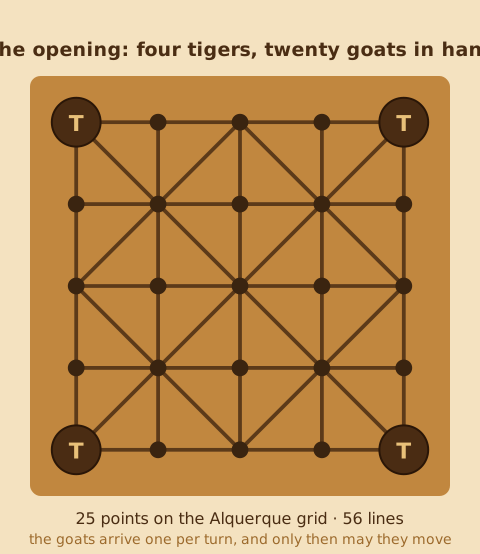
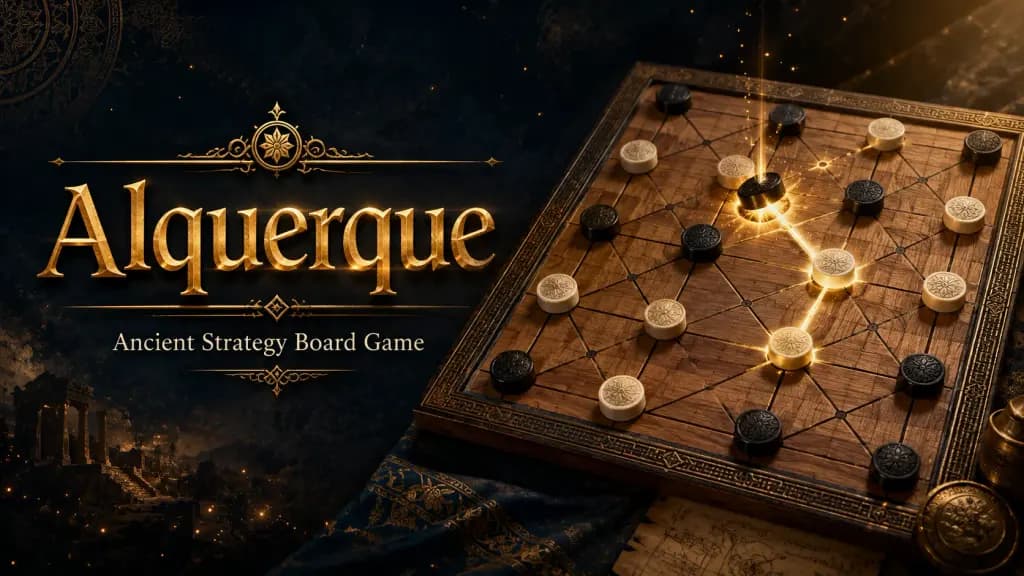
The grid is the Alquerque board — orthogonals everywhere, diagonals only at alternate points. It is one of the oldest patterns in the world and turns up under half a dozen games, including Alquerque itself, which is played on exactly this grid with two equal sides.
Goats go first, one per turn, onto any empty point. Only when all twenty are down may a goat move — one step along a line. That drop phase is where the game is usually decided, because a goat placed within a tiger's reach is a goat gone.
The tigers begin on the worst squares
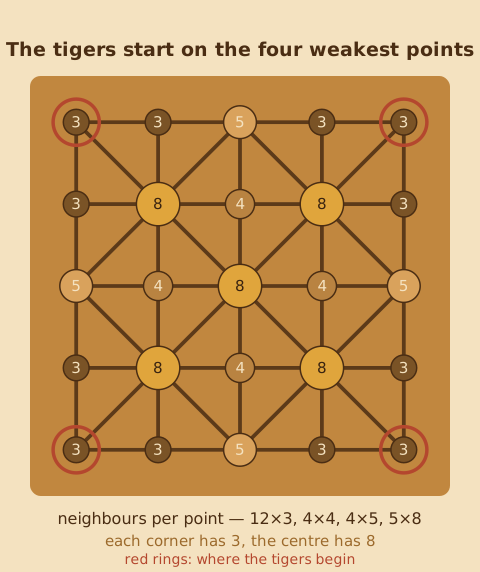
Count the lines out of each point and the board turns out to be very uneven: twelve points have three neighbours, four have four, four have five, and five have eight. The centre is the richest square on the board.
And the tigers start in the corners — three neighbours each, the weakest points there are. It looks like a commanding position and is nothing of the sort. A tiger in a corner has three ways out and three possible jumps; a tiger in the centre has eight of each. Most of the tigers' early play is simply getting off the edge.
For the goat player this is the first thing to exploit: the tigers want the middle, and the middle is exactly where a wall of goats does the most work.
Is four against twenty fair?
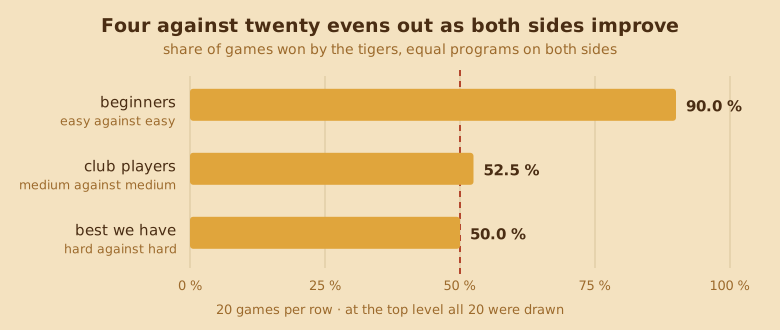
This is the question every asymmetric game has to answer, and it cannot be answered by counting pieces. So we measured it: our own program on both sides, at the same strength, twenty games per level.
- Weak against weak — the tigers take 90%. Beginners feed goats, and five fed goats is the game.
- Middle against middle — 52.5%. Ten wins, one draw, nine losses. As close to even as twenty games can show.
- Strong against strong — 50%, and every single game drawn.
So Bagh-Chal is not balanced for beginners and is balanced for anyone who has played it a dozen times. That is a real property of the game, and it is why the goat side is the one to hand the stronger player.
One caveat we will not hide: two programs of the same design measure themselves as much as they measure the game. A weakness shared by both sides would look exactly like a drawn game. The numbers say what our opponent does, not what perfect play does — nobody has solved this board.
How to actually play the goats
The goat side is the harder job and the more interesting one.
- Never place a goat where a tiger can jump it. That means: not adjacent to a tiger with an empty point directly behind. It is the whole opening.
- Goats defend each other by standing in line. A goat with another goat directly behind it cannot be jumped — there is nowhere for the tiger to land. So advance in blocks, not as a scattered front.
- Push the tigers back to the edge. They start there; keep them there. A tiger on a three-neighbour point is a third of the way to being trapped.
- Count moves, not goats. You are not trying to keep twenty goats. You are trying to reach a position where no tiger can move, and losing four goats on the way is fine.
How to play the tigers
- Get to the middle. Eight lines instead of three, and every extra line is another way to jump.
- Threaten two goats at once. The goat player can only cover one.
- Do not jump just because you can. A jump moves your tiger somewhere, and somewhere is often worse than where it was — the corner you land in may be a corner you cannot leave.
Where this sits
Bagh-Chal is the Asian branch of an idea that turns up everywhere. Northern Europe had the fox and the geese; Scandinavia had the tafl games, where a king runs for a corner while twice his number try to stop him. All of them had to solve the same balance problem, and all of them solved it by tuning the counts over generations.
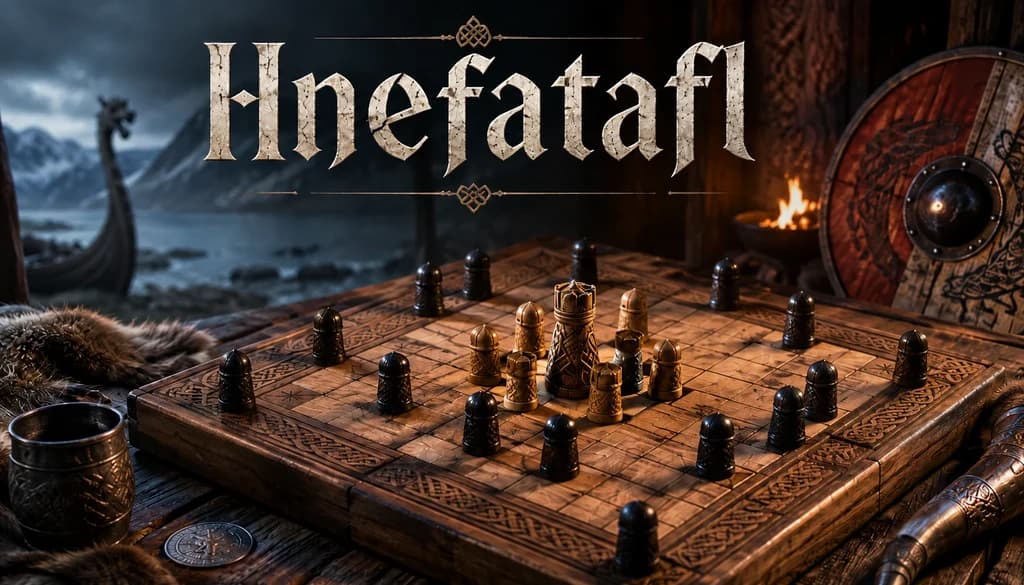
- Hnefatafl, 11×11 — twenty-four against twelve and a king
- Tablut, 9×9, and Brandubh, 7×7
- Alquerque — the symmetric game on this very grid
The written background is in hunt games: where the two sides are not equal.
Play a friend online
Choose With a friend online under the board and press Open a table. You get a four-character code — send it over, they type it in, and you are playing. Swap sides after a game; it is a different game with the same equipment, and that is the point of the whole family.