
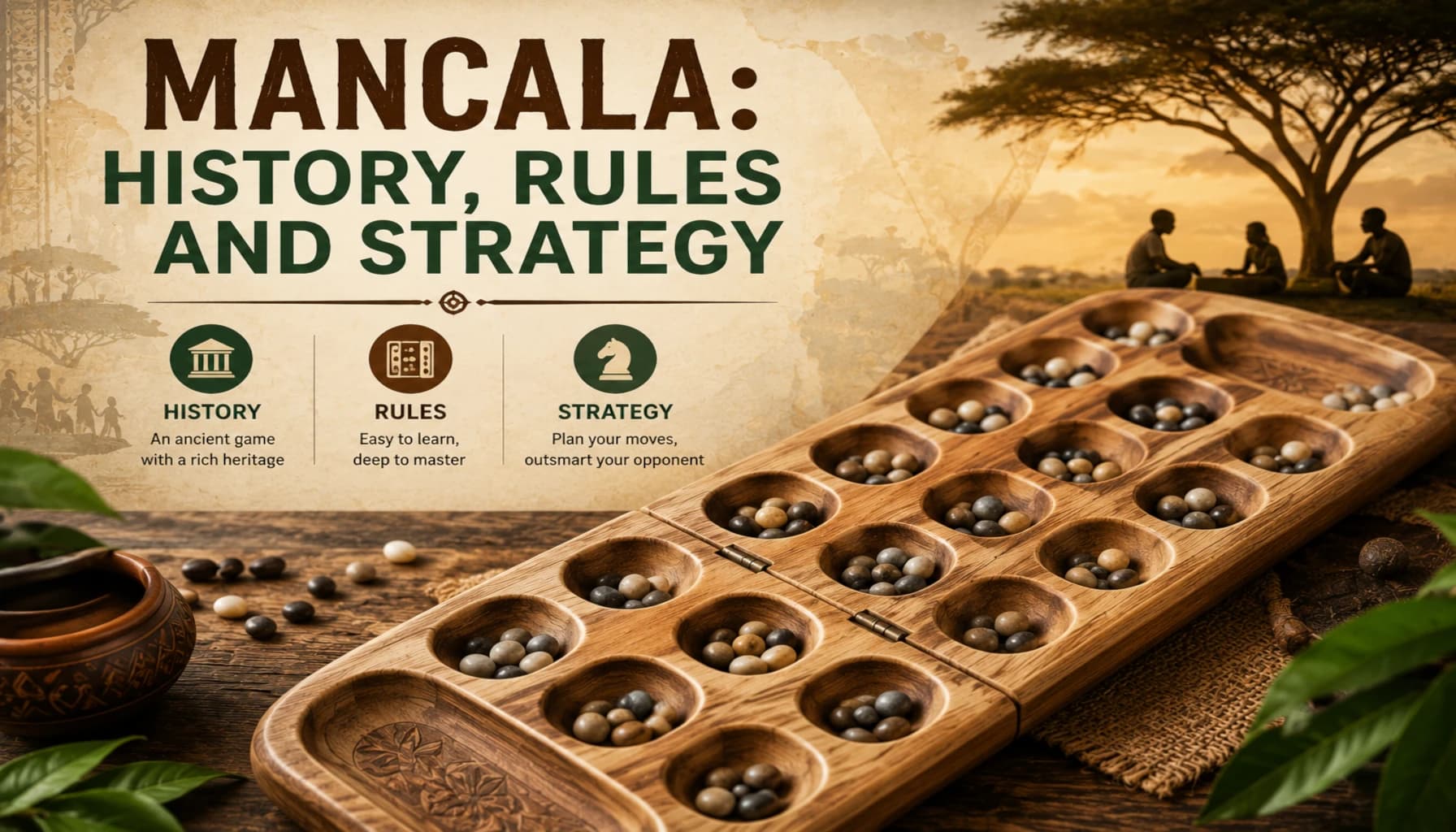
Mancala is not one game. It is a family of sowing games played for centuries across Africa, the Middle East and Asia, united by a single gesture: lift the seeds out of one pit, and drop them one at a time into the pits that follow.
That gesture is why they are called sowing games, and why they need almost nothing to play — a board scratched in the earth and a handful of stones will do. It is also why no two of them play alike, and why the version most people own is the youngest member of the family.
One name, many games
Mancala is not a game. It is a family name — from the Arabic naqala, to move — covering several hundred sowing games with their own local names: Oware in Ghana, Bao on the Swahili coast, Congkak in Malaysia, Toguz kumalak in Kazakhstan.
The version sold in Europe and North America under the plain word Mancala is almost always Kalah: two rows of six pits and a large store at each end. It is one member of the family, and by some distance the most recent — devised in the United States in 1940 and sold as an ancient game.
Two boards can look nearly identical and play nothing alike, so the first question before a game should always be which mancala. What separates them is in the mancala family; how the modern one came to carry the family's name is in who invented mancala.
How old is it, really?
Older than the evidence can prove, and younger than the folklore claims. Boards were wooden or simply scooped in the ground, and neither survives — so the five-thousand-year figure cannot be checked either way.
What can be pointed at: rows of carved depressions at Abu Shaar in Egypt from around the fourth century, and at Matara and Yeha in the Horn of Africa from the sixth or seventh, all on the trade routes linking Africa, the Red Sea and Arabia. Sowing games later crossed the Atlantic with the slave trade and survive in the Caribbean as Warri and Awari.
The evidence, the caveats and the crossing are in the history and origin of mancala.
Everything in the rules below is Kalah.
The board and the goal
Each player owns the six pits in front of them and the large store to their right. Every pit starts with four seeds, which puts 48 seeds in play. Both stores start empty.
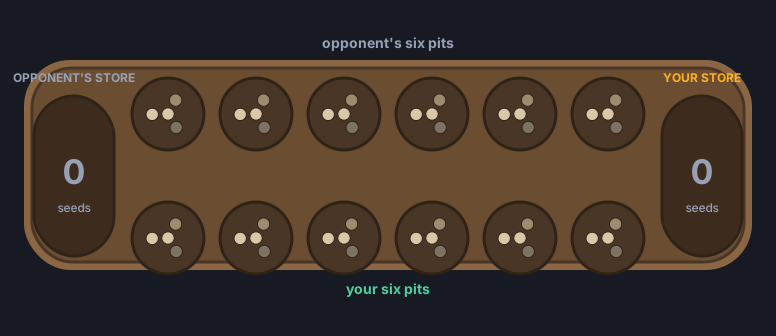
The goal is to gather more than half of the seeds. 25 wins; 24 each is a draw.
Sowing
On your turn, pick any non-empty pit on your own side. You cannot start from an empty pit, from your opponent's side, or from either store.
Lift out all the seeds and drop them one at a time into the following pits, moving counterclockwise. One seed per pit, no stopping early, no doubling up, until your hand is empty.
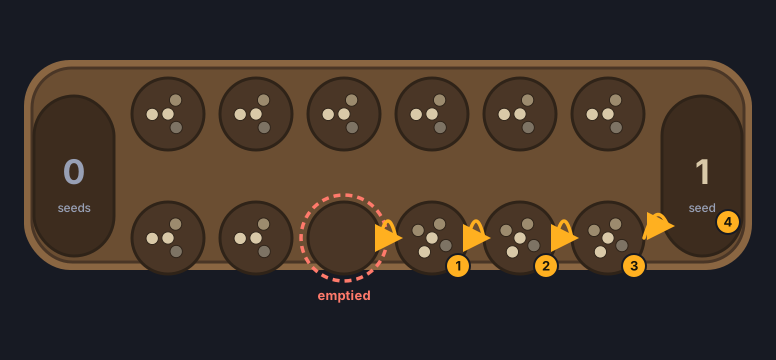
Your store, not theirs. When you pass your own store you add a seed to it. When you pass your opponent's store you skip it entirely. Seeds in a store are safe for the rest of the game.
The extra turn
If your last seed lands exactly in your own store, you move again immediately.
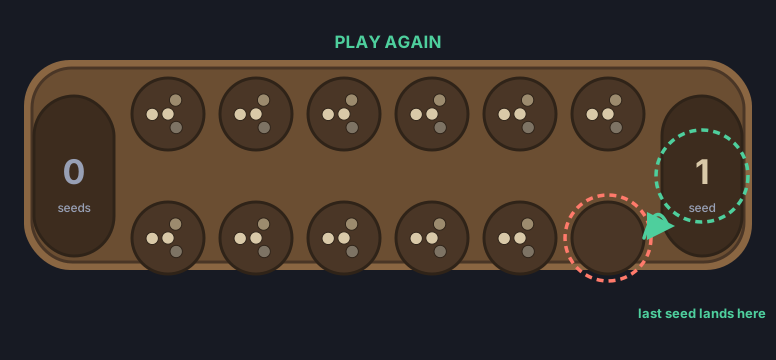
Several extra turns can follow one another, and stringing them together is the heart of Kalah. The arithmetic is worth memorising: the pit next to your store needs exactly one seed to earn another move, the next one along needs two, the next three, and so on out to six.
Capturing
If your last seed lands in an empty pit on your own side, and the pit directly opposite contains seeds, you take that final seed together with everything opposite and put it all in your store.
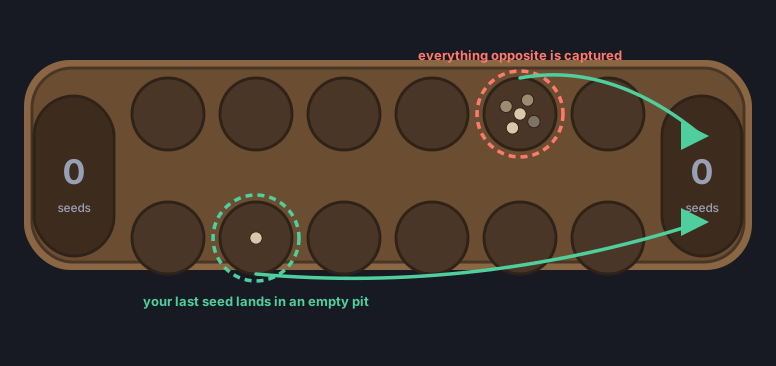
Two conditions, both required: the pit must be empty before your seed lands, and it must be on your side. If the opposite pit is empty, nothing happens and the seed simply stays.
How the game ends
The game ends the instant one player's six pits are all empty. The other player then sweeps every seed remaining on their own side straight into their store.
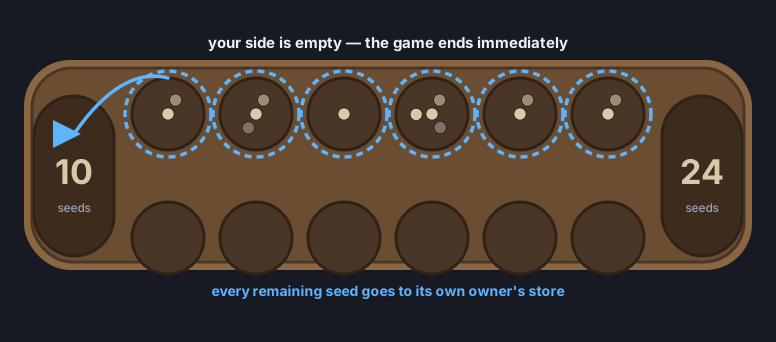
That last sweep decides more games than beginners expect. A comfortable-looking lead can evaporate when the opponent collects a dozen seeds from their own row in a single stroke — which means the ending has to be planned several moves out, not discovered when it arrives.
The rules at a glance
| Question | Kalah |
|---|---|
| Board | 2×6 pits plus one store each |
| Seeds | 48 — four per pit |
| Direction of sowing | Counterclockwise |
| Start from | Any non-empty pit on your own side |
| Your opponent's store | Skipped entirely |
| Last seed in your store | Move again |
| Last seed in your own empty pit | Capture it plus everything opposite |
| Last seed in your opponent's empty pit | Nothing happens |
| Game ends | When either side's six pits are empty |
| Then | The other player sweeps their remaining seeds |
| Winning score | 25 of 48; 24 each is a draw |
Strategy
Count where the last seed lands. Beginners choose the pit with the most seeds. Strong players choose by destination — whether the sowing ends in the store, in an empty pit, or somewhere harmless. Where a move ends matters far more than how big it is.
Hunt for free turns, then chain them. Because the pit beside your store needs one seed, the next two, and so on, a row that reads 1-2-3-4-5-6 from the store outwards lets you play six moves in a single turn. That shape almost never appears by accident, but half-chains of two or three do, and they are the most reliable source of advantage in the game.
Don't feed your opponent. Every seed sown past your own store lands on their side and becomes their material. Moves that keep seeds at home are worth more than their raw count suggests, and a big sowing that spills six seeds across the table is usually a gift.
Watch both sets of empty pits. Your own empty pits are capture traps waiting to be sprung — you need exactly the right number of seeds in the right pit to land there. Your opponent's empty pits are a warning: they show precisely which of your pits is about to be raided. A big pile sitting opposite an enemy gap is not an asset, it is bait.
Keep a pit loaded opposite their gaps — or empty yours. If your opponent has an empty pit and you have twelve seeds facing it, you are one accurate move away from losing all twelve. Either spend them or accept the risk knowingly.
Play the ending backwards. Before you empty your side, count what the sweep will hand over. Emptying your row is not automatically good: it ends the game immediately and gives your opponent everything left on theirs.
What beginners get wrong
| Habit to build | Why it matters | The mistake it replaces |
|---|---|---|
| Choose by destination | Only the last seed can score or capture | Emptying whichever pit holds the most seeds |
| Look for the free turn first | An extra move costs nothing and compounds | Taking a decent move without checking for a repeat |
| Count what spills over | Seeds past your store become their material | Playing a big sowing without counting the overflow |
| Check their empty pits | They mark exactly which of your pits is at risk | Letting a pile sit opposite an obvious gap |
| Count the sweep before it happens | The ending can swing a dozen seeds | Emptying your row and handing over the rest |
| Remember 25, not 24 | Half of 48 is only a draw | Playing for a lead that ties |
The single most useful habit: before each move, trace the sowing to its last seed. Everything in Kalah — the free turn, the capture, the timing of the end — depends on where the hand runs out.
The versions computers have solved
Kalah is small enough to be worked out completely, and it has been.
In 2000, Irving, Donkers and Uiterwijk solved standard Kalah with six pits and four seeds: with perfect play, the first player wins. Larger versions with five and six seeds per pit fell the same way. The first move is a real advantage, not a superstition — which is why some house rules add a pie rule, letting the second player swap sides after the opening move.
The contrast with the traditional games is striking. Awari, the West African game, was solved completely in 2003 by Romein and Bal at Vrije Universiteit Amsterdam, who computed all 889 billion positions. Their verdict: with perfect play, Awari is a draw.
So the modern commercial version is a first-player win, and the centuries-old traditional one is balanced. Neither result affects a game between two humans, where the outcome still comes down to who counts more accurately.
Common questions
Is mancala the same as Kalah? No. Mancala is the family; Kalah is one modern member of it, and the one usually sold under the family name.
How many seeds do I need? Standard Kalah uses 48 — six pits per player, four seeds each. Some sets start with three, five or six per pit, which shortens or lengthens the game without changing the rules.
Which direction do you sow? Counterclockwise in Kalah. Other members of the family differ, so agree before you start.
Do I put seeds in my opponent's store? Never. You skip it and carry on.
What if my last seed lands in an empty pit on their side? Nothing happens. Captures only work on your own side.
Can the game end while I still have seeds? Yes, and it is worth planning for: the moment either row is empty the game stops, and whoever still has seeds sweeps them into their own store.
Is it luck or skill? Skill. There are no dice, no cards and no hidden information — both players see everything, and the better counter wins. In Kalah the player who moves first also holds a proven advantage — though measured against real play it is worth almost nothing.
Ready to try it? Play Mancala here — Kalah rules, four difficulty levels and an undo button for when the counting goes wrong, or open a table and play a friend online with a chat window beside the board. Or take it to the table: the printable mancala board prints a board for any of the layouts above, seed counts included.