
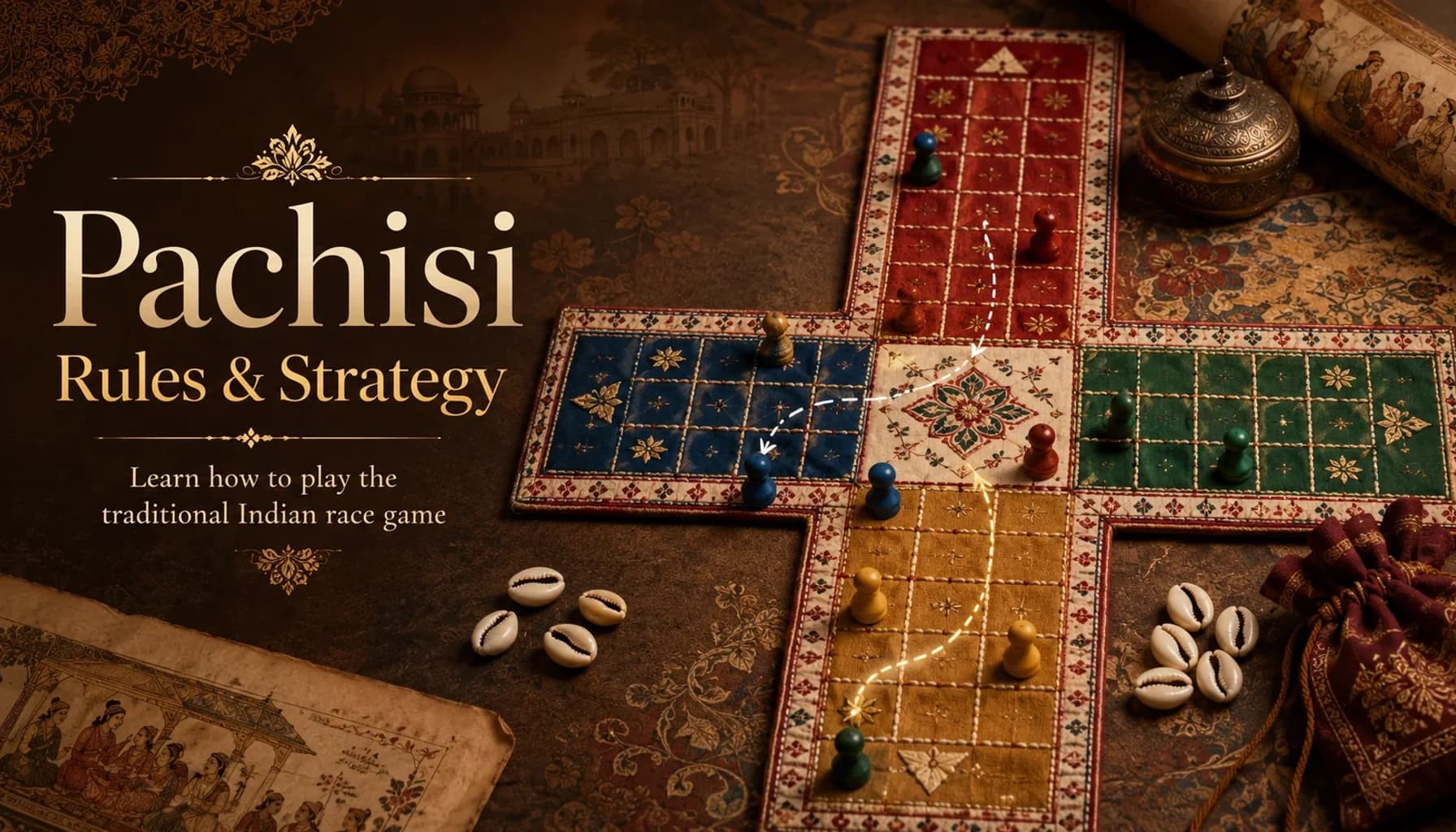
Most people meet Pachisi through one of its children. Ludo, Parcheesi and Mensch ärgere Dich nicht all descend from it, and all of them cut something away. Learn Pachisi expecting Ludo with prettier wood and you will lose to someone who knows what the cowries are for.
The differences are not decoration. Your pieces start in the middle of the board and travel outward before they go round. Movement comes from six cowrie shells, which produce 2, 3, 4, 5, 6, 10 and 25 — and never a 1. Four players form two partnerships. And no piece of yours may come home until your side has captured an enemy. A player who only runs cannot win.
This guide covers every rule, then the tactics that follow from them.
The board
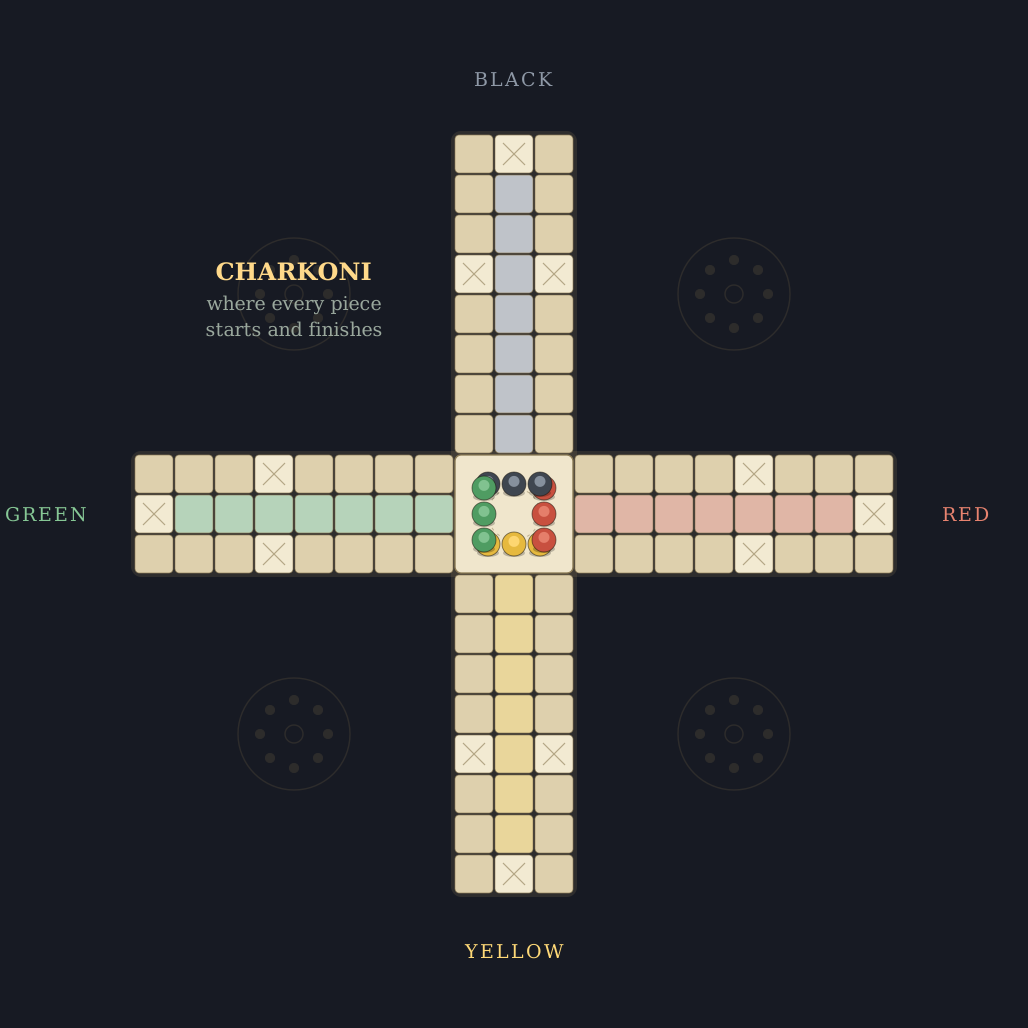
The board is a cross, not a square. Four arms, each three columns wide and eight squares deep — 24 squares per arm, 96 in all. In the middle sits the Charkoni, the large central square that is both the starting place and the finish.
Each arm belongs to the player sitting at it, and the middle column of an arm is private. No foreign piece ever enters it. The one exception is the square at the very tip of the arm, which lies on everybody's circuit.
Twelve squares are marked with a cross. Those are castles, and they are safe ground. More on them below.
Two sides, not four players
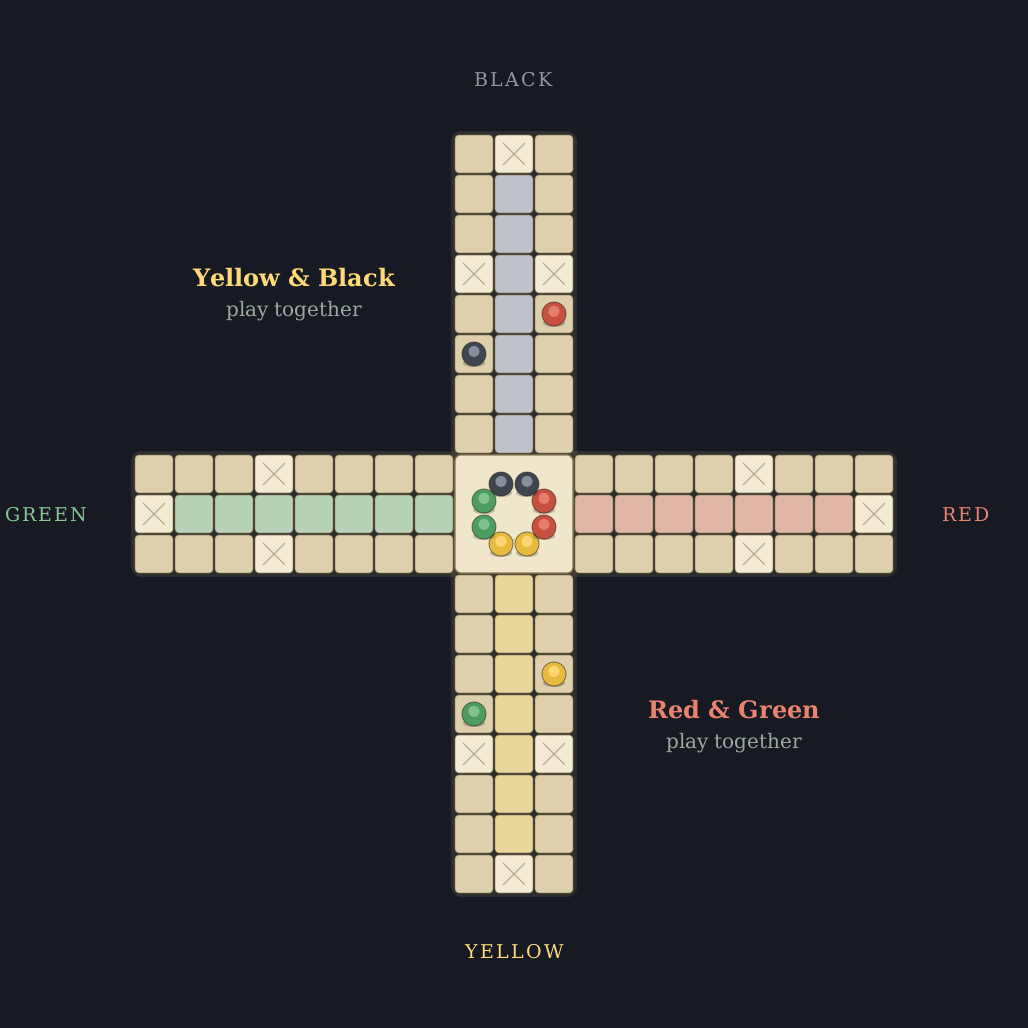
In the four-player game, the players sitting opposite each other are partners: Yellow with Black, Red with Green. A side wins when all eight of its pieces have come home. If your own four are finished, your partner plays on alone.
This changes everything about how the middle game is played. A capture is not just your gain, it is your side's gain, and a piece parked on a castle in front of your partner's route is worth more than one racing ahead of it.
Two-player games drop the partnerships: first to bring four pieces home wins.
The throw: six cowrie shells
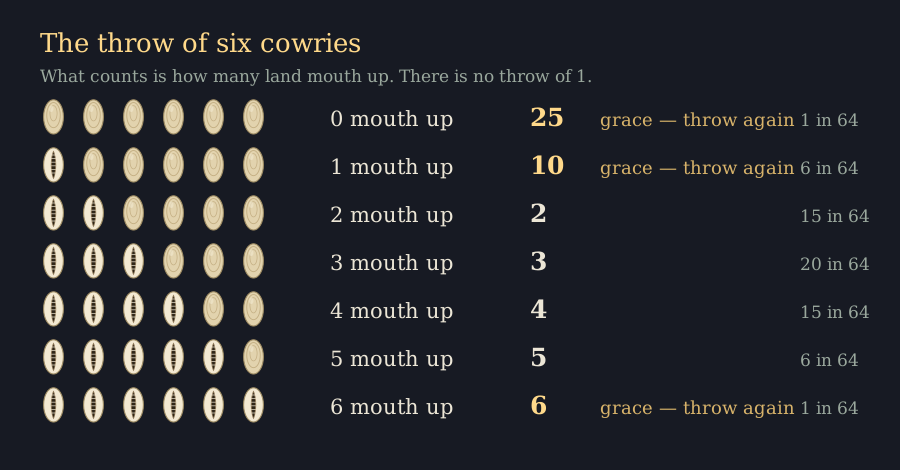
Six shells are tossed. What counts is how many land mouth up:
| Mouths up | Move | Chance | |
|---|---|---|---|
| 0 | 25 | grace | 1 in 64 |
| 1 | 10 | grace | 6 in 64 |
| 2 | 2 | 15 in 64 | |
| 3 | 3 | 20 in 64 | |
| 4 | 4 | 15 in 64 | |
| 5 | 5 | 6 in 64 | |
| 6 | 6 | grace | 1 in 64 |
Three things follow, and each one shapes the game.
There is no 1, and no 7, 8 or 9 either. The seven reachable numbers are 2, 3, 4, 5, 6, 10 and 25. Any distance of 1, 7, 8 or 9 cannot be covered by a single throw. That fact returns to bite in the endgame.
A throw of 6, 10 or 25 is a grace. It earns you another throw immediately, and it is the only way to bring a further piece out of the Charkoni. Graces come up 8 times in 64 — one turn in eight.
The average throw is 4.23, but the distribution is two-humped: usually a 2, 3 or 4, and occasionally a leap of 10 or 25. A game of dice drifts. Pachisi lurches.
One more rule that catches new players: a throw moves exactly one piece. You may not split a 10 into a 6 and a 4 across two pieces.
Coming out of the Charkoni

Pieces enter the board on step 1 — the square of your own middle column directly outside the Charkoni. Entering uses up the throw: the piece does not then move the number thrown.
- If you have no piece on the board, any throw brings one out.
- Otherwise, bringing out a further piece requires a grace: 6, 10 or 25.
This is why losing a piece hurts so much more than in Ludo. A captured piece goes back to the Charkoni and waits for a grace — and a grace arrives about once in eight turns.
The route
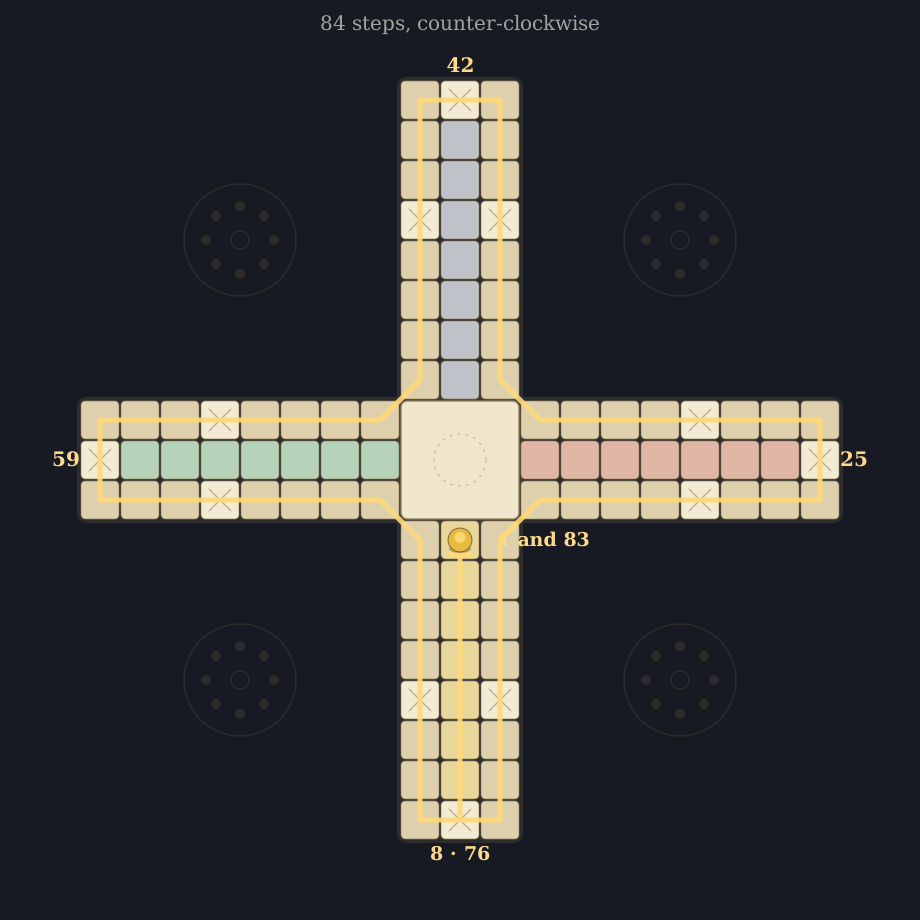
Every piece travels the same 84 steps, and the shape of the journey is the part that surprises people who arrive from Ludo:
| Steps | Where |
|---|---|
| 1–8 | Outward down your own middle column to the tip of your arm |
| 9–16 | Round the tip into the outer column, back towards the centre |
| 17–33 | The next arm counter-clockwise: out, across the tip, back in |
| 34–50 | The arm after that |
| 51–67 | And the third |
| 68–75 | Your own arm again, the other outer column, outward |
| 76–83 | Your own middle column, inward — the same squares as at the start |
| 84 | Into the Charkoni, on an exact throw |
Movement runs counter-clockwise. Because your middle column is walked twice — outward at the beginning, inward at the end — step 1 and step 83 are the same square, and so are steps 8 and 76.
Castles
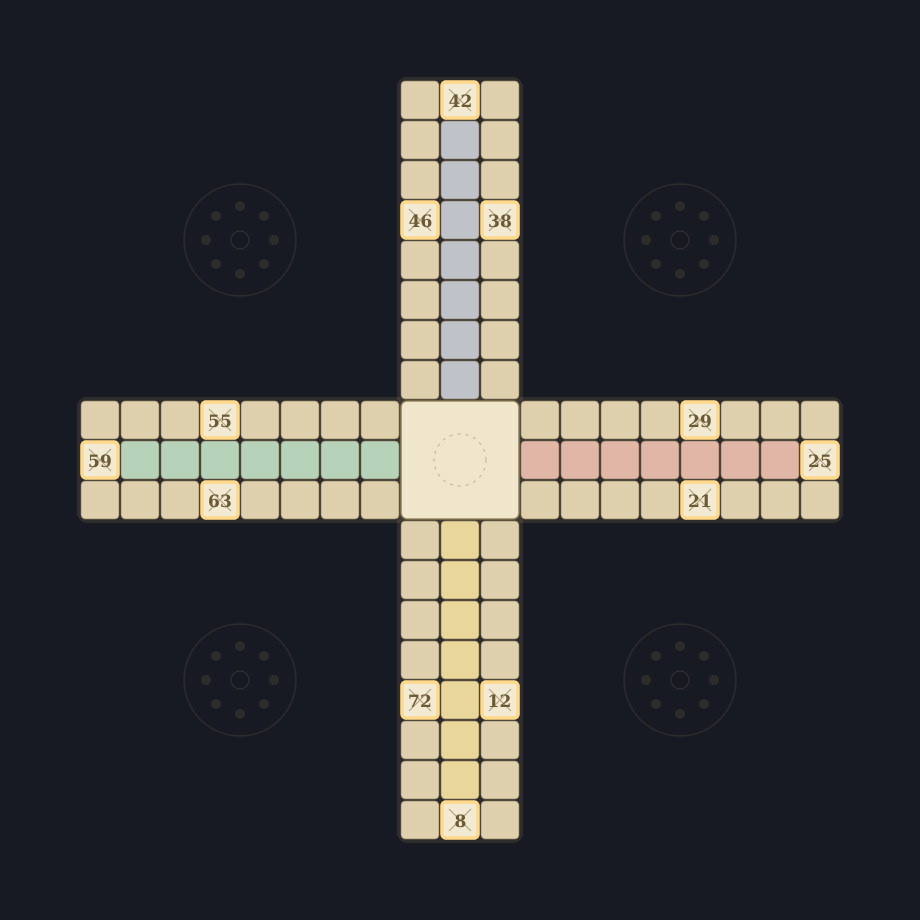
Twelve squares are castles: the four arm tips, and two squares in each arm's outer columns, four squares in from the tip. Along your own route they fall at steps
8 · 12 · 21 · 25 · 29 · 38 · 42 · 46 · 55 · 59 · 63 · 72
with your own arm tip visited a second time at step 76.
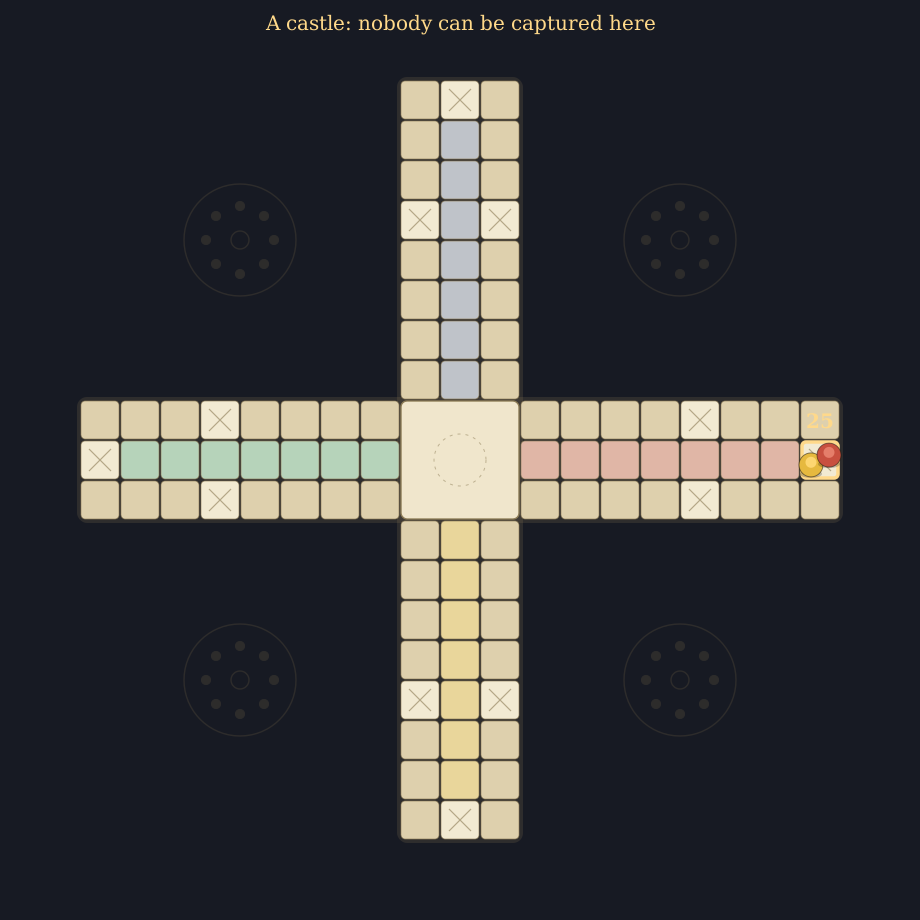
On a castle, no piece can be captured, and pieces of any colours may share the square. Step 25 is the tip of the next arm — exactly twenty-five steps from the centre. That number is where the game gets its name: pachīs is Hindi for twenty-five.
Look at the spacing in that list of steps: 4 – 9 – 4, repeating. It is the single most useful pattern on the board, and the strategy section returns to it.
Capturing
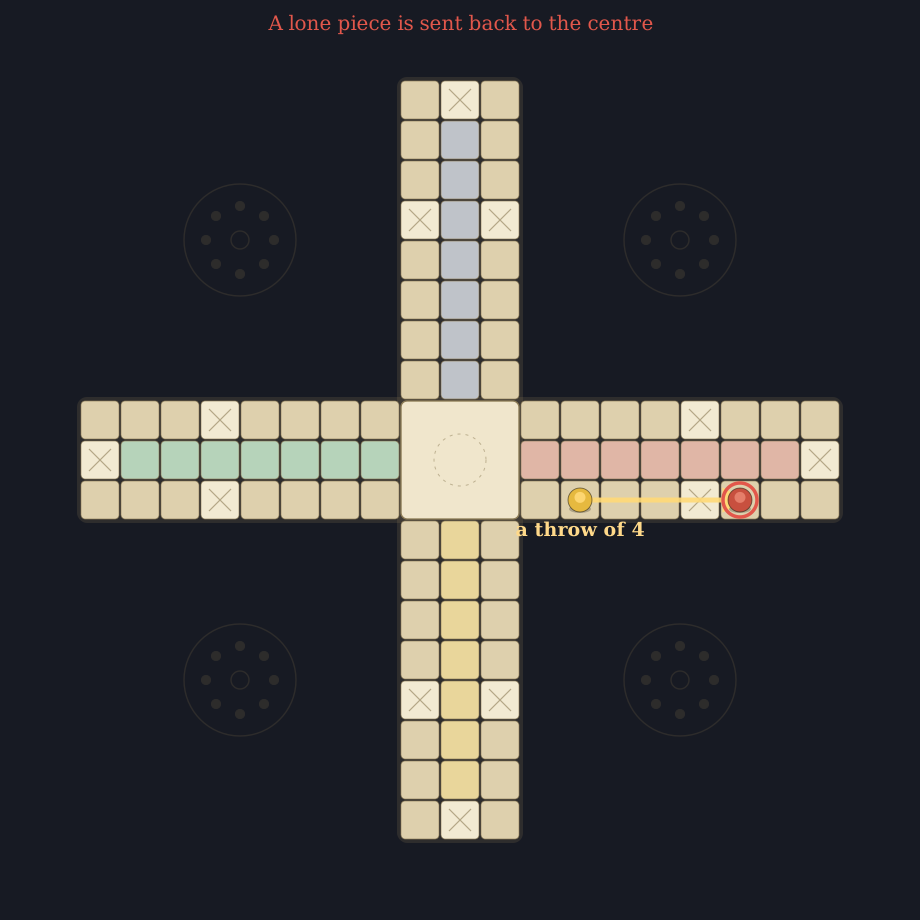
End your move on a square that is not a castle and that holds enemy pieces, and all of them go back to the Charkoni to start their 84 steps again. The capturing player throws again immediately.
That extra throw is the reason captures often come in pairs. A grace leads to a capture, the capture leads to another throw, and a turn that began with one shell face-up ends three squares deep in someone else's arm.
Blockades
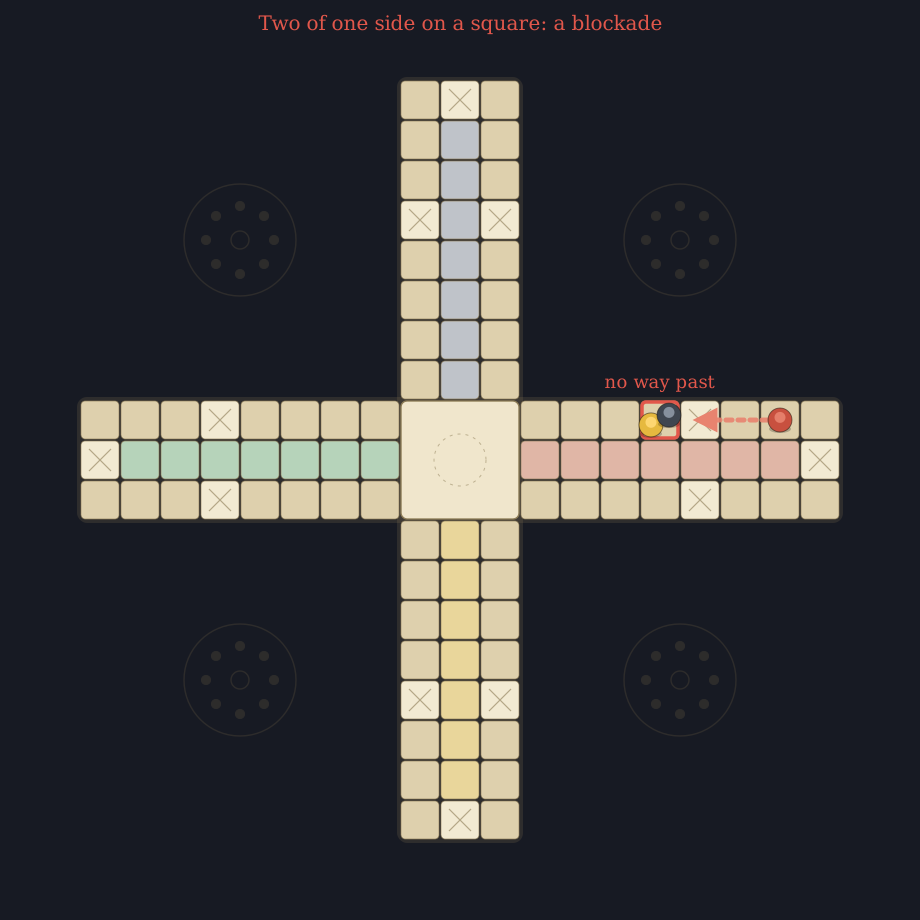
Two or more pieces of the same side on one square form a blockade. Enemy pieces can neither land on it nor pass over it. Pieces of your own side move past freely.
Because partners share a side, a blockade can be built by your piece and your partner's, which is a good deal harder for the opposition to dislodge than two of your own.
Coming home
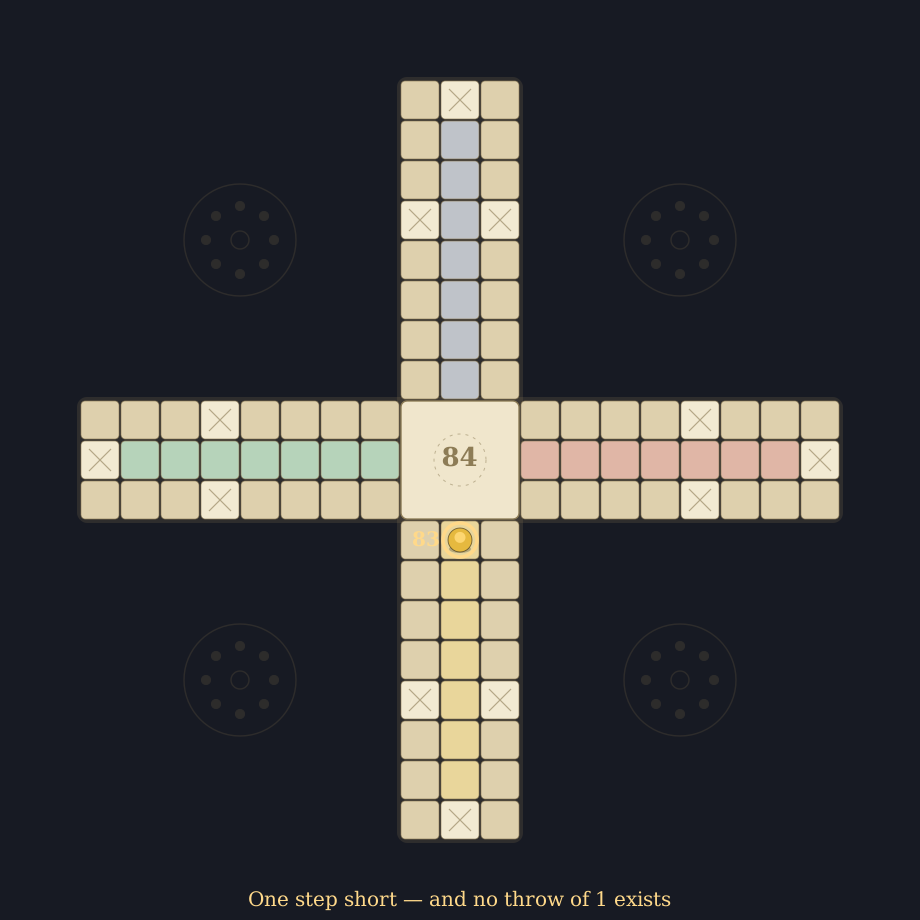
Three conditions guard the Charkoni.
An exact throw. Step 84 is home. A throw that would carry the piece beyond it is simply not playable for that piece.
Your side must have captured. Until your partnership has sent at least one enemy piece back to the centre, no piece of yours may enter the Charkoni. This is the rule that stops Pachisi from being a race. You have to fight.
There is one escape hatch, and it exists for the same reason as the last-square exception. A piece on step 82 or later has no move except going home — the smallest throw is 2, and 82 + 2 is already the goal. If all of your pieces are sitting there and you have never captured, you cannot move at all, and neither can anyone else in the same position: the game freezes. So a player who can do nothing but come home is allowed to come home. In the full four-piece game this almost never arises; in a two-piece game it decided one game in ten.
The last square is a special case. A piece on step 83 comes home on any throw. That is not a courtesy — it closes a hole. Step 83 needs exactly 1 to finish, and six cowries cannot produce a 1. Without the exception the last square before the goal is a dead end that no piece ever leaves. In 3000 simulated games with the exception removed, 96.1 % ended in deadlock; with it, 0.1 %.
Strategy
Everything above is the machine. Here is how to drive it.
Count in fours
The castles sit 4 – 9 – 4 apart, and 4 is the second most common throw (15 in 64). From a castle, the next castle is very often exactly one 4 away. Two of the three gaps in every repeat are jumps of four; the third is a nine — and there is no throw of 9.
That gap of nine is where pieces die. You cannot cross it in one throw, so you must stand in the open for at least one round of the table. Before you leave a castle, look at how far the nearest enemy is and what they need to reach you.
Graces are the engine, not luck
A grace does three things at once: it moves you 6, 10 or 25, it earns another throw, and it is the only way to bring a new piece out. That makes the decision after a grace the most important one in the game — move the piece you have, or open a new one?
The rough rule: bring out a second and third piece early, while there is little on the board to lose. Once your pieces are strung out around the board, a fresh piece at step 1 is a liability that needs escorting past three arms of enemies.
You must capture, so plan for it
Because no piece comes home before your side has captured, the capture is not optional — it is a requirement with a deadline. The cheapest one to arrange is against a piece that has just come out and sits on step 1 or 2 of its own middle column…
…except you can never go there. Foreign middle columns are closed. So the real hunting ground is the outer columns and the arm tips, and the best hunting happens right after an enemy leaves a castle into one of those nine-step gaps.
Blockades win more games than captures
A capture costs the enemy every step that piece had walked, and gains you a throw. A blockade costs them time, every turn, without you spending anything. Park two pieces in the middle of a nine-gap and the enemy pieces behind it are stuck where they stand until you move — they cannot pass, and the squares in front of them are the ones they need.
The strongest blockade is built with your partner: the two of you can hold a square while both of your other pieces run.
The endgame is arithmetic
The last stretch is where games are actually lost. Look at the distances again: throws are 2, 3, 4, 5, 6, 10 and 25. That means from
- step 78 you need a 6, from 79 a 5, 80 a 4, 81 a 3, 82 a 2 — exactly one number each;
- step 83 any throw brings you home;
- steps 75, 76 and 77 you cannot come home in one throw at all, because 9, 8 and 7 do not exist.
So the squares to aim for on the way in are 78 to 83, and the squares to avoid lingering on are 75 to 77. When you have a choice of which piece to move late in the game, ask which one lands on a number that can still finish.
Play the side, not the seat
Your partner's pieces are yours strategically. A capture by either of you unlocks the Charkoni for both. If your partner has captured and you have not, your pieces may come home regardless — the condition is on the side, not the player. When your own four are home, you keep throwing for your partner, so plan the last third of the game as one board with eight pieces, not two boards with four.
Common mistakes
- Racing. Running four pieces round without ever making contact leaves you parked outside the Charkoni with nothing to show.
- Splitting a throw. You cannot. One throw, one piece.
- Forgetting the middle column is private. You cannot capture a piece sitting on its own middle column, and you cannot use that column as a shortcut.
- Leaving a castle without counting. The nine-gaps are two throws long. Leave when the board behind you is empty, not when you feel like moving.
- Sitting on 76. It looks like home. It is eight steps away, and 8 is not a number that exists.
Where sources disagree
Pachisi is a folk game with five centuries of regional variants, and there is no canonical rulebook. The version above is the one implemented in our Pachisi game, and where sources differ we chose deliberately:
- Entering the board. Some rules let a piece move the thrown value after entering. We do not — it turns every 25 into a free lap.
- Capturing before coming home. Some rulebooks omit the condition. We keep it, because without it the game is a pure race and the fighting is optional.
- The last square. Rarely stated, always needed. See above.
The full rule set with sources lives with the game itself.
Reading is one thing. Play Pachisi — you will feel the nine-gaps within three turns. Against the computer to learn the rhythm, and then with up to three friends: open a table, send them the link, and they take a seat as soon as they open it. No account, no download, and the computer covers any seat until somebody arrives, so nobody waits for a full house.
Coming from Ludo? Pachisi vs Ludo sets the two side by side.