
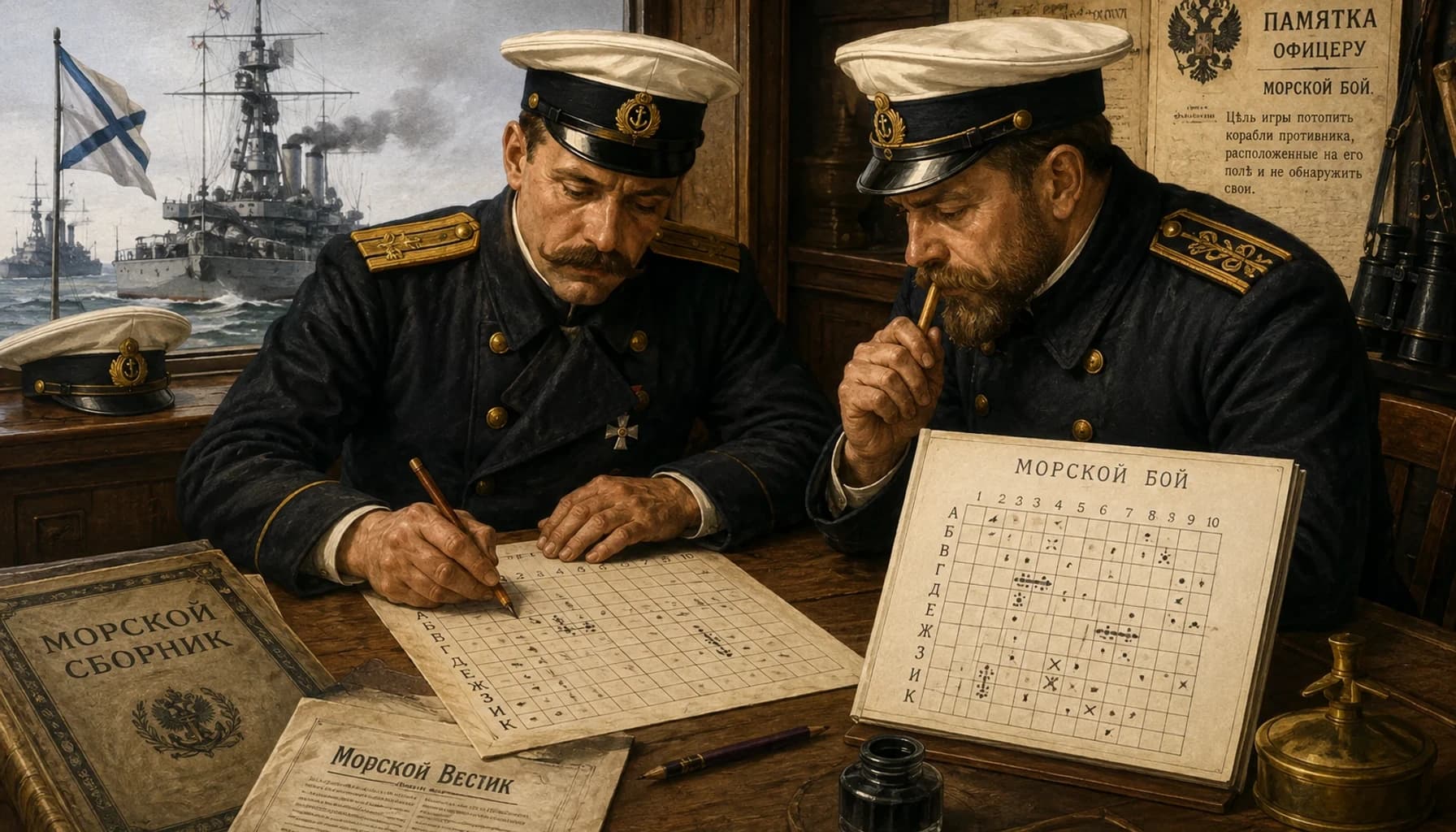
The version of sea battle played in Russia — Морской бой, Morskoi Boi — is not the boxed game with two more ships. It is a different game that happens to use the same grid, and the difference comes from a single line in the placement rules.
The fleet
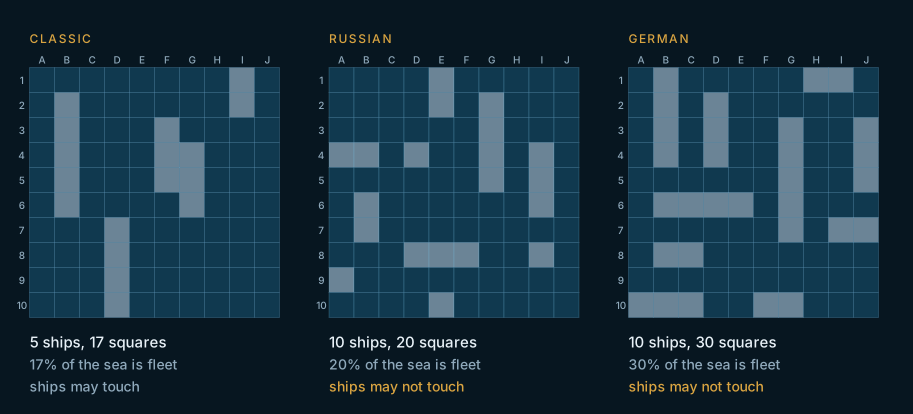
Ten ships, twenty squares:
| Ships | Length | Squares |
|---|---|---|
| 1 | 4 | 4 |
| 2 | 3 | 6 |
| 3 | 2 | 6 |
| 4 | 1 | 4 |
| 10 | 20 |
A neat descending staircase — one four, two threes, three twos, four ones. The boxed fleet, by contrast, is five ships of 5, 4, 3, 3 and 2, seventeen squares, with no single-square ships at all.
Those four single-square boats are the reason the Russian game feels harder to finish than its twenty squares suggest. A one-square ship cannot be deduced. It leaves no line to follow, no second square to guess at. You find it by shooting the square it happens to be on, and nothing else will do.
The rule that changes everything
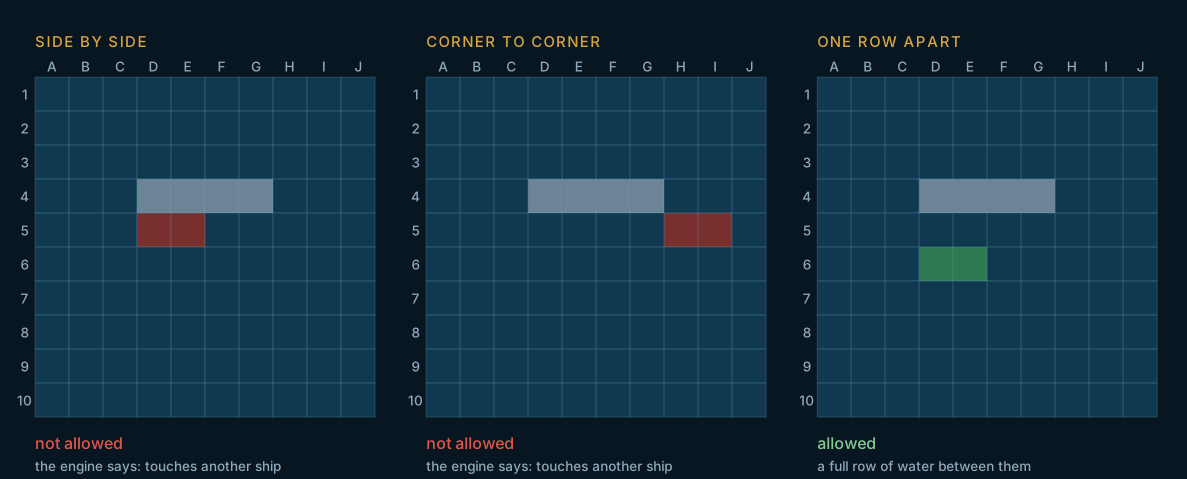
No two ships may touch — not along a side, and not at a corner.
Every ship therefore sits inside its own ring of empty water. The consequences run in both directions.
When you place, the board is very much smaller than it looks. We measured it over 500 random Russian fleets: the twenty squares of ships drag an average of 62 more squares of compulsory water along with them. Eighty-two of the hundred squares are spoken for, and only eighteen are genuinely free.
That is why corners and edges are worth so much here. A ship in open water needs a ring all the way round it — fourteen squares for a four, twelve for a three, ten for a two, eight even for a single boat. Push it against the edge and a third of that ring falls off the board and costs nothing.
When you shoot, a sinking pays you. The moment a ship goes down, every square around it is known to be empty — you do not have to shoot them to find out.
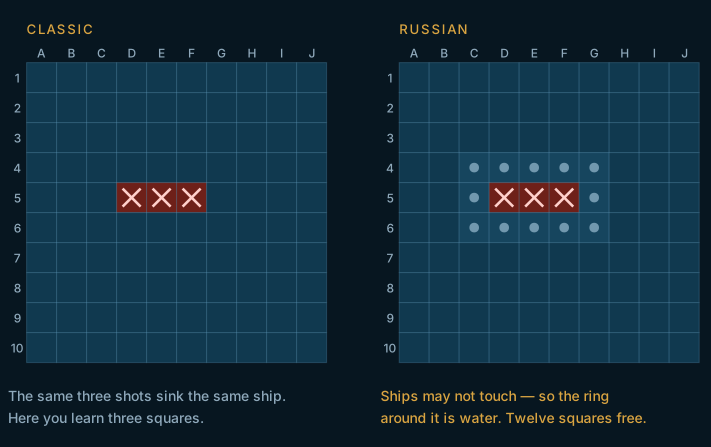
Twelve squares, handed over, for a three-square ship. The ring is always
(length + 2) × 3 − length, so a four gives you fourteen and even a single
boat gives you eight. Over a game that is a very large amount of free
information — and it is the reason a Russian game speeds up as it goes, while a
classic game plods on at the same rate to the end.
A hit earns another shot
The third difference is the tempo. Hit, and you shoot again immediately. Keep hitting and you keep shooting.
This is what makes the game swing. A player who finds the four can sink it in a single turn, collect its ring of fourteen free squares, and still be shooting. In the boxed game the same four hits would take four turns and give the opponent four turns back.
It also changes what a miss costs. In classic your turn ends whatever happens, so a miss costs you nothing you had. Here a miss ends a run, and ending a run while the board is opening up in front of you is a real loss.
So is it harder or easier?
Easier to search, harder to finish. We measured it — the same computer opponent, 300 games under each set of rules, counting shots to clear the whole fleet:
| Opponent | Classic (17 squares) | Russian (20 squares) |
|---|---|---|
| Shooting at random | 95.4 | 75.0 |
| Easy | 62.0 | 62.1 |
| Medium | 55.3 | 58.6 |
| Hard | 44.2 | 55.3 |
Look at the first row. Blind shooting does far better under Russian rules — 75 shots against 95 — because there is more fleet to blunder into and every sinking clears a ring for free. Now look at the last. Skilled shooting does worse — 55 against 44 — because those four single-square boats are immune to every clever thing a good player knows how to do. The gap between guessing and thinking is much narrower here.
That is not a flaw in the Russian rules. It is a fair description of a game with a different shape: less deduction, more nerve, and a much better chance for the weaker player.
Where the German version fits
Since the same question always follows: the fleet drawn on squared paper across the German-speaking world is different again. One ship of five, two of four, three of three, four of two — ten ships, thirty squares. Ships may not touch there either.
Thirty of a hundred squares is nearly a third of the sea, and once the compulsory water is counted the German board is astonishingly full: fleet plus mandatory ring comes to 94 of the 100 squares, leaving six free. It shows in the play — the strong opponent clears that fleet in 48 shots. More squares to find than the Russian twenty, yet fewer shots needed, because at that density almost nothing can be wasted.
Three fleets, three quite different games, one grid. All three are playable here in the browser — pick them from the Rules menu under the board, against a computer or against a friend online.
The short version
- Ten ships: one 4, two 3s, three 2s, four 1s. Twenty squares.
- No touching, not even diagonally. Every ship sits in its own ring of water.
- A hit earns another shot. Runs are possible and they decide games.
- A sinking reveals its whole ring — twelve free squares around a three-square ship, fourteen around a four.
- Fleet and compulsory water together take up 82 of the 100 squares.
- Ten by ten, letters across, numbers down, and no draws.
Related reading
- The history of the game — a Russian diary from 1907, sixty years before anyone sold it in a box.
- How a computer plays it — counting positions instead of guessing, and what that says about where to hide.
- Printable sea battle grids — two grids to a sheet, for playing it the way it was meant to be played.