
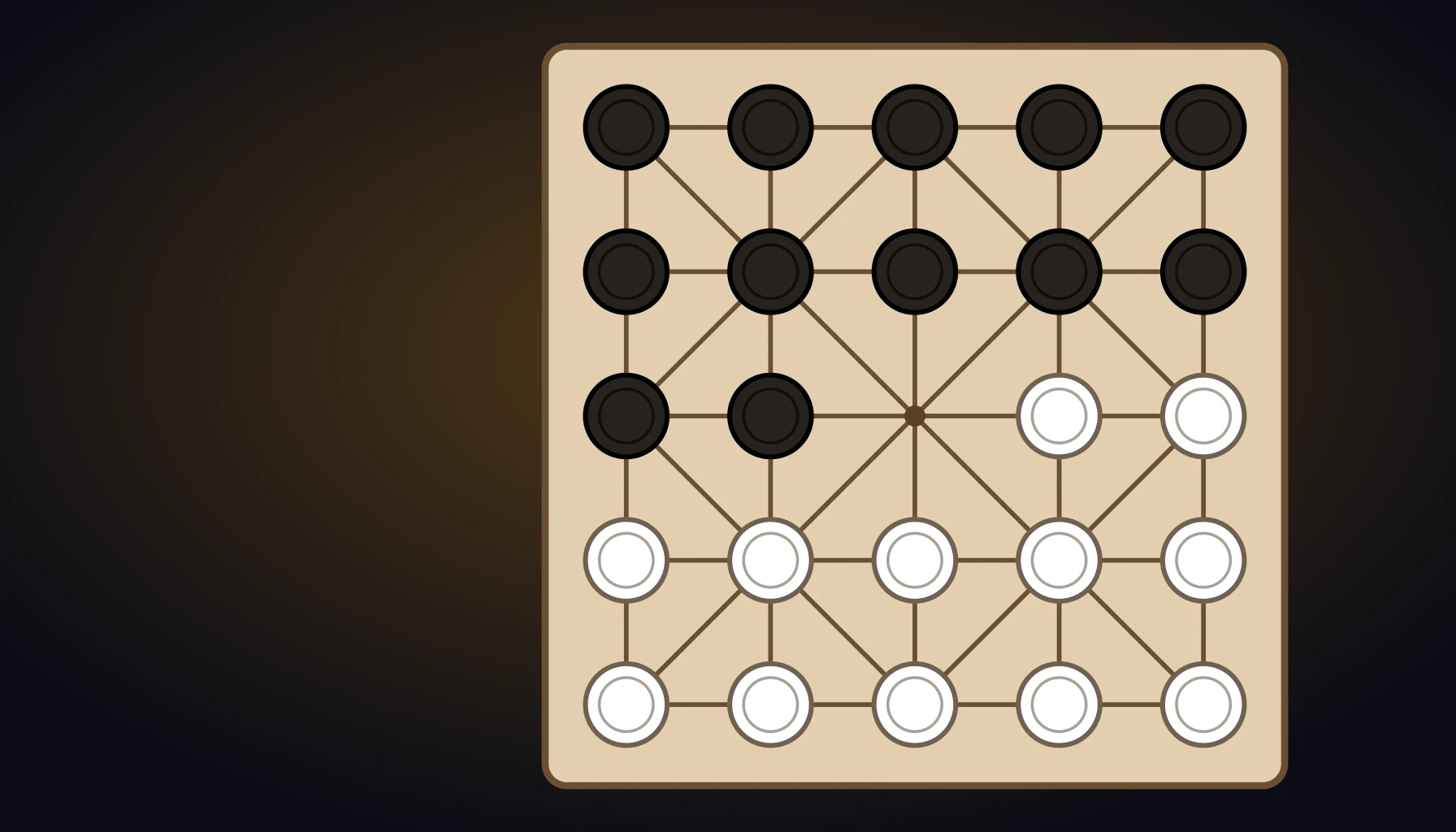
Twelve men each, twenty-five points, and exactly one empty space on the whole board. That is how every game of Alquerque begins, and it explains why the opening feels less like a battle than like prising a door open.
It also happens to be the game draughts came from. Not a relative, not an influence — the direct ancestor, with the same jumping capture, played on points instead of squares.
Al-qirkat, Alfonso, and the leap onto the chessboard
Boards of this exact pattern turn up scratched into the roofing slabs of the temple at Kurna in Egypt, into Roman paving, and into the benches of medieval cathedrals. Scratches in stone cannot be dated directly, so the popular "1400 BC" should be taken with care — but the game is unquestionably old.
What is documented is the middle of the story. The Arab world knew it as al-qirkat; the Moors carried it into Spain, where in 1283 King Alfonso X of Castile had its rules written down in the Libro de los juegos, under the name Alquerque de doce — "Alquerque of twelve", after the pieces per side.
Then somebody in twelfth-century France did the obvious thing and moved the pieces onto a chessboard, using only the dark squares. The jumping capture came along unchanged. That was draughts, and within a couple of centuries the parent was forgotten almost everywhere the child took hold.
The board is the hard part
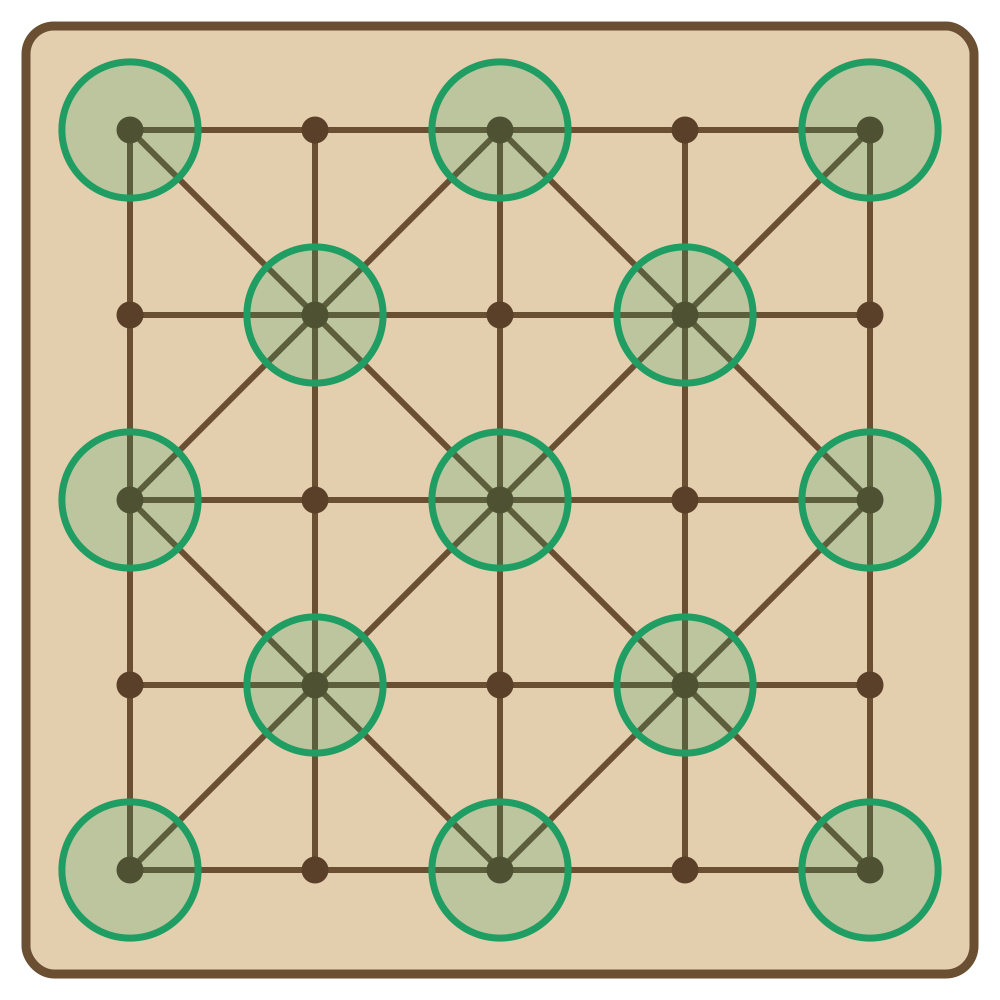
Twenty-five points in a five-by-five grid, joined by the full grid of rows and columns, both long diagonals, and the diamond connecting the four edge midpoints. No more, no less.
That pattern is what people get wrong when they draw a board by hand, and getting it wrong produces a different game. Its effect is the ringed points above: every second point carries diagonals and so has eight neighbours, while the points between them have four.
This is the whole tactical texture of Alquerque. A man on an eight-neighbour point sees more, threatens more and escapes more easily. A man on a four-neighbour point is where pieces get trapped. Before you move anywhere, notice which kind of point you are moving to.
Setting up: twelve each, one gap
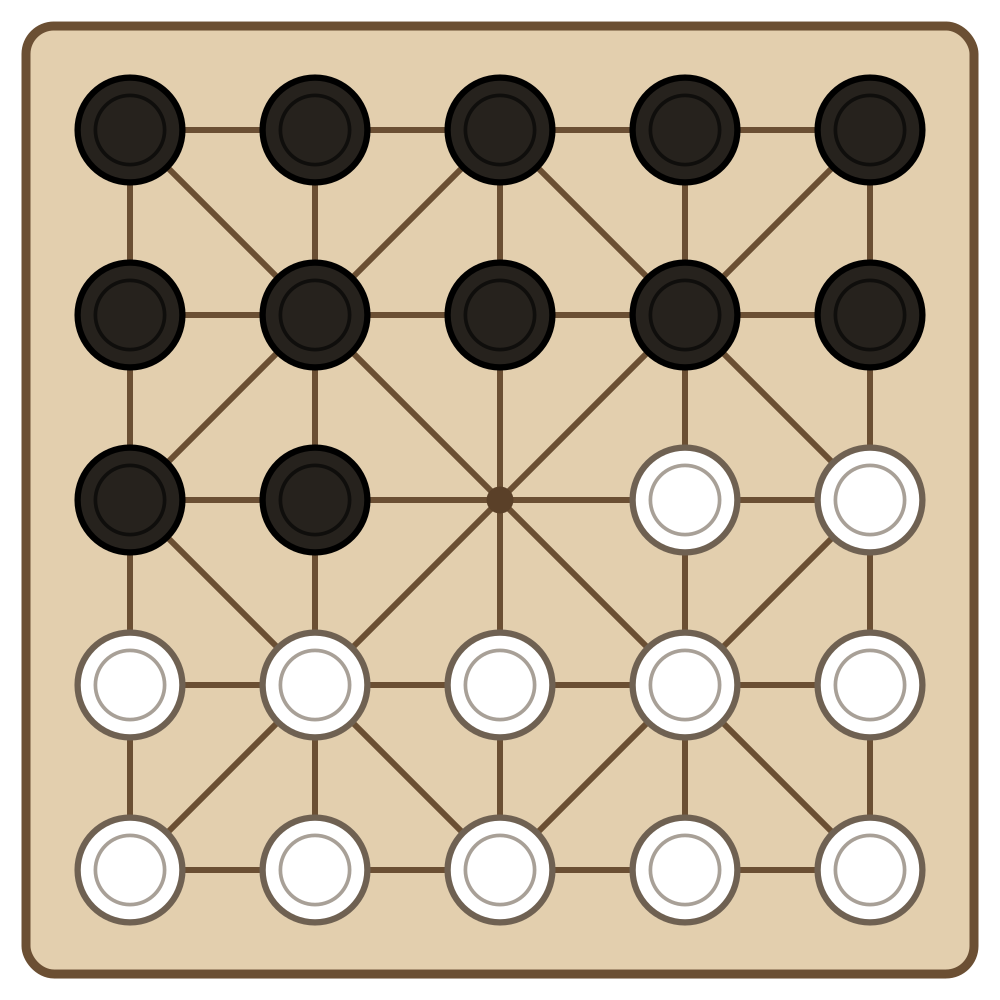
Each player fills the two rows nearest them plus the two middle-row points on their own side. The centre stays empty — and since it is the only empty point, the first move is forced: somebody steps into the middle.
The rules
- Move one step along a drawn line to an adjacent empty point. Sideways and backwards are both fine; there is no forward direction in Alquerque and there are no kings.
- Diagonals exist only where a diagonal line is drawn. This is the rule the board is enforcing.
- Capture by jumping. An enemy man adjacent to yours, with an empty point directly beyond it on the same line, is taken. Your man lands beyond it and the enemy leaves the board.
- Capturing is compulsory. If a jump exists anywhere on the board, every quiet move is forbidden.
- A jumping man must keep jumping while it can, turning corners as it goes.
- You win by taking all twelve enemy men or leaving your opponent with no legal move at all.
- A draw is threefold repetition, or sixty moves with nothing captured.
Historically there was also huffing: a man that failed to make an available capture could be removed as a penalty. Modern play simply makes the capture compulsory instead, which comes to the same thing with less bookkeeping.
The chain is the game
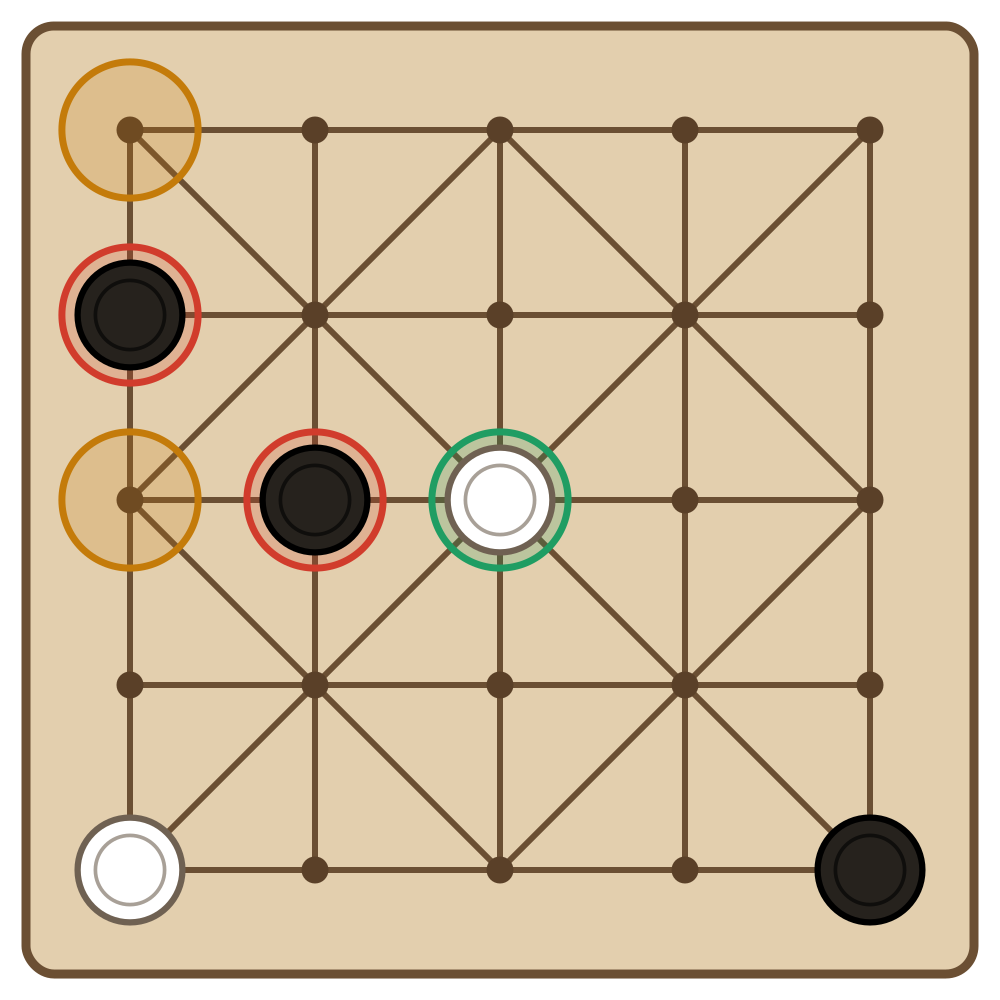
A man that lands next to another jumpable man must carry on, and it may turn in any direction the lines allow. Three- and four-man chains are routine; the board is crowded enough that they appear from nowhere.
Which leads to the tactic that defines Alquerque:
Compulsory capture is a weapon, not a rule
Because your opponent has no choice, you control where their piece goes. Offer a man, and you have decided which point they will occupy at the end of their turn — and therefore what your own next move can be.
Sacrificing one man to set up a three-man counter-chain is not a clever trick here. It is the standard tactic, and it is the difference between a beginner and somebody who has played ten games. The question to ask before every quiet move is not "is this safe" but "what happens after they take what I am offering".
The corollary is the beginner's most common loss: moving a man to a point where it can simply be jumped for nothing. Check every quiet move for that first, every time.
Four habits that win games
Advance as a wall. A lone man pushed forward is chain fodder. Move up in connected formations where each man stands behind another's escape point.
Value the eight-neighbour points. They are worth roughly twice what the others are worth, and they are the squares from which chains begin.
Count the chain, not the jump. Before offering anything, follow the sequence all the way to its end. Alquerque punishes people who stop calculating after one jump.
Keep the board tight early. With twenty-four men and one gap, space is the scarce resource. Do not open lines you cannot use.
Common questions
Where can I buy an Alquerque board? You largely cannot. A handful of craft workshops make them and almost no shop stocks them, which is why we built a printable Alquerque board — the full pattern, twenty-four men to cut out and the rules on a third sheet.
How is it different from checkers? The jumping capture is identical. But Alquerque is played on points, men move in every direction the lines allow including backwards, there are no kings, and the board is nearly full at the start. It is sharper and more claustrophobic than draughts.
Can a man on a corner be captured? No. A jump over it would have to land off the board, so a corner man is safe where it stands — though it also sees very little from there.
Is it a draw with perfect play? Nobody has published a solution for the twelve-piece game. Between careful players draws are common, which is what you would expect from a symmetric position with a forced first move.
Ready to try it? Play Alquerque against the computer — compulsory captures, chain jumps and three difficulty levels. To play it at a table, print the board, the men and the rules, or read how the same jump ended up on a chessboard in the history of checkers.