
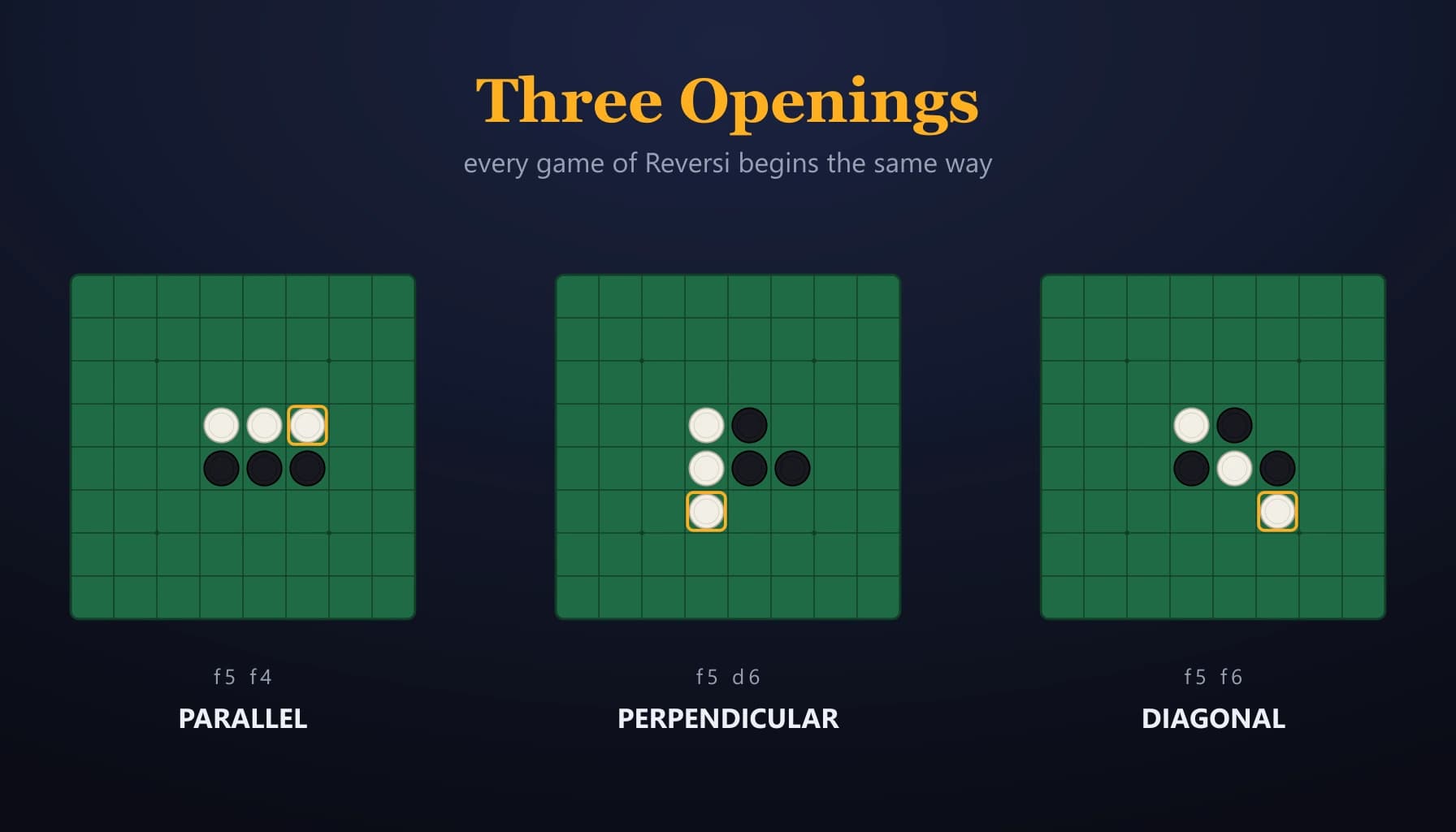
Chess has thousands of openings. Reversi has three.
That is not a simplification — it is the whole of it, and it falls out of the rules. Every game begins from the same four discs, Black's first move is always the same move, and White's answer can only be one of three things. Ten seconds of geometry gets you further here than an hour of memorising ever will.
Black's first move is not a decision
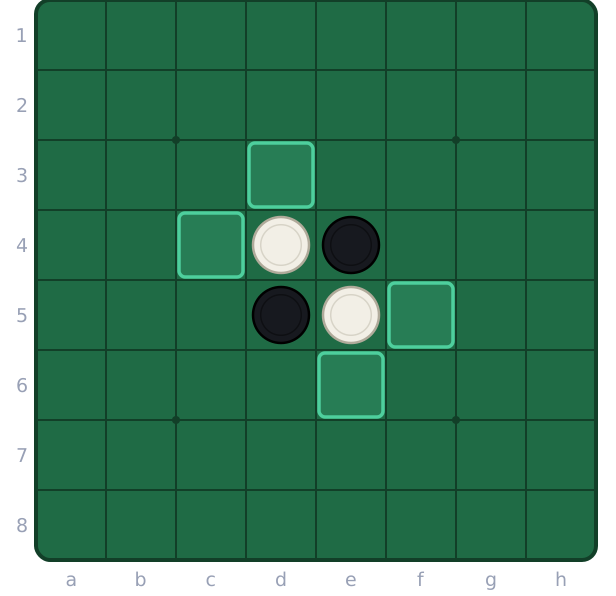
Black has four legal opening moves: d3, c4, f5 and e6. They look like a choice. They are not: the starting position has four-fold rotational symmetry, so each of those moves produces the identical position, simply rotated a quarter turn. Play any of them and you have played all of them.
By convention everyone writes the first move as f5, which is why every book, database and game record you will ever see starts that way. It saves arguing about which corner of the board to draw first.
White has exactly three answers
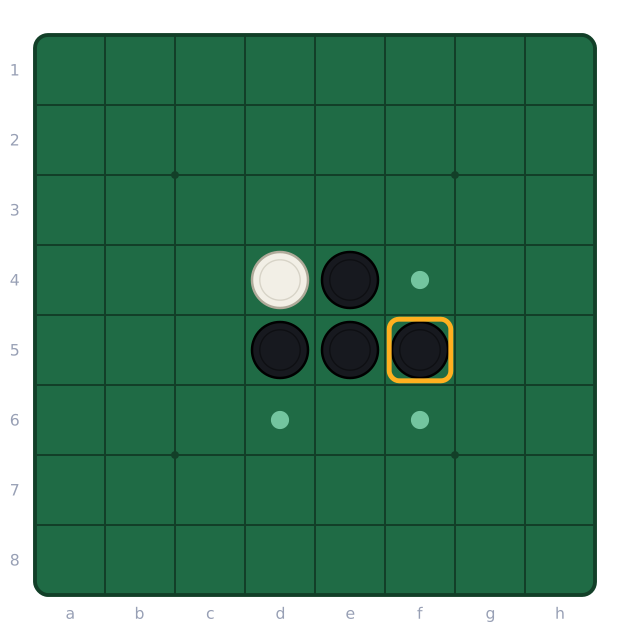
Black's disc on f5 flipped e5, and now White has three legal squares: f4, d6 and f6. Not three good ones out of many — three, full stop. Everything ever played in this game, every named line in every database, continues from one of those three.
Their names describe something exact. Black captured along a row, horizontally from f5 through e5. Each of White's three replies captures along a line of its own, and the name says how that line sits against Black's:
| White's reply | White captures | Relative to Black's line | Name |
|---|---|---|---|
| f4 | e4, along the row | Same direction | Parallel |
| d6 | d5, down the column | At right angles | Perpendicular |
| f6 | e5, along a diagonal | Diagonally | Diagonal |
Two lines in a plane can only be parallel, perpendicular or oblique. That is why there are three openings and not four.
The parallel opening — 1. f5 f4
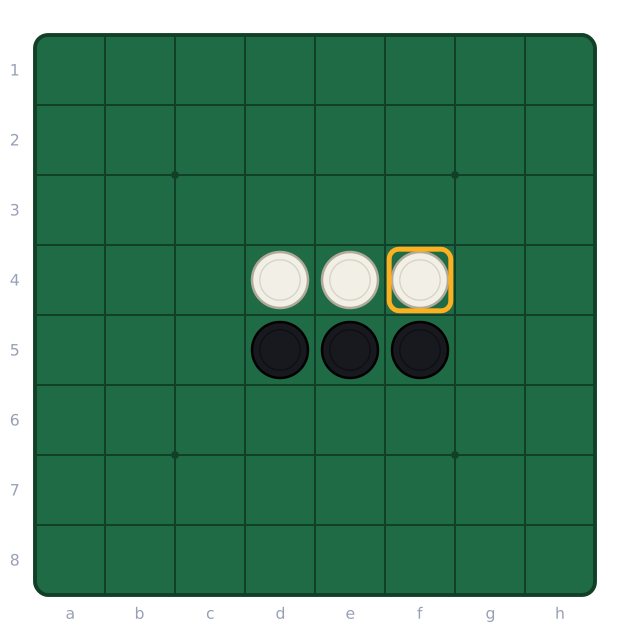
The tidiest of the three to look at: White's three discs sit in row 4, Black's in row 5, directly facing. Black then has five legal moves, all along row 3.
The symmetry is real but shallow. Both players are staring at a flat wall, and the first one to break it badly hands the other a target.
The perpendicular opening — 1. f5 d6
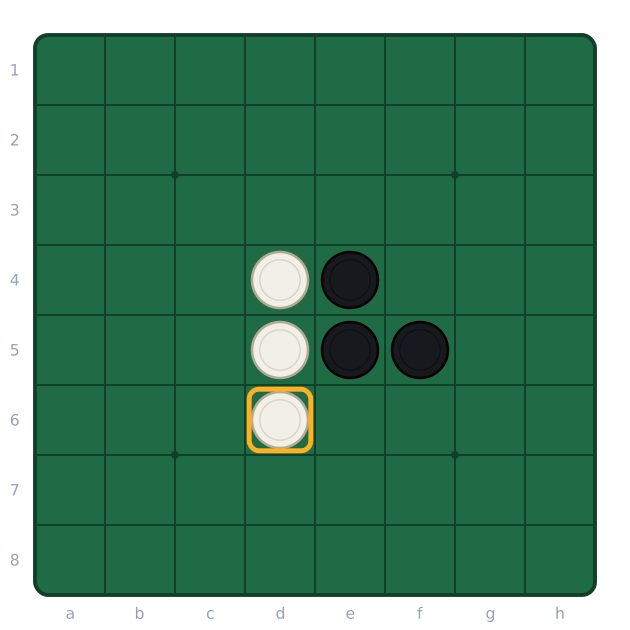
White's discs form a column where Black's form a row. Black again has five legal moves, and this time they all sit in column c.
The diagonal opening — 1. f5 f6
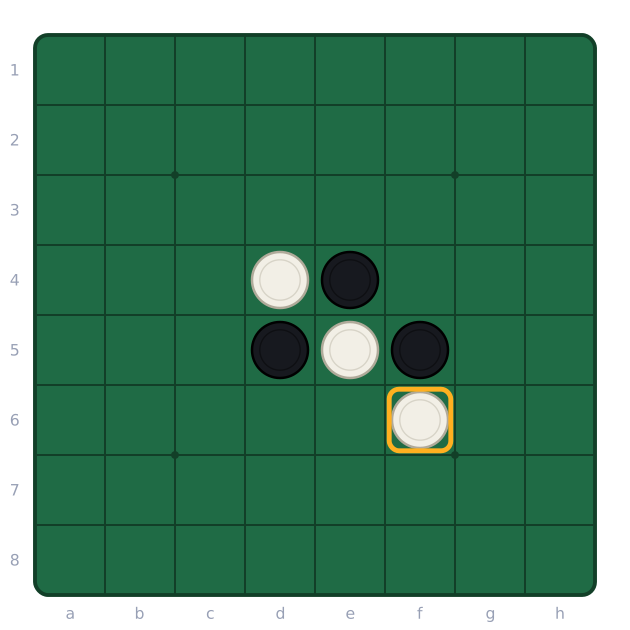
White takes back e5 along the long diagonal. This is the tightest of the three: Black is left with four legal moves rather than five, and they are scattered rather than lined up — d3, c4, e6 and f7.
A single move fewer sounds trivial. In a game where running out of safe moves is the main way people lose, it is not.
What actually matters in the first ten moves
Openings in Reversi are not about memorised lines. They are about three habits, and all three run against instinct:
- Take as few discs as you can. Every disc you own is a disc your opponent can flip. A small, tight position in the first twenty moves leaves you choices later, which is the only currency that matters.
- Count your moves, not your discs. If you have eight legal squares and your opponent has two, you are winning, whatever the counter says. Running out of moves is how good players are beaten.
- Stay off the squares beside the corners. The four squares diagonally touching an empty corner are the worst on the board — playing one usually hands the corner over, and a corner can never be flipped back.
That is the whole of opening theory for anyone below tournament level. The full guide works through why each of those is true rather than just asserting it.
What about the Tiger, the Rose and the Snake?
Competitive Othello does have a named literature — Tiger, Rose, Snake, Buffalo, Cow, and a hundred more, each a specific sequence recorded, argued over and catalogued. They are not a separate branch of the game: since White has only three replies, every one of those lines is a continuation of the parallel, the perpendicular or the diagonal opening.
They are worth learning if you intend to compete. If you are here to beat the computer or a friend, the three habits above will do far more for you than any memorised line.
Common questions
Does the first move matter in Reversi? No. Black's four opening moves are the same move rotated, so the choice is cosmetic. The first real decision belongs to White.
What is the best opening in Reversi? None of the three is refuted, and the game as a whole is a draw with perfect play, so there is no winning opening. At club level the differences are far smaller than the mistakes made around move thirty.
Why does every game record start with f5? Convention. Since all four first moves are equivalent, the game is written down as though Black always played f5, which makes records comparable.
How many Reversi openings are there really? Three at move two, and then it explodes. After three moves each there are already 7,092 different positions on the board, counting rotations separately — 269,352 after four moves each. That is why named lines exist at all: nobody can hold that in their head.
Is Othello opening theory worth learning? Only if you play in tournaments. Below that, mobility and corner discipline decide almost every game.
The fastest way to feel the difference between the three is to play them. Open a board, set the computer to Medium, and try the same opening three times in a row — or open a table and play a friend online, with a chat window beside the board to argue about it.