Cavern Drift is a one-button helicopter game. Hold — Space, the mouse button, or a finger anywhere on the screen — and the craft climbs. Let go and it falls. It flies itself to the right at a steady 27 metres a second, the cave scrolls to meet it, and the only decision you ever make is when to hold.
The cave narrows as you go: about four fifths of its starting height by 500 m, seven tenths by 1,000 m, three fifths by 2,000 m. From 500 m on, crystal pillars stand free in the passage, each with a wide side and a narrow one. Touch anything and the run is over — and one press has you flying again in about a third of a second.
Three things make a run more than a number. Your best distance is a glowing line in the cave, so you see your record coming. The path of your last flight stays behind as a dotted ghost, so you see where it went wrong. And the daily cave is the same for every player that day, with a best score of its own.
- 1 button — hold to rise, let go to fall
- 27 m/s the whole way: the cave gets harder, never faster
- 500 m to the first pillar — 18.5 seconds of flying
- 365 daily caves solved by machine before launch
How to play Cavern Drift
- Hold to rise. Space, the left mouse button, or a finger anywhere on the screen. There is no wrong place to press.
- Let go to fall. Nothing changes direction at once — the craft speeds up and slows down — so begin every correction early.
- Pick a side at each pillar. One gap is always the wider. Decide when the pillar comes into view, not when you reach it.
- Press once to go again. After a crash any press restarts. P or Esc pauses, M mutes.
The first second and a half of every run is softened: fall and lift both start at a quarter of their strength. A first tap should not end on the floor before you have seen what the button does.
What makes this helicopter game different?
- The record line. Your best distance is drawn across the cave as a dashed line with the figure on it, and from 300 m out the counter in the corner tells you how far away it is.
- The ghost. Your last flight stays in the cave as a dotted trail that ends in a cross where you hit. Fly the same cave again and you watch the mistake arrive.
- The daily cave. One cave per calendar day, built from the date, identical on every phone and computer, with a best of its own.
How does the daily cave work?
Each day has a numbered cave — Cave #1 was 22 November 2026 — and everyone who opens the game that day flies the same ceiling, the same floor and the same pillars. It changes at midnight on your own clock, and yesterday's best does not carry over: every day starts level.
Free flight is the other mode. There the cave is yours and stays the same run after run until you ask for a new one, which is exactly what makes the ghost useful. Its best distance is kept separately.
Your best distances and your ghost live in your browser's own storage. There is no account, and the game does not send them anywhere.
Can a cave be impossible to get through?
Does the helicopter get faster?
It never does. The craft holds 27 metres a second from the first metre to the last, and the difficulty comes from the walls.
| Distance | Cave height | Time flown |
|---|---|---|
| Start | 100 % | 0 s |
| 500 m | 79 % | 18.5 s |
| 1,000 m | 70 % | 37 s |
| 2,000 m | 60 % | 74 s |
| Far beyond | never under 42.5 % | — |
Pillars begin at 500 m, about every 107 m at first and every 76 m beyond 3,000 m. The first three are smaller than the rest — 55, 70 and 85 per cent of full size — because a new obstacle should be seen once before it counts.
If you like this one
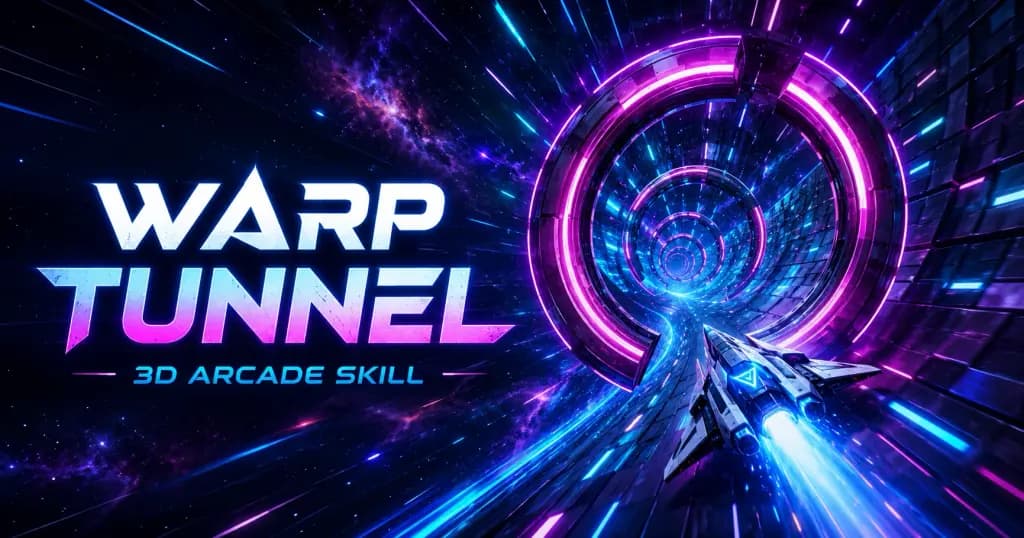
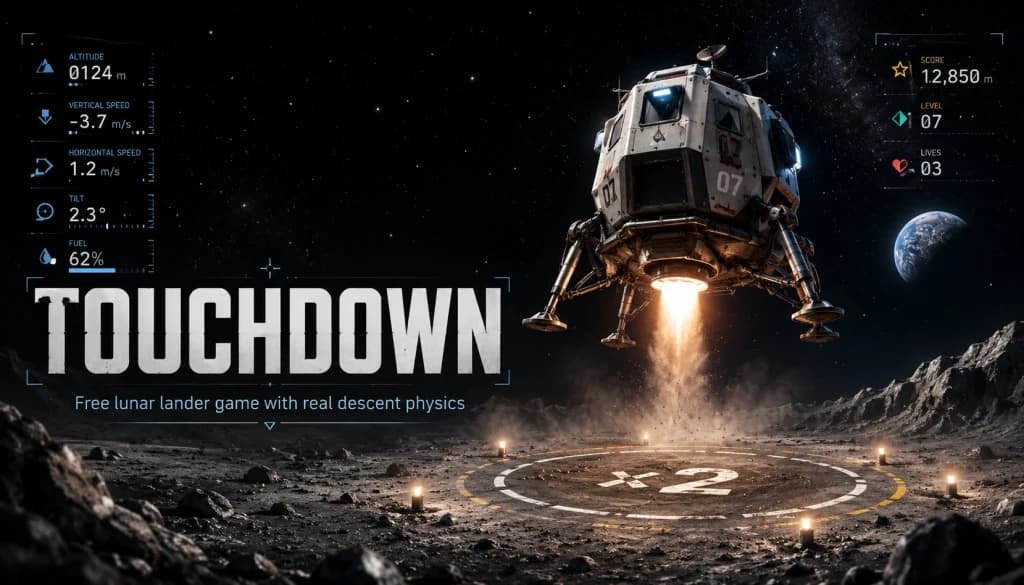
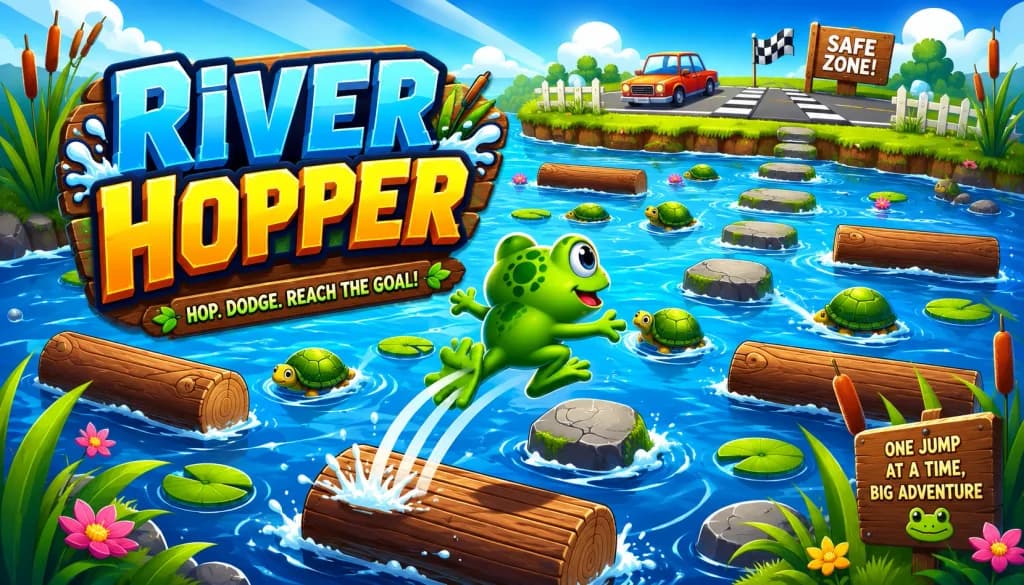
Warp Tunnel is the other endless neon run here, with one axis of control instead of one button. Touchdown is the same argument with gravity, given a landing pad and a fuel gauge, and River Hopper is the one to play when you would rather dodge than drift. Everything else is in retro and arcade.
About the game
Cavern Drift is an original PlayNook game: the cave generator, the artwork, the sounds and the name are ours. The idea underneath — one button, a craft that falls unless you hold, a cave that scrolls — is far older than this page and belongs to nobody. It is the idea behind the old helicopter game that so many of us played in a browser during the Flash years; this one keeps the single button and changes what surrounds it.